Your Sleep Guide Map
- Why Would Direction Even Matter? The Science and the Stories
- So, What IS the Best Sleeping Direction? Breaking Down the Options
- The Real-World Hurdles: When Your Bedroom Fights Back
- Your Personal Blueprint: How to Find YOUR Best Sleeping Direction
- Answers to the Questions You're Actually Asking (FAQ)
- Beyond Direction: The Non-Negotiables for Good Sleep
- Final Thoughts: It's About Awareness, Not Dogma
Let's be real, most of us just fall into bed wherever it fits in the room. The headboard's against that wall because the outlet is there, or the window is here, and that's that. We worry about mattress firmness, pillow loft, blackout curtains... but the direction our body points while unconscious? It never even crosses our minds. What if I told you that this one, often overlooked detail might be the missing piece in your quest for truly restorative sleep? The concept of a best sleeping direction isn't just new-age fluff; it's a thread woven through ancient traditions and, surprisingly, touched by modern science.
I stumbled into this rabbit hole after a stretch of terrible sleep. Great mattress, perfect room temperature, no screen time—yet I'd wake up feeling like I'd run a marathon in my dreams. A friend offhandedly mentioned trying to align her bed north-south, a tip from her yoga teacher. Skeptical but desperate, I gave it a shot. The change wasn't magical, but within a week, the quality of my sleep felt... deeper. Less tossing. A clearer head in the morning. It made me wonder. Was it placebo, or was there something to this idea of a best sleeping direction?
This guide isn't about dictating a single rule for everyone. It's about exploring the why behind the advice, sifting through the science and the symbolism, and giving you the tools to experiment for yourself. Because the truth about the best direction for sleeping is deeply personal, tangled up with your biology, your beliefs, and the frustrating realities of your bedroom layout.
Why Would Direction Even Matter? The Science and the Stories
Okay, so why would which way your toes point make a difference? It sounds kind of silly when you say it out loud. The reasoning comes from two very different worlds: the invisible forces of physics and the symbolic systems of ancient wellness practices.
The Earth's Magnetic Field Argument
This is the most cited "scientific" reason for seeking the best sleeping direction. The idea is that our planet has a magnetic field running between the North and South Poles. Proponents suggest that aligning the human body—specifically, its own subtle magnetic and electrical systems (think brainwaves, heart rhythms)—with this planetary field can promote harmony and deeper rest. Sleeping north-south, they argue, puts you in sync with this natural flow.
Now, the hard science here is, frankly, thin. While studies have shown some animals use magnetoreception for navigation, conclusive evidence for a direct, measurable impact on human sleep physiology is lacking. Organizations like NASA have studied the effects of magnetic fields on astronauts, but the focus is on extreme environments, not your bedroom. However, the absence of proof isn't necessarily proof of absence. Some small-scale studies and a ton of anecdotal reports suggest people feel a subjective difference. It might be less about a powerful physical force and more about a subtle, calming influence on a subconscious level.
My take? It's a fascinating theory that feels intuitively right to many. Even if the mechanism is subtle or psychological, the result—better sleep—is what counts.
The Ancient Wisdom: Feng Shui and Vastu Shastra
This is where the concept gets rich, detailed, and sometimes contradictory. Both Traditional Chinese Feng Shui and the Indian Vastu Shastra have spent millennia analyzing how the orientation of spaces affects the energy, or "qi/prana," within them. Your bed's position is arguably the most important placement in your home.
In Feng Shui, the best sleeping direction is often said to be with your head pointed towards a "commanding position." This means you can see the door from your bed without being directly in line with it, fostering a sense of safety and control. Directionally, certain orientations are believed to enhance specific life areas—like north for career growth or east for health.
Vastu Shastra is more prescriptive. It strongly advocates for sleeping with your head to the south or east. The reasoning is again magnetic: aligning the positive pole of your head (the north) with the positive pole of the Earth (the south) is considered repulsive and disruptive. Head-to-south is the gold standard. East is acceptable, as it aligns with the rising sun's energizing vibrations. Head-to-north is explicitly discouraged, believed to cause mental stress, disturbed sleep, and even health issues over time. The Vastu Shastra principles are deeply woven into architecture and are taken very seriously by its practitioners.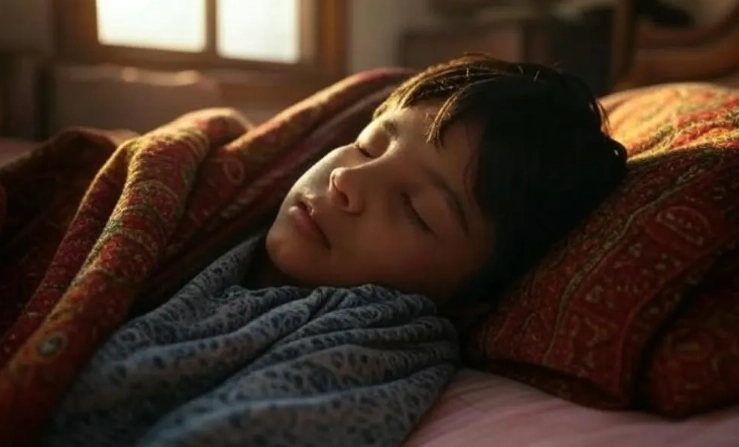
Here's where it gets messy. Sometimes Feng Shui and Vastu disagree. So, who do you listen to?
I remember trying the Vastu-recommended head-to-south position. My bedroom layout made it awkward—my feet were almost at the door, which felt weird in Feng Shui terms. I felt caught between two ancient rulebooks. It was frustrating. I realized then that blindly following any rule without adapting it to my space was a recipe for stress, the exact opposite of the goal.
So, What IS the Best Sleeping Direction? Breaking Down the Options
Let's cut through the noise. Based on the convergence of magnetic theory and the most common ancient recommendations, here’s a straightforward ranking. Think of this as the consensus best sleeping direction hierarchy.
| Sleeping Direction (Head Pointing...) | Scientific/Magnetic Rationale | Ancient Wisdom (Feng Shui / Vastu) | Reported Benefits & Potential Drawbacks |
|---|---|---|---|
| South or North (Body aligned North-South) | Alignment with Earth's magnetic axis. Minimizes cross-interference. | Vastu: Head-to-South is TOP choice. Feng Shui: Can be good depending on Kua number. | Benefits: Most reported deeper sleep, calmness. Note: Vastu strongly prefers South over North for the head. |
| East | Aligns with the direction of the rising sun, symbolic of new beginnings. | Vastu: Second-best choice. Feng Shui: Associated with health and family. | Benefits: Reported to promote energy, optimism, and good health. Considered very supportive. |
| West | Direction of the setting sun, symbolic of completion. | Generally not recommended in Vastu. In Feng Shui, can be associated with creativity but also lethargy. | Drawbacks: Most often linked with reports of sluggishness, inertia, or restless minds. The least recommended. |
| North (Head-to-North specifically) | Magnetic repulsion theory (head's north pole vs. Earth's north pole). | Vastu: Explicitly discouraged. Feng Shui: Can be acceptable for some. | Drawbacks: Anecdotally linked to insomnia, nightmares, and high blood pressure in some traditions. Controversial. |
The table makes it clear: the best direction to sleep for the widest consensus is with your head pointing south, body aligned north-south. East is a strong, safe second. West gets a lot of side-eye. Head-to-north is the most debated and often warned against.
The Real-World Hurdles: When Your Bedroom Fights Back
Here’s the truth they don't tell you in most articles about the best sleeping direction. Your room has doors, windows, radiators, and weird corners. The "ideal" south alignment might place your bed directly under a drafty window or facing a blank wall you hate.
So, what matters more? Perfect direction or practical comfort?
From my experience and talking to experts, the hierarchy of needs for good sleep looks something like this:
- Safety and Security: Can you see the door? Does the position feel vulnerable? This primal need trumps everything. A bed in a commanding position (Feng Shui's rule) will always beat a perfectly directional bed that leaves you subconsciously anxious.
- Physical Comfort: Are you in a draft, in direct line of an air vent, or with your head against a noisy pipe wall? No magnetic alignment will save you from that.
- Mental Peace: Do you like the view when you wake up? Is the space around the bed cluttered? Your waking thoughts matter.
- Directional Alignment: This is the fine-tuning. Once the first three are locked in, then you see if you can tweak towards the best sleeping direction.
The goal is to find the best possible compromise. If true south puts your bed in a terrible spot, try for a close approximation—south-southeast, or even east. The intention and effort to align yourself positively with your space might be as powerful as the perfect geometric alignment.
Quick Fixes for Common Bedroom Problems
- Window in the wrong place? Use blackout curtains and ensure there's no direct draft on your head or torso.
- Door alignment issue? A small mirror (positioned so you can see the door from bed, but not directly reflecting the bed) or a calming piece of art on the wall opposite can mitigate the "in-line" feeling.
- Stuck with a head-to-north setup? Try using a non-metallic bed frame (wood is ideal). Some suggest placing a small natural magnet under the pillow pointing south, though this is deep in the realm of personal experimentation.
Your Personal Blueprint: How to Find YOUR Best Sleeping Direction
Forget one-size-fits-all. Let's build a plan that works for you. Finding your optimal sleeping direction is a mini-experiment.
Week 1: Sleep in your current position. Before bed, jot down a quick note on how you feel (tired, anxious, calm). Use a simple sleep tracker app (even your phone's basic one) or just note your wake-up mood and energy level on a scale of 1-5. Be honest.
Week 2: Change your bed to the most feasible "ideal" direction (aim for head-to-south or east). Do NOT change anything else—same pillow, same routine. Keep the same notes.
Compare. Did anything shift? Not just "I slept better," but look for subtleties: dream recall, ease of falling asleep, mid-night wake-ups, morning grogginess.
Your body's feedback is the most important data point. I tried the head-to-east for two weeks and noticed I woke up slightly easier, less hitting the snooze button. Head-to-south felt more solidly restful. Head-to-west? Confirmed—I felt groggy. It was my personal proof.
Answers to the Questions You're Actually Asking (FAQ)
Is it bad to sleep with your head facing north?
This is the biggest debate. According to Vastu Shastra and the magnetic repulsion theory, yes, it is considered unfavorable and linked to sleep disturbances and potential health issues over the long term. Many Western sleep scientists would say there's no robust evidence. My advice? If you sleep fine head-to-north and feel great, don't stress. But if you struggle with sleep and your bed is north-aligned, it's the easiest, free thing to experiment with changing. It was a game-changer for a friend of mine with chronic insomnia.
What if my partner and I have different "best" directions?
A classic dilemma! The bed can only point one way. First, see if your ideal directions are compatible (e.g., both of you benefit from south or east). If they conflict (one south, one north), prioritize the person with the poorer sleep quality or higher sensitivity. The other can try using a different pillow material or focusing on other sleep hygiene aspects. Compromise is key.
I'm renting/I can't move my heavy bed. What can I do?
Don't underestimate the power of intention and small adjustments. You can't move the bed, but you can move yourself. Try sleeping with your head at the opposite end of the bed. Seriously. It flips your direction 180 degrees. It feels weird for a night or two, but it's a zero-cost experiment. Alternatively, use a wooden bed riser to subtly change the angle if possible, or focus heavily on the non-directional aspects of your sleep sanctuary.
Does the best sleeping direction work with adjustable beds?
Yes, the principle remains. Align the base of the bed (and therefore your spine's primary axis) with the ideal direction. When you raise the head or feet, you're still oriented from that base alignment. The Sleep Foundation discusses optimal sleep positions for health conditions, which you can combine with directional principles for a holistic approach.
What about pets/kids who end up sideways on the bed?
(Laughs) Yeah, this is real life. The direction applies to your intentional position when you fall asleep. A cat draped across your legs isn't breaking the Feng Shui. The goal is to set the stage, not control the entire night's chaotic ballet.
Beyond Direction: The Non-Negotiables for Good Sleep
Chasing the perfect best sleeping direction is pointless if you're scrolling in bed until 2 AM or your room is 80 degrees. Direction is the cherry on top of a solid sundae. Here’s the sundae:
- Darkness: Pitch black. Use an eye mask if needed.
- Coolness: Around 65°F (18°C) is ideal for most.
- Quiet: White noise is your friend if you can't control sounds.
- Routine: A consistent wind-down signal tells your brain it's time.
- A Pristine Mattress & Pillow: These are your primary points of contact. Invest here first.
Think of sleep direction as fine-tuning your car's alignment. It makes the ride smoother and prevents wear and tear, but it won't work if the engine is broken or the tires are flat. Fix the fundamentals first.
Final Thoughts: It's About Awareness, Not Dogma
After all this research and experimentation, here's my conclusion. The quest for the best sleeping direction is valuable not because it gives you a rigid rule, but because it makes you conscious of your sleep environment in a new way. It forces you to look at your bedroom not just as a place to crash, but as a designed ecosystem for restoration.
For some, the alignment will bring a profound sense of calm and improved sleep quality. For others, the difference might be subtle or even unnoticeable. Both outcomes are perfectly valid.
Don't let the pursuit of the perfect best direction to sleep become another source of anxiety. That defeats the whole purpose. Use the guidelines, try the experiment, listen to your body, and then make a choice that works for your life and your unique space. The best sleeping direction is ultimately the one that helps you forget about the world and drift into a peaceful, restoring night's sleep.
Now, if you'll excuse me, I need to go slightly adjust my bed. I think it's a few degrees off true south.
Reader Comments