In This Guide
- Why Your Sleep Posture Actually Matters to Your Ticker
- The Winner: Left-Side Sleeping Takes the Crown
- The Positions to Approach with Caution (Or Avoid)
- Sleep Position Breakdown: A Quick Comparison Table
- It's Not Just About Left or Right: Other Crucial Factors
- Putting It All Together: Your Action Plan for Heart-Healthy Sleep
Let's be honest, most of us crash into bed at night without a second thought about how we're lying. We just want to be comfortable. But what if the way you're curled up or sprawled out is quietly putting extra strain on your heart? It's not something they teach you in school, but it matters more than you'd think.
I remember talking to a friend who has mild hypertension. He was doing everything right—eating well, exercising—but his morning readings were still stubbornly high. His doctor, almost as an afterthought, asked, "How do you sleep?" Turns out, he was a dedicated stomach sleeper. A simple switch later, and he noticed a difference. It wasn't a miracle cure, but it was a piece of the puzzle he never considered.
That got me digging. Is there really a best sleeping position for heart health? The short answer is yes, and the consensus among cardiologists and sleep specialists points strongly in one direction. But the long answer, the one with all the nuances and "it depends" moments, is far more interesting.
Why Your Sleep Posture Actually Matters to Your Ticker
Your heart isn't just floating in your chest. It's connected, nestled among other organs, and subject to the simple, relentless force of gravity all night long. The position you choose changes the game.
Think about it. When you lie down, the workload on your heart changes compared to standing. The main issue becomes how your body handles circulation and pressure without gravity helping blood flow back from your legs. Certain positions can kink or compress major blood vessels, like the inferior vena cava (the big vein that brings blood from your lower body back to the heart). Other positions can put pressure on your lungs or even your heart itself.
Then there's the lymphatic system—your body's drainage network. Some research, like that highlighted by the National Sleep Foundation, suggests that sleeping on your left side may facilitate better lymphatic drainage from the brain and central organs. This is a bit more theoretical, but it's part of the growing conversation.
The real kicker for many people is acid reflux. Heartburn at night is miserable, but it's also a stressor. The acid can irritate the esophagus, which is right behind the heart. That irritation can sometimes trigger palpitations or a feeling of discomfort that's hard to distinguish from a cardiac issue. So, a sleep position that tackles reflux is indirectly helping your heart have a peaceful night too.
The Winner: Left-Side Sleeping Takes the Crown
If we have to name a single best sleeping position for your heart, it's sleeping on your left side. This isn't just an old wives' tale; there's some solid physiology behind it.
Your heart is on the left side of your chest, but it's not centered. The left ventricle, which is the powerhouse chamber that pumps oxygen-rich blood out to your entire body, is the largest and strongest part. When you lie on your left side, your heart is essentially hanging in a more natural, unrestricted position within your chest cavity. Gravity may even help with the efficiency of the aortic arch, the major artery that leaves the heart.
More importantly, it takes pressure off the inferior vena cava, which runs slightly to the right of your spine. Freeing up this highway allows blood to return to your heart more easily. For pregnant women, this is drilled-in advice because it increases blood flow to the uterus, but the principle benefits everyone's circulation.
What about the research? A study often cited in discussions about sleep position and heart health looked at patients with congestive heart failure. While more research is always needed, findings suggested that right-side sleeping might increase heart rate and nervous system activity in some individuals compared to left-side sleeping. The American Heart Association doesn't have an official "sleep position statement," but many cardiologists I've read opinions from lean towards left-side as the preferable default for general heart health.
And let's not forget acid reflux. The esophagus enters the stomach on the right side. When you sleep on your left, the stomach sits below the esophagus, making it harder for acid to climb up. It's a simple gravitational win. No acid reflux means less nighttime stress and inflammation, which is always a good thing for cardiovascular wellness.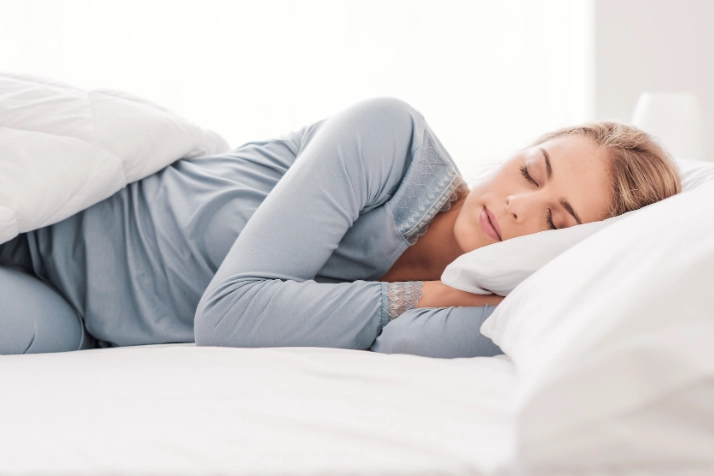
How to Actually Train Yourself to Sleep on Your Left Side
I can hear the lifelong back sleepers groaning. "I'll just roll over in my sleep!" Trust me, I was one of you. Here’s what can work, without making you feel like you're in a straitjacket:
- The Pillow Barrier: This is the oldest trick. Place a firm body pillow or a couple of regular pillows against your back. When you start to roll onto your back, you'll feel the obstruction and naturally settle back onto your side. It works surprisingly well.
- Start on the Correct Side: Make a conscious effort every single night to begin on your left side. Your body often follows the initial "set point."
- Check Your Mattress: If your mattress is too soft and causes your body to sink, it can be harder to maintain a side position. A medium-firm mattress offers better support for side sleeping.
- Give it Time: Don't expect change in one night. It can take a few weeks for your body to adjust to a new sleep position for heart health.
The Positions to Approach with Caution (Or Avoid)
Now for the not-so-great news. While comfort is king, some positions are less than ideal for your cardiovascular system.
Sleeping on Your Back (Supine)
This is the big one people get wrong. Back sleeping is often praised for spinal alignment, and for many, it's fine. But it has two major potential downsides for heart and breathing health.
First, it's the prime position for snoring and obstructive sleep apnea to worsen. When you lie on your back, gravity pulls the tissues in your throat (your tongue, soft palate) directly backward, narrowing or collapsing your airway. Sleep apnea is a known enemy of the heart, leading to repeated oxygen drops, blood pressure spikes, and a much higher risk of hypertension, atrial fibrillation, and heart failure. The American Heart Association has clear information on this strong link.
Second, for some people with certain types of heart failure, back sleeping can cause pulmonary congestion—a buildup of fluid in the lungs—making breathing difficult (a condition called orthopnea). These individuals often need multiple pillows to sleep propped up.
Sleeping on Your Stomach (Prone)
This is probably the worst of the common positions for overall health, not just your heart. To breathe while on your stomach, you have to twist your neck sharply to one side for hours. This misaligns your spine and can strain nerves.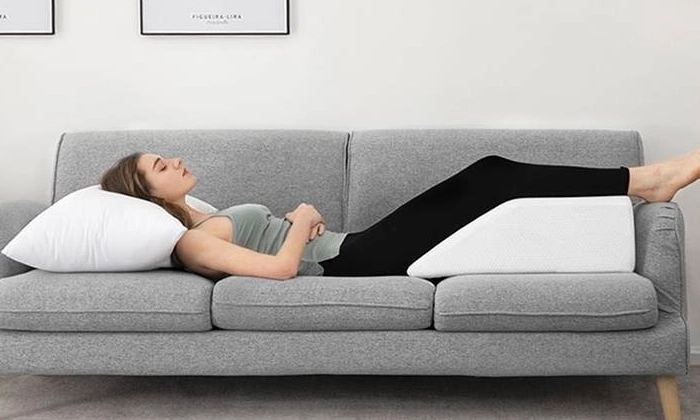
But for the heart? The main issue is compression. You're pressing your chest against the mattress, which can limit the full expansion of your ribcage and lungs. Less efficient breathing means your heart has to work a bit harder to oxygenate your blood. It also often promotes a more arched back, which isn't doing you any favors either.
I'll be blunt: if you're a stomach sleeper looking for the best sleeping position for heart benefits, this is the one to try and phase out first. The neck pain alone should be enough of a deterrent.
Sleep Position Breakdown: A Quick Comparison Table
Let's put it all in one place. This table sums up how the common positions stack up for heart and general health.
| Sleep Position | Effect on Heart & Circulation | Effect on Breathing | Best For... | Worst For... |
|---|---|---|---|---|
| Left Side | May improve circulation, takes pressure off vena cava, can aid lymphatic drainage. | Keeps airway open, good for reducing snoring/apnea. | General heart health, acid reflux, pregnancy, most snorers. | People with left shoulder pain or certain heart conditions (ask your doctor). |
| Right Side | Generally fine for most, but may be less optimal than left side for some. | Keeps airway open, good for reducing snoring/apnea. | People with left-side pain, a comfortable alternative. | Those with severe heart failure (in some cases). |
| Back (Supine) | Neutral for some, but can worsen sleep apnea which harms the heart. | Can worsen snoring & obstructive sleep apnea. | Spinal alignment (if no apnea), acid reflux (if head elevated). | Anyone with untreated sleep apnea, heavy snorers, some heart failure. |
| Stomach (Prone) | Potential for chest compression, least recommended. | Can restrict full lung expansion due to pressure. | Temporary relief for snoring (but fixes symptom, not cause). | Neck/spine health, overall circulation, most people. |
It's Not Just About Left or Right: Other Crucial Factors
Focusing only on left-side versus right-side is like worrying about the paint color on a car with a shaky engine. The foundation matters more.
Chronic short sleep (less than 7 hours a night) is consistently linked by organizations like the Centers for Disease Control and Prevention (CDC) to higher risks of heart disease, high blood pressure, and stroke. Why? It messes with your hormones (like cortisol), increases inflammation, and throws your metabolism off balance. No perfect sleep position can compensate for only getting 5 hours of sleep.
Sleep apnea is the other giant. As mentioned, it's a direct assault on your cardiovascular system. If you have it, treating it with a CPAP machine or other therapy is a thousand times more important for your heart than whether you sleep on your left or right side. The position might help mildly, but it's not the treatment.
And then there's your bedding. An overly soft pillow can crank your neck out of alignment in any side-sleeping position, potentially impinging nerves and blood vessels. A pillow that keeps your head and neck in a neutral line with your spine is key. For back sleepers, a thinner pillow is better; for side sleepers, you need a thicker, firmer one to fill the space between your ear and shoulder.
Your Questions, Answered (The Stuff You're Actually Searching For)
Let's tackle some of the specific, sometimes quirky, questions people have when they look this up.
Is sleeping on the left side bad for the heart if you have a heart condition?
This is critical. For most people with stable heart disease, left-side sleeping is fine and often recommended. However, if you have congestive heart failure, particularly with reduced ejection fraction, some older studies and theories suggested that the heart's position when lying on the left side might be sensed as "fuller," potentially triggering discomfort or shortness of breath in some patients. The evidence isn't uniform, and many modern cardiologists say it's individual. The bottom line? If you have a diagnosed heart condition, ask your cardiologist. Tell them, "I've heard about the best sleeping position for heart patients. What do you recommend for me?" They know your specific case.
What if I have shoulder or hip pain on my left side?
Don't suffer! Pain will ruin your sleep quality, which negates any potential benefit. The best sleeping position for your heart that also works for you is the one that lets you sleep soundly and pain-free. Switch to your right side. The difference between left and right for a healthy person is likely marginal compared to the massive benefit of getting deep, uninterrupted, pain-free sleep. Use pillows for support—a pillow between your knees aligns your hips, and hugging a pillow can support a sore shoulder.
Does elevating the head of the bed help?
Absolutely, and it's a great hack. For back sleepers especially, elevating the head of the bed by 6-8 inches (using bed risers or a wedge pillow under the mattress) can significantly reduce acid reflux and may help mild sleep apnea by keeping the airway more open. This is often recommended for people with heart failure who experience breathing difficulties when lying flat. It turns a less-ideal back position into a much more heart-friendly one.
I keep switching positions all night. Is that bad?
Not at all! In fact, it's probably natural and healthy. Our bodies move during sleep to prevent pressure sores and stiffness. The goal isn't to be a statue all night. The goal is to start on your left side and make it your dominant, default position. If you wake up on your back or right side, just gently roll back. Don't stress about perfection.
Putting It All Together: Your Action Plan for Heart-Healthy Sleep
Okay, so information is great, but what do you actually DO tonight? Here's a simple, no-overwhelm plan.
- Assess Your Current State: Where do you usually wake up? Do you snore? Do you have heartburn at night? Be honest with yourself.
- Pick Your Primary Goal: Is it reducing reflux? Minimizing snoring? Just trying the "recommended" position? Focus on one.
- Set Up Your Environment:
- If aiming for left-side: Get a body pillow or spare pillow to place behind you.
- Check your pillow height. Your spine should be straight when viewed from the front.
- Consider a mattress evaluation if you're constantly uncomfortable.
- Wind Down Properly: A calm heart before bed leads to better sleep. Avoid heavy meals, alcohol, and stressful screen time 2-3 hours before bed.
- Be Patient and Observe: Try the new position for at least two weeks. Notice how you feel in the morning. Is your heartburn better? Do you feel more rested? Your body will give you feedback.
Look, at the end of the day, sleep is deeply personal. The best sleeping position for heart health is the one that allows YOU to get consistent, high-quality, restful sleep. For most people, that's going to be some variation of side sleeping, with a strong nod towards the left side for its circulatory and anti-reflux perks.
But if you have sleep apnea, fixing that is job number one. If you have a specific cardiac condition, your doctor's advice overrides any article. Use this information as a guide, not a rigid rule. Tweak things, experiment, and find what makes you wake up feeling truly refreshed. That feeling, more than any specific posture, is your heart's best friend.
Sweet dreams, and here's to your heart beating strong for all the nights to come.
Reader Comments