Navigating Your Sleep Journey
- Why Your Sleep Position Actually Matters (It's Not Just About Comfort)
- The Case for Sleeping on Your Left Side
- The Case for Sleeping on Your Right Side
- How to Choose Your Best Position to Sleep Left or Right: A Condition-by-Condition Guide
- Left Side vs. Right Side Sleeping: A Quick-Reference Comparison
- Beyond the Side: Pro Tips to Make Any Sleep Position Work Better
- Your Questions Answered: The Left vs. Right Side Sleep FAQ
- Putting It All Together: Finding Your Personal Best Position
Let's be honest, most of us just flop into bed and hope for the best. We don't really think about whether we're sleeping on our left side, right side, back, or stomach until something goes wrong. Maybe you started waking up with a sore shoulder, or that annoying heartburn came creeping back at 2 AM. That's when you start searching, "best position to sleep left or right," trying to find a fix that doesn't involve another pill.
I've been there. A few years back, I had a brutal phase of acid reflux that made sleeping a nightmare. I tried everything—propping up pillows, eating earlier, you name it. Then my doctor, almost as an afterthought, said, "Just try sleeping on your left side." I was skeptical. How could something so simple possibly work? But within a couple of nights, the difference was undeniable. It got me digging deeper into the whole left-side vs. right-side sleeping debate, and let me tell you, the science behind it is surprisingly fascinating. It's not just old wives' tales; there's real anatomy and physiology at play.
So, if you're lying in bed wondering which side is truly the best position to sleep left or right for your body, this guide is for you. We're going to move past the generic advice and look at what the research actually says, breaking it down by specific health concerns. Because the "best" side isn't the same for everyone—it depends entirely on what you're trying to achieve or avoid.
Why Your Sleep Position Actually Matters (It's Not Just About Comfort)
Think of your sleep position as the default setting for your body during its 7-9 hour maintenance cycle. Gravity doesn't switch off when you close your eyes. How you're aligned affects everything from how your brain clears waste (through the glymphatic system, a cool recent discovery) to the pressure on your internal organs, your breathing pathways, and even blood flow.
Sleeping on your back (supine) is often touted as the best for spinal alignment, and it is—if you don't snore or have sleep apnea, which it can worsen. Stomach sleeping (prone) is pretty much universally panned by experts; it twists your neck, flattens your spine's natural curve, and can compress your lungs. I find it incredibly uncomfortable, personally.
That leaves side sleeping (lateral decubitus, if you want the fancy term) as the most common and often most recommended position. But here's the kicker: your left side and your right side are not mirror images when it comes to your internal layout. Your stomach, spleen, and pancreas are on the left. Your liver and gallbladder are primarily on the right. Your heart is slightly left of center. This asymmetry is why the best position to sleep left or right debate has real medical substance.
The Case for Sleeping on Your Left Side
Left-side sleeping gets a lot of hype, especially in wellness circles. Some of it is justified, some might be a bit overblown. Let's separate the signal from the noise.
1. Champion for Digestive Comfort (Especially Acid Reflux/GERD)
This is the big one, and the one with the most solid evidence. When you sleep on your left side, your stomach sits below your esophagus. The junction where your esophagus meets your stomach (the lower esophageal sphincter) is then positioned above the stomach contents. Gravity helps keep stomach acid where it belongs—in your stomach. Sleep on your right side, and your stomach is now perched above that sphincter, making it easier for acid to spill upward.
A study published in The Journal of Clinical Gastroenterology found that left-side sleeping significantly reduced esophageal acid exposure time compared to right-side sleeping. For anyone with nighttime heartburn, this isn't just a tip; it can be a game-changer. It was for me.
2. May Support Lymphatic Drainage
This is a theory that's popular but a bit harder to pin down with direct "sleep position" studies. The logic is that the thoracic duct, a major pathway of the lymphatic system which drains waste and immune cells, empties into the venous system on the left side of your body. The idea is that left-side sleeping could use gravity to assist this drainage process. While the basic anatomy is correct, more research is needed to confirm a significant sleep-specific benefit. Still, it's a plausible theory and certainly not harmful.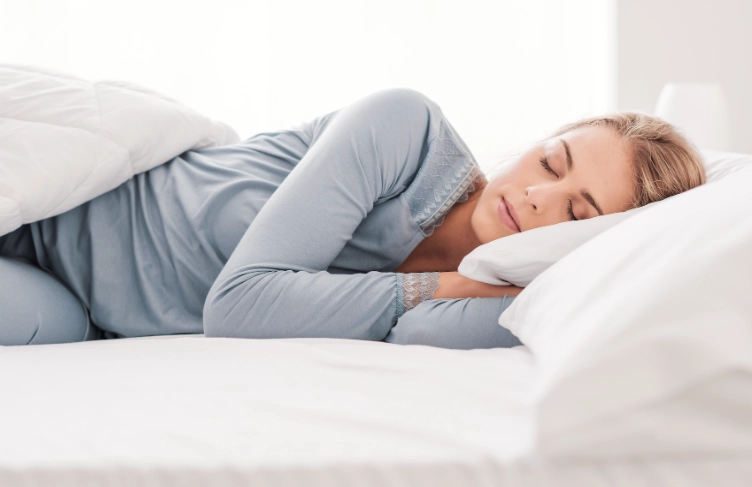
3. Potential Heart Health Considerations
Here's where it gets nuanced. Some sources claim left-side sleeping puts pressure on the heart. For most healthy people, this isn't an issue—your heart is well-protected. However, for individuals with certain severe heart conditions like congestive heart failure, some older studies suggested right-side sleeping might be slightly easier on the heart, allowing it to work with less intrathoracic pressure. The American Heart Association doesn't have an official sleep position stance for the general public, but if you have a diagnosed heart condition, this is a perfect topic to discuss with your cardiologist. Don't just assume left-side is bad for your heart if you're otherwise healthy.
4. The Gold Standard for Pregnancy
This is non-negotiable advice from obstetricians. Sleeping on the left side, particularly in the second and third trimesters, is strongly recommended. It improves circulation to the heart, which benefits both mother and baby by maximizing blood flow to the uterus and kidneys. Sleeping on the back can put the weight of the uterus on major blood vessels (the inferior vena cava and aorta), potentially reducing circulation. The American College of Obstetricians and Gynecologists (ACOG) clearly recommends side-sleeping for pregnant women, with left-side being optimal.
The Case for Sleeping on Your Right Side
Right-side sleeping often gets cast as the villain in the acid reflux story, but it has its own set of potential benefits and might be the better choice for other specific situations.
1. Might Be Easier on the Heart for Some (The Flip Side of the Coin)
As mentioned, some limited research, like a small study in the Journal of the American College of Cardiology, has observed that in people with heart failure, right-side sleeping led to more favorable heart rate and blood pressure readings during sleep compared to left-side. The theory is it may reduce sympathetic nervous system activity. Important: This is highly specific to existing, significant heart disease. For the vast majority, it's not a concern.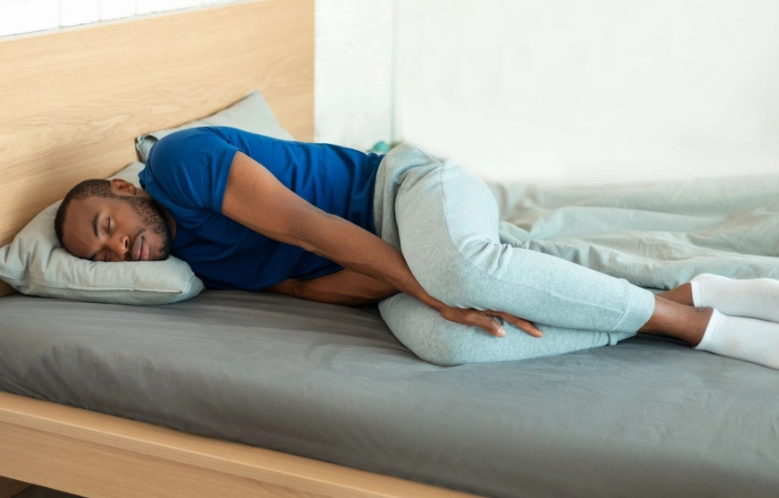
2. Could Ease Certain Types of Back Pain
If you have pain primarily on your left side (say, left sciatica or a left hip issue), sleeping on your right side takes the pressure off the painful area. This is simple mechanics. Placing a pillow between your knees while side-sleeping (on either side) is a universally excellent trick to keep your hips, pelvis, and spine in neutral alignment, preventing twisting.
3. May Be Beneficial for Certain Neurological Conditions
Emerging research is looking at sleep positions and brain waste clearance. A fascinating study from Stony Brook University suggested that side sleeping (both left and right) might be more effective than back or stomach sleeping for clearing brain metabolites like beta-amyloid (associated with Alzheimer's disease) via the glymphatic system. The study didn't strongly differentiate between left and right sides, but it highlights that side-sleeping itself may have a unique brain health benefit.
I sometimes find right-side sleeping just feels more "natural" for my breathing, though I have no science to back that up—it's purely personal. Maybe it's because my right nostril is often clearer!
How to Choose Your Best Position to Sleep Left or Right: A Condition-by-Condition Guide
Alright, let's get practical. You're not a generic human; you have specific stuff going on. Here’s a breakdown to help you decide.
- For Acid Reflux, GERD, or Chronic Heartburn: This is the clearest win for left-side sleeping. Make it a habit. Combine it with elevating the head of your bed by 6 inches for a one-two punch against nighttime acid.
- For Chronic Back or Hip Pain: Sleep on the side that is not painful. If both sides hurt, you likely need to look at mattress support and that knee pillow trick first. Alternate sides to avoid creating new imbalances.
- For Snoring or Mild Sleep Apnea: Side sleeping (either side) is almost always better than back sleeping. Sleeping on your back allows your tongue and soft palate to collapse backward, obstructing your airway. The National Sleep Foundation notes that side sleeping can help keep the airway open. If you're a back sleeper who snores, training yourself to side-sleep can be a simple, effective strategy.
- For Pregnancy (Second & Third Trimester): Left side is best. Use a long body pillow or pregnancy pillow for support under your belly and between your knees.
- For General Heart Health (No Existing Condition): Don't stress. Both sides are fine. Choose based on your other needs (like digestion) or comfort.
- If You Have Congestive Heart Failure: Talk to your doctor. Some evidence points to right-side sleeping as potentially more comfortable and physiologically favorable, but this is a medical decision, not a DIY one.
See? The answer to "best position to sleep left or right" is a classic "it depends." But now you know what it depends on.
Left Side vs. Right Side Sleeping: A Quick-Reference Comparison
| Factor | Sleeping on Left Side | Sleeping on Right Side |
|---|---|---|
| Top Benefit | Reduces acid reflux & heartburn symptoms. | May reduce cardiac pressure for some with heart failure. |
| Digestive System | Optimal. Stomach below esophagus, uses gravity to contain acid. | Suboptimal for reflux. Stomach above esophagus, can promote acid backup. |
| Cardiovascular System | Generally fine for healthy hearts. A topic of discussion for severe CHF. | Often recommended in older studies for severe CHF patients. |
| Pregnancy | Highly Recommended. Optimizes blood flow to uterus & kidneys. | Okay, but left is preferred by medical guidelines. |
| Back/Hip Pain | Good for taking pressure off a painful right side. | Good for taking pressure off a painful left side. |
| Lymphatic System Theory | Thought to potentially assist drainage via the thoracic duct. | Not typically associated with this benefit. |
| Best For... | People with GERD, pregnant individuals, general wellness focus. | Those with left-side body pain, or as advised for specific cardiac conditions. |
Beyond the Side: Pro Tips to Make Any Sleep Position Work Better
Choosing your side is half the battle. The other half is supporting your body correctly so you don't create new problems.
The Pillow Between the Knees: I can't emphasize this enough. It keeps your top leg from pulling your spine out of alignment. Use a firm pillow. A rolled-up towel works in a pinch.
Your Head Pillow Matters: It should fill the space between your ear and the mattress, keeping your neck in a straight line with your spine. If you're a broad-shouldered side sleeper, you might need a thicker pillow. If you switch to your back sometimes, a medium pillow is better.
Hug a Pillow: Hugging a second pillow against your chest can help prevent you from rolling onto your stomach and provides support for your top arm, taking strain off your shoulder.
Mattress Firmness: Side sleepers usually need a medium to medium-soft mattress to allow the shoulders and hips to sink in slightly, maintaining spinal alignment. A board-like mattress will put pressure on those points.
Your Questions Answered: The Left vs. Right Side Sleep FAQ
Putting It All Together: Finding Your Personal Best Position
So, after all this, what's the final verdict on the best position to sleep left or right?
If you have no major health issues, consider yourself lucky and sleep on whichever side feels most comfortable and restorative. Your body will likely tell you. But if you're dealing with a specific problem—especially acid reflux or you're pregnant—the evidence strongly leans towards making left-side sleeping your default.
For other conditions like certain heart issues or unilateral pain, the right side might be your hero. The key is to be intentional. Don't just drift into a position that might be aggravating your symptoms night after night.
Start tonight. Think about your primary sleep goal. Is it to quiet the heartburn? To ease an achy hip? To breathe more quietly? Pick the side that aligns with that goal. Set up your pillows for support—knee pillow, hugging pillow, the works. Give it a solid week or two. Pay attention to how you feel in the morning.
The best position to sleep left or right is the one that helps you wake up feeling better. It's a free, drug-free, and surprisingly powerful tool in your health toolkit. Sometimes the simplest changes, backed by a little understanding of how your body works, make the biggest difference of all. Sweet dreams.
Reader Comments