Quick Guide
- The Immediate Fallout: Your Body on 4-Hour Sleep
- The Long-Term Health Catastrophe: When 4-Hour Sleep Becomes Your Norm
- But What About Those People Who Claim They Only Need 4 Hours?
- The Science of Sleep: Why 4 Hours Simply Isn't Enough
- So, What Can You Actually Do? (Moving Beyond the 4-Hour Trap)
- Common Questions (And Straight Answers)
Let's be real. The idea of squeezing more hours out of the day by cutting sleep is incredibly tempting. In a world that glorifies hustle culture, sleeping just four hours can feel like a superpower. You see the tweets from CEOs boasting about their 4 AM routines, the biohackers touting polyphasic sleep, and you think, "Maybe I could do that." I've been there, staring at the ceiling at 2 AM, convinced that sleep is a waste of time when my to-do list is a mile long.
But here's the raw, unfiltered truth I learned the hard way, and what decades of sleep science screams at us: consistently sleeping only four hours a day is a one-way ticket to sabotaging your health, your mind, and your life. It's not a hack; it's a highway to burnout. So, what really happens if you only sleep 4 hours a day? Buckle up, because we're going beyond the surface-level "you'll be tired" and digging into the physiological and psychological carnage.
The Core Problem: Most adults need 7-9 hours of sleep per night for optimal functioning. Four hours is less than half of the minimum requirement for many. This creates a massive, cumulative "sleep debt" that your body cannot ignore or adapt to.
The Immediate Fallout: Your Body on 4-Hour Sleep
Think of the first day after a terrible night's sleep. Now imagine that feeling is your new normal. That's the baseline for only sleeping four hours.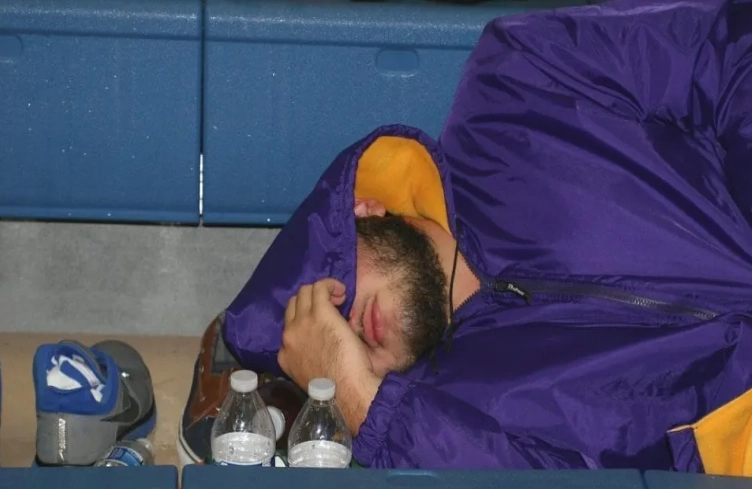
Your Brain Turns to Fog
Cognitive function takes the first and hardest hit. We're not just talking about feeling a bit slow.
- Attention & Concentration: Your ability to focus plummets. Sustaining attention on a single task becomes a Herculean effort. You'll find yourself rereading emails, losing your train of thought mid-sentence, and making careless mistakes. Studies comparing 4-hour sleep to 8-hour sleep show dramatic drops in performance on vigilance tasks.
- Memory Malfunction: Sleep is when your brain consolidates memories—transferring them from short-term to long-term storage. On four hours, this process is severely disrupted. You'll struggle to remember what you learned yesterday, where you put your keys, or a promise you made. Both forming new memories and recalling old ones get fuzzy.
- Executive Function Crash: This is your brain's CEO—responsible for planning, decision-making, problem-solving, and impulse control. It's utterly compromised. You'll make poorer decisions, struggle to plan complex tasks, and your emotional regulation goes out the window. Ever snapped at someone after a bad night? That's your sleep-deprived prefrontal cortex checking out.
I remember trying to power through a project on minimal sleep. I spent three hours "working," only to realize I'd been organizing files and writing nonsense. Zero productive output. It was a total waste of time.
Emotional Rollercoaster
Your emotional stability is tightly wired to your sleep. The amygdala (your brain's fear and emotion center) goes into overdrive when sleep-deprived, while the prefrontal cortex (which moderates it) weakens. The result?
It's not just feeling grumpy. It's a fundamental shift in your emotional baseline.
Physical Performance Hits a Wall
Even if your job isn't physical, your body feels it. Reaction times slow down, comparable to being legally drunk in some studies. Coordination suffers, increasing the risk of accidents whether you're driving or just walking down the stairs. Your pain tolerance decreases, making every little ache feel more intense. Your body's ability to repair muscle tissue and recover from the day's wear and tear is slashed.
Driving while sleep-deprived is a terrifyingly common and dangerous reality. The Centers for Disease Control and Prevention (CDC) bluntly states that being awake for 18 hours (which a 4-hour sleep schedule easily leads to) impairs you like having a blood alcohol content (BAC) of 0.05%.
Let's pause here. This is just the next-day stuff. This is what happens if you only sleep 4 hours a day for a night or two. The real horror show begins when this becomes a chronic pattern.
The Long-Term Health Catastrophe: When 4-Hour Sleep Becomes Your Norm
This is where the "What happens if I only sleep 4 hours a day?" question gets scary. Your body is resilient, but it's not designed for perpetual drought. Chronic sleep deprivation (getting less than 6 hours regularly) is classified as a risk factor for a staggering number of serious diseases.
| Body System | Long-Term Risks of 4-Hour Sleep | Why It Happens |
|---|---|---|
| Cardiovascular | Hypertension (high blood pressure), Heart Disease, Stroke, Increased Heart Rate | Sleep helps regulate stress hormones (cortisol) and maintains blood vessel health. Chronic deprivation keeps blood pressure elevated. |
| Metabolic & Weight | Weight Gain, Obesity, Type 2 Diabetes, Insulin Resistance | Hormonal chaos: Ghrelin (hunger hormone) increases, Leptin (fullness hormone) decreases. You crave high-calorie junk food. Cells become less responsive to insulin. |
| Immune System | Weakened Defenses, Frequent Colds/Infections, Increased Inflammation, Poorer Vaccine Response | Sleep is when your immune system releases cytokines (proteins that fight infection). Short sleep = fewer cytokines and more inflammatory markers. |
| Hormonal Balance | Reduced Testosterone (in men), Disrupted Growth Hormone, Fertility Issues | Key hormones for repair, growth, and reproduction are primarily released during deep sleep stages, which are cut short. |
| Brain Health | Increased Risk of Dementia & Alzheimer's Disease, Brain Shrinkage | During deep sleep, the brain's glymphatic system clears out toxic waste products like beta-amyloid. No sleep, no cleanup. Plaques build up. |
Look at that table again. We're talking about fundamentally altering your disease risk profile. The research is not subtle. A famous review published in the journal Sleep concluded that short sleep duration is a significant risk factor for all-cause mortality—meaning it increases your risk of dying from anything.
And the weight gain part is insidious. You're not just tired; you're hungrier. Your body, desperate for energy, starts screaming for quick sugar and fat. Your willpower, already depleted from poor sleep, crumbles. It's a vicious cycle I've watched friends struggle with—they sleep less to work more, gain weight, feel worse, and then have even less energy to fix their habits.
The Cancer Connection
This one deserves its own spotlight. The World Health Organization (WHO) has classified night shift work, which involves circadian disruption (a form of chronic sleep disturbance), as a probable human carcinogen. While more research is always needed, the link between chronically disrupted sleep and increased risk for cancers like breast and prostate is taken seriously by major health bodies. The theory centers on the suppression of melatonin (a sleep-regulating and potent antioxidant hormone) and increased systemic inflammation.
But What About Those People Who Claim They Only Need 4 Hours?
Ah, the genetic unicorns. Yes, a tiny fraction of the population (less than 1%) carries a rare genetic mutation (DEC2 gene, sometimes called the "Thatcher gene" after the former UK Prime Minister) that allows them to function on significantly less sleep with seemingly fewer negative consequences. These people are the extreme exception, not the rule.
The brutal truth for the other 99% of us is that we might think we're adapting to four hours of sleep, but we're not. We're just becoming accustomed to a degraded state of being. This is called "sleep state misperception." Your subjective feeling of alertness adapts, but objective measures of your performance, health, and physiology continue to deteriorate. You feel "fine" because you've forgotten what truly feeling rested and sharp is like.
The Science of Sleep: Why 4 Hours Simply Isn't Enough
To understand why sleeping only four hours a day is so destructive, you need to know what you're missing. Sleep isn't a monolithic state. It's a complex, cyclical architecture of different stages, each with a critical purpose.
A full sleep cycle lasts about 90 minutes and includes both Non-REM (Stages 1-3) and REM sleep.
- Stage 1 & 2 (Light Sleep): The transition into sleep. Body temperature drops, heart rate slows. Important for memory processing and learning.
- Stage 3 (Deep Sleep or Slow-Wave Sleep): The physical restoration phase. This is when tissue growth and repair happen, energy is restored, and crucial hormones are released. It's vital for physical recovery and immune function. This stage is prioritized early in the night.
- REM Sleep (Rapid Eye Movement): The mental restoration phase. Your brain is almost as active as when awake. This is where dreaming, memory consolidation (especially for skills and procedures), emotional processing, and creativity happen. REM periods get longer later in the night.
On a four-hour sleep schedule, you are brutally truncating this cycle. You might get some deep sleep in the first half of the night, but you are severely robbing yourself of the later, longer REM periods. You're missing the full "service" your brain and body need. It's like only ever doing a quarter of your laundry or filling your car with just enough gas to sputter to the next station. It's a strategy of perpetual deficit.
So, What Can You Actually Do? (Moving Beyond the 4-Hour Trap)
If you're reading this because you're stuck in a cycle of short sleep, the goal isn't to instill fear, but to empower change. Improving sleep hygiene isn't about perfection; it's about consistent, better choices.
Practical Steps to Reclaim Your Sleep
- Protect Your Wind-Down Hour: The hour before bed is non-negotiable. Dim lights, no screens (blue light is a melatonin killer), read a physical book, take a warm shower, listen to calm music. Signal to your brain that it's time to shift gears.
- Get Daylight in the Morning: View bright, natural light within 30-60 minutes of waking. This is the strongest signal to reset your circadian clock. It tells your body, "The day has started," which helps it prepare for sleep later.
- Be Ruthless with Consistency: Go to bed and wake up at roughly the same time every day, even on weekends. Yes, even on Saturday. This single habit is more powerful than any supplement.
- Audit Your Diet & Caffeine: Avoid heavy meals, alcohol, and caffeine too close to bedtime. Alcohol might make you pass out, but it fragments your sleep architecture, destroying deep and REM sleep. Caffeine has a half-life of 5-6 hours; that 4 PM coffee is still 50% active at 10 PM.
- Optimize Your Environment: Cool (around 65°F or 18°C), dark, and quiet. Use blackout curtains, a white noise machine, or earplugs. Your bed is for sleep and intimacy only—not for work, scrolling, or worrying.
Start small. Don't try to jump from 4 to 8 hours overnight. Aim for 15-30 minutes earlier for a week. Then another 15. Let your body gradually adjust and pay attention to how you feel. The National Sleep Foundation has fantastic, non-commercial resources on building these habits.
Common Questions (And Straight Answers)

Look, the allure of the 4-hour sleep schedule is understandable. Time is our most precious resource. But viewing sleep as lost time is a catastrophic error. Sleep is the foundation upon which every other aspect of your health, performance, and happiness is built. It's the ultimate non-negotiable.
What happens if you only sleep 4 hours a day? You systematically undermine your potential. You trade long-term health for short-term, often illusory, gains. The science is unequivocal, and the personal cost is too high. The real productivity hack, the genuine biohack, is prioritizing the full, restorative sleep your biology demands. Start tonight. Your future self will thank you for it.
Reader Comments