Quick Guide
- Why Your Brain Craves That Single Hour: The Science of Micro-Sleep Benefits
- The Immediate Aftermath: A Side-by-Side Comparison
- When the "Better" Choice Gets Complicated: It's Not Always Simple
- Beyond the Binary: What You Should *Actually* Do in a Sleep Crisis
- Your Body's Bill Comes Due: The Long-Term View
- Answering Your Real-World Questions (FAQ)
- The Final Verdict: A Practical Decision Tree
Let's be real. You're reading this because you're in a bind. Maybe it's 3 AM, a deadline is screaming at you, and you're weighing whether to power through or crash for what feels like a blink. That question, "Is it better to have 1 hour sleep or no sleep?" isn't some philosophical pondering—it's a survival call. I've been there. Staring at a screen, eyes burning, brain fog thicker than pea soup, trying to decide if surrendering to the pillow for a mere 60 minutes is a victory or a trap.
I remember one particular night in college, fueled by bad coffee and panic, where I chose "no sleep." The next day was a blur of nausea, emotional fragility (I nearly cried because the vending machine was out of my favorite chips), and a profound inability to form coherent sentences. It was awful. So, from that experience and a deep dive into what sleep scientists actually say, let's unpack this. The short, non-sugarcoated answer? Almost always, yes, one hour of sleep is better than no sleep. But the real story is in the messy, complicated "why" and the massive "it depends."
Why Your Brain Craves That Single Hour: The Science of Micro-Sleep Benefits
Think of sleep not as a single state, but a journey through different stages. A full cycle takes about 90 minutes, but you don't need to complete the whole trip to get some benefits. Even dipping your toes in the early stages provides something precious.
The first part of the journey is light sleep (N1 & N2). It's the gateway. Your body starts to relax, your heart rate slows. It's not deep, restorative sleep, but it's a crucial wind-down. Getting even 20-30 minutes can help quiet the mental noise. The golden ticket in a one-hour window, however, is a taste of slow-wave sleep (N3), often called deep sleep. This is the heavy-duty repair shift. It's when growth hormone is released for tissue repair, your immune system gets a boost, and your brain starts to consolidate some memories and clear out adenosine—that sleep-pressure chemical that makes you feel tired.
So, asking "is it better to have 1 hour sleep or no sleep?" boils down to this: one hour gives you a fighting chance to tap into the beginning of this deep, restorative phase. No sleep gives you zero. The National Institute of Neurological Disorders and Stroke outlines these stages clearly, emphasizing their non-negotiable roles. Skipping them entirely has immediate consequences.
I'll be honest, the science is clear, but the feeling? That's different. Waking up from a one-hour nap can sometimes feel worse than staying up—you're groggy, disoriented, in that state called sleep inertia. It feels like your brain is wrapped in cotton wool. But here's the thing: that grogginess, while unpleasant, is a sign your brain was actually starting to go into a deeper sleep state. It's a temporary fog that usually lifts faster than the relentless, accumulating exhaustion of zero sleep.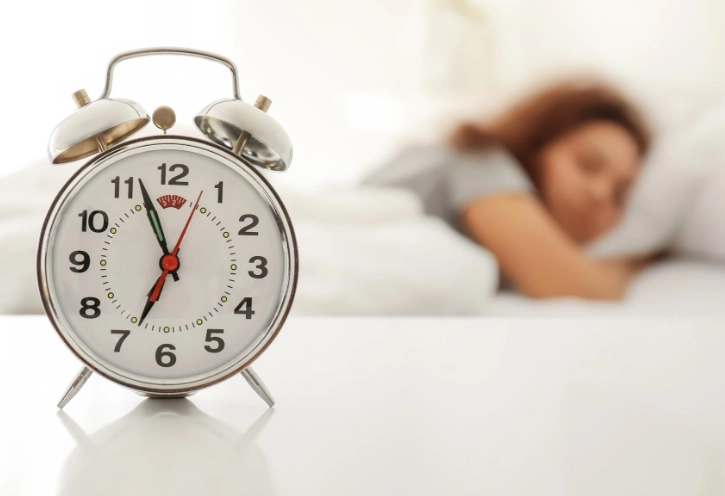
The Immediate Aftermath: A Side-by-Side Comparison
Let's get practical. What actually happens in the hours after you choose one path over the other? This table breaks down the battlefield.
| Aspect | After 1 Hour of Sleep | After No Sleep |
|---|---|---|
| Cognitive Function | Moderate impairment, but with pockets of clarity. Reaction time and focus are poor but may show brief recovery. You might manage simple, familiar tasks. | Severe and deteriorating impairment. Equivalent to being legally drunk in many studies. Decision-making, memory, and logical thinking are profoundly compromised. |
| Mood & Emotion | Irritable, grumpy. You're tired and you know it. Emotions are closer to the surface but somewhat recognizable. | Emotional volatility is high. Proneness to anxiety, sadness, or irrational anger. The brain's emotional center (amygdala) goes into overdrive without the prefrontal cortex to regulate it. |
| Physical Sensation | Heavy limbs, strong desire for more sleep. You feel tired in a predictable, "I need a bed" way. | Beyond tiredness. May include nausea, dizziness, headache, a weak immune response, and microsleeps (uncontrollable seconds of sleep with eyes open). |
| The "Crash" Risk | High risk of a crash later if more sleep isn't obtained. The body will demand repayment. | Immediate and ongoing crash. The body is running on pure stress hormones (cortisol), which is unsustainable. |
| Long-Term Debt | Still accrues sleep debt, but a slightly smaller one. The hour is a down payment. | Accrues maximum sleep debt. Recovery will require more than one good night's sleep. |
See the pattern? One hour of sleep doesn't make you good, but it keeps you from being catastrophically bad. It's the difference between driving on a very flat tire (dangerous, stupid, but you might limp home) versus driving with no tire at all (immediate disaster).
When the "Better" Choice Gets Complicated: It's Not Always Simple
Okay, so one hour is generally better. But life isn't a lab. Sometimes, the context flips the script. Let's talk about those gray areas.
The Sleep Inertia Trap
This is the big one. If you have a critical meeting, exam, or presentation that starts exactly 60-90 minutes after you fall asleep, that one hour might backfire. Waking up during deep sleep (slow-wave sleep) causes severe sleep inertia—that groggy, confused, brain-dead feeling. You might perform worse for the first 15-30 minutes after waking than if you had just stayed up. So, if timing is that tight and the task requires peak sharpness the second you start, pushing through might be the lesser of two evils. It's a brutal calculus.
Your Personal Sleep Architecture
Some people are naturally short sleepers. Others have insomnia where falling asleep takes an hour itself. If you know you're someone who wakes up feeling terrible from short naps, the one-hour option loses some appeal. It's not a one-size-fits-all rule. You have to know your own body. Personally, I'm a deep-sleeper. If you wake me after an hour, I'm a zombie for a good 20 minutes. My friend, a light sleeper, can pop up from a 20-minute power nap feeling refreshed. Go figure.
The question "is it better to have 1 hour sleep or no sleep" really depends on what comes after that hour. A whole day of work? Take the hour. A single, crucial 10-minute speech? Maybe sip some water and power through.
Beyond the Binary: What You Should *Actually* Do in a Sleep Crisis
Framing it as "1 hour or nothing" is often a false dilemma. There are usually better third options, even in a crisis. Let's move past the either/or.
- The 90-Minute Power Play: If you can possibly carve out 90 minutes, do it. That's one full sleep cycle. You'll likely wake from lighter sleep (REM or stage 2), minimizing inertia and maximizing cognitive benefit. It's the gold standard for a short burst.
- The 20-Minute Tactical Nap: Can't manage 90? Go for 20-25 minutes. This keeps you in light sleep, avoiding deep sleep inertia entirely. It's a pure refresh button for alertness. Set a loud alarm.
- Delay and Reschedule: Is the thing you're staying up for truly non-negotiable? Can a deadline be moved by a few hours? Communicate. Most people understand. An honest "I need two hours to do this right" is better than delivering garbage at dawn.
- Caffeine Timing: If you must stay up, use caffeine strategically. Have a coffee right before a 20-minute nap. The caffeine takes about 20-30 minutes to kick in, so you wake up as the alertness boost arrives. It's a potent combo.
Look, the goal isn't to glorify sleep deprivation. It's to manage damage control. The Sleep Foundation is packed with resources on why full sleep is non-negotiable for long-term health. We're talking about emergency protocols here, not a lifestyle.
Your Body's Bill Comes Due: The Long-Term View
Making this choice once in a blue moon is survivable. Your body is resilient. But if "is it better to have 1 hour sleep or no sleep" becomes a weekly Google search, you have a bigger problem. Chronic short sleep (even if it's 4-5 hours, let alone 1) is linked to scary stuff:
- Weight gain and metabolic chaos: Hormones that regulate hunger (ghrelin and leptin) get messed up, making you crave junk food.
- Cardiovascular strain: Consistently elevated blood pressure and stress on the heart.
- Mental health toll: Strong correlations with increased anxiety and depression risk.
- Accelerated brain aging: Impaired clearance of toxins like beta-amyloid, associated with Alzheimer's disease.
That one hour, while a valuable stopgap, doesn't prevent this debt. It just makes the interest slightly lower than pulling an all-nighter. Thinking of it as "better" can be dangerous if it lets you normalize crisis mode.
Answering Your Real-World Questions (FAQ)
Let's get into the nitty-gritty questions people actually type into search.
If I only sleep 1 hour, will I be able to function at work?
Function? Barely. Thrive? No. You'll be operating at a significant deficit. Expect to make more mistakes, be easily distracted, and struggle with complex problem-solving. Tell your coworkers you're running on fumes so they have context. Avoid making major decisions or sending important emails.
Is a 1-hour sleep cycle enough for memory?
For memory consolidation, deep sleep (N3) and REM sleep are key. A one-hour nap might get you to the doorstep of deep sleep, giving a minor boost to stabilizing some memories compared to none. But for learning new, complex information, it's grossly insufficient. Cramming all night is famously ineffective for this reason.
What's worse: 1 hour of sleep or 3 hours of broken sleep?
This is a great question. Three hours of broken, fragmented sleep is often subjectively worse—you feel like you never truly rested. However, objectively, three hours likely provides more total minutes in restorative sleep stages than one solid hour. The fragmentation prevents the natural, smooth progression of cycles, which is disruptive, but the total sleep time still wins. So, for your body, three broken hours is probably better, even if it feels more miserable.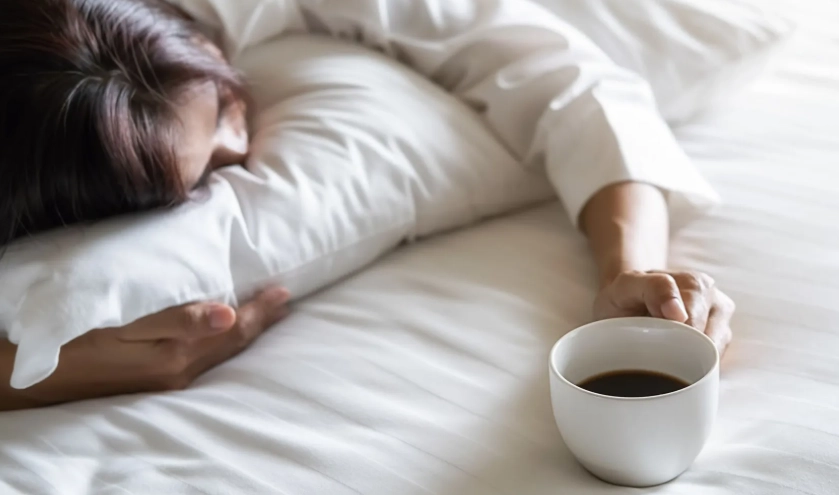
How do I recover after a night of only 1 hour of sleep?
Don't try to "power through" the next day on more caffeine. That just digs the hole deeper. Your priority is to get back on track:
- Prioritize the next night: Go to bed early. Not necessarily super early (to avoid lying awake), but give yourself a 9+ hour window to sleep.
- Nap strategically: A 20-minute afternoon nap can help, but avoid napping too late or too long, which can ruin the next night's sleep.
- Be kind to yourself: Eat nutritious food, get some gentle light exposure in the morning, and hydrate. Don't schedule intense workouts.
- Accept the debt: It may take 2-3 nights of good sleep to fully recover. There's no instant fix.
Is it better to have 1 hour sleep or no sleep before an exam?
If the exam is in 2 hours and you haven't slept, the one hour might induce too much grogginess. If you have 4+ hours before the exam, the one hour (or better, a 90-minute cycle) could provide meaningful benefit. The worst plan is to stay up all night trying to learn new material. Your brain's ability to encode that information is shot. Review lightly, then sleep.
The Final Verdict: A Practical Decision Tree
Let's make this actionable. Next time you're in this spot, ask yourself these questions:
- How much time do I have before I *must* be functional?
Less than 90 mins? → Consider a 20-min nap or powering through.
More than 90 mins? → Strongly consider a 90-min or 1-hour sleep. - What will I be doing?
Driving/operating machinery? → DO NOT DO EITHER. Find an alternative.
Routine, low-stakes tasks? → The 1-hour sleep is better.
A high-stakes, focused performance (exam, presentation)? → If timing allows, prioritize a 90-min cycle. - How do I usually feel after short naps?
Groggy and worse? → Lean towards a 20-min nap or caffeine.
Refreshed? → The 1-hour sleep is a great tool for you.
The core of the debate, "is it better to have 1 hour sleep or no sleep," is about harm reduction. It's choosing the smaller setback. One hour of sleep offers a fragment of the brain's essential maintenance cycle—a chance to clear some metabolic waste, lower sleep pressure slightly, and give your emotional regulation a tiny bit of support. No sleep offers none of that. It's a complete withdrawal from your brain's biological bank account.
So, in your moment of desperation, choose the hour if you can. But more importantly, use that crisis as a signal. Fix the underlying reason you're facing this brutal choice so often. Your future, well-rested self will thank you.
Reader Comments