Your Sleep Navigation
You know the feeling. It's 2:17 AM. The room is dark, the house is quiet, but your mind is running a marathon. You've been staring at the ceiling, watching the digital clock flip numbers for what feels like hours. The question starts to echo in your tired brain: should I just lay in bed if I can't sleep? Is it better to tough it out under the covers, hoping sleep will eventually come, or is there something else you should be doing?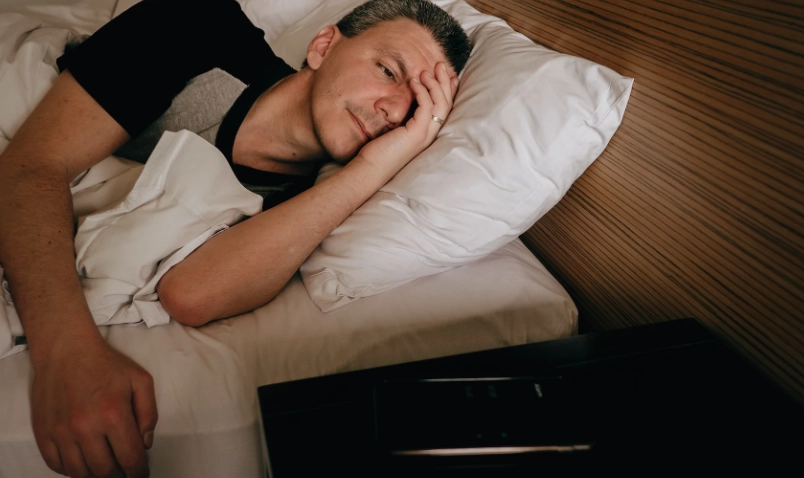
Let's cut to the chase. Most sleep experts will give you a pretty clear answer: no, you shouldn't just lie there. In fact, staying in bed while wide awake is one of the worst things you can do for your long-term sleep health. It sounds counterintuitive, right? Bed is for sleep, so if you can't sleep, you should stay there until you can. That's the logic. But that logic is what gets so many of us stuck in a cycle of sleepless nights.
The core problem isn't the lack of sleep in that moment. It's what your brain learns to associate your bed with. If you spend hours each night in bed feeling anxious, frustrated, and awake, your brain starts to connect your bed with those feelings. Your bed stops being a trigger for sleep and starts being a trigger for anxiety. That's a recipe for chronic insomnia.
Why Lying Awake in Bed Backfires
So, why is the answer to "should I just lay in bed if I can't sleep?" a resounding no? It boils down to two main concepts: sleep drive and conditioned arousal.
First, sleep drive. Think of it like hunger for sleep. The longer you're awake, the stronger this drive gets. If you lie in bed not sleeping, you're not effectively building that drive. You're in a weird limbo—not fully awake and active, but not asleep either. Getting up and doing something quiet and calm (more on that later) actually helps increase that natural sleep pressure.
Second, and this is the big one, conditioned arousal. This is fancy psychology talk for your brain learning bad habits. Your bed should have one primary purpose: sleep (and intimacy). That's it. When you add "the place where I worry about work," "the place where I scroll through my phone," or "the place where I stare at the clock in despair," you pollute that association.
It creates a vicious cycle. The more nights you spend lying awake frustrated, the stronger the link between your bed and wakefulness becomes. Soon, just getting into bed can trigger a feeling of anxiety. You start dreading bedtime because you anticipate the struggle. It's a horrible feeling, and it all stems from trying to answer "should I just lay in bed if I can't sleep?" with a yes.
What Your Bed Should Be For (And What It Shouldn't)
Let's be practical. To break the cycle, you need clear rules. This isn't about being rigid, it's about giving your brain clear signals. I found this table helpful when I was trying to reset my own sleep habits. It makes the do's and don'ts really clear.
| Good Bed Activities (Strong Sleep Associations) | Bad Bed Activities (Weakens Sleep Associations) |
|---|---|
| Sleeping (obviously!) | Lying awake for more than 20-30 minutes |
| Intimacy with a partner | Watching TV or movies |
| Reading a few pages of a *physical*, relaxing book | Using a phone, tablet, or laptop |
| Gentle stretching or breathing exercises *before* settling down to sleep | Working, answering emails, or paying bills |
| Having stressful conversations or arguments | |
| Eating full meals |
See the pattern? The "good" activities are passive, calming, and directly linked to winding down. The "bad" ones are stimulating, engaging, or stress-inducing. Lying awake for a prolonged time falls squarely into the bad column because it's almost always paired with frustration.
So, What Should You Do Instead? Enter the 15-Minute Rule.
This is the gold-standard advice from sleep specialists, and for good reason. It works. It's simple, but not always easy. The next time you find yourself asking, "should I just lay in bed if I can't sleep?", this is your action plan.
Okay, you're out of bed. Now what? This is where people mess up. They get up and go watch an exciting movie or start cleaning the kitchen. That's not the point.
The goal is to do something boring and calming under dim light. You want to distract your mind from the "I can't sleep" anxiety without fully waking yourself up. The idea is to let the natural sleep drive build up again and to break the association of bed with frustration.
Your Toolkit for Those Middle-of-the-Night Moments
Here’s a list of things that actually help. Pick one or two that resonate with you. Keep the lights low—use a small lamp, not the overheads. Avoid any screens like they're toxic during this time (because for your sleep, they are).
- Read a boring book. I mean it. Pick up a physical book you find mildly interesting but not gripping. A history textbook? A manual for an appliance you don't own? Perfect. The goal is to make your eyes tired, not to get to the next cliffhanger.
- Listen to a calm podcast or audiobook. Use a sleep timer. Choose something with a monotone voice. There are podcasts designed specifically for sleep with dull stories or descriptive narratives. The National Sleep Foundation often discusses the benefits of audio-based relaxation.
- Do some very gentle stretching or progressive muscle relaxation. Focus on your breath. Don't make it a workout. Just slowly tense and release each muscle group from your toes to your head.
- Sit and sip a small glass of warm water or caffeine-free herbal tea. Don't make a full meal. The act of sitting quietly can be enough.
- Try a mindfulness exercise. Instead of fighting your thoughts, just observe them. "There's the thought about my meeting tomorrow. Okay. Now it's passing." The American Psychological Association has resources on how mindfulness can reduce sleep-interfering anxiety.
The key is to only return to bed when you feel sleepy. Not tired—sleepy. There's a difference. Tired is a bodily fatigue. Sleepy is that heavy-eyed, nodding-off feeling. When you feel that, go back to bed. If sleep doesn't come again within 15-20 minutes, repeat the process. It might feel silly the first few nights, but you're retraining your brain.
Fixing the Bigger Picture: Sleep Hygiene Isn't Just a Buzzword
Answering "should I just lay in bed if I can't sleep?" is really about crisis management in the moment. But to stop the problem from happening night after night, you need to look at your overall sleep habits. This is called sleep hygiene, and it's the foundation of good sleep.
Think of the 15-minute rule as putting out a fire. Sleep hygiene is preventing the fire from starting in the first place. If you're constantly asking yourself should I just lay in bed if I can't sleep, your daytime and evening habits probably need an overhaul.
Your Pre-Bed Routine Matters More Than You Think
What you do in the hour before bed sets the stage. Your brain needs a signal that it's time to shift from "go" mode to "slow" mode.
Here’s where people get tripped up. They watch an intense thriller until 10:59, turn off the TV, and expect to be asleep by 11:00. It doesn't work like that. Your brain is still processing the adrenaline from the movie. The blue light from the screen has just told your brain it's daytime, suppressing melatonin (the sleep hormone).
Instead, try this:
- Set a screen curfew 60-90 minutes before bed. Use night mode on devices earlier in the evening, but aim for full disconnection.
- Create a literal ritual. Wash your face, brush your teeth, maybe jot down worries for the next day in a notebook to get them out of your head.
- Make your bedroom a cave: cool, dark, and quiet. Consider blackout curtains and a white noise machine if needed. The Mayo Clinic consistently emphasizes the importance of a sleep-conducive environment.
Daytime Habits That Steal Nighttime Sleep
It's not just about the night. Your entire day impacts your sleep.
Napping is a big one. A short 20-minute power nap before 3 PM can be refreshing. A two-hour nap at 5 PM? That's going to rob your sleep drive. If you have insomnia, it's often best to avoid naps altogether until your nighttime sleep stabilizes.
Caffeine and alcohol are sneaky. Caffeine has a half-life of 5-6 hours. That coffee at 4 PM? Half of it is still in your system at 9 PM. Alcohol might make you fall asleep faster, but it absolutely wrecks the quality of your sleep, causing frequent awakenings in the second half of the night. You might be "asleep," but you're not getting restorative sleep.
Exercise is fantastic for sleep—but timing matters. Regular exercise deepens sleep, but doing a high-intensity workout right before bed can be too stimulating for some people. Morning or afternoon exercise is ideal.
Common Questions (The Stuff You're Probably Googling at 3 AM)
"What if I get up and then I'm even more awake?"
"Isn't it better to at least be resting my body?"
"What about just lying there and practicing meditation in bed?"
"How long will it take for this to work?"
When It's More Than Just a Bad Night
All this advice is for what's called psychophysiological insomnia—basically, sleep problems caused by habits and anxiety around sleep. But sometimes, the question "should I just lay in bed if I can't sleep?" points to a deeper issue.
If you've tried solid sleep hygiene and the 15-minute rule consistently for a month with no improvement, it's time to talk to a doctor. There are medical conditions that can severely disrupt sleep, like sleep apnea (where you stop breathing), restless legs syndrome, or chronic pain. Depression and anxiety disorders are also huge sleep disruptors. A healthcare professional can help you rule out or address these underlying causes.
Don't suffer in silence thinking it's just a willpower thing. Sometimes, we need help.
Wrapping It Up: Your Action Plan
So, let's answer the question one last time, definitively. Should you just lay in bed if you can't sleep?
No.
Staying in bed while frustrated teaches your brain that the bed is a place for anxiety, not sleep. It's the fast track to making temporary sleeplessness into a chronic problem.
Your new plan is this:
- Set a time limit. Give yourself 15-20 minutes to fall asleep (without clock-staring).
- Get up. If sleep hasn't come, get out of bed calmly. Don't see it as a failure.
- Do something boring and calm in dim light. Read a dull book, listen to a sleep story, sip some water.
- Return only when sleepy. Wait for that heavy-eyed feeling, then go back to bed.
- Repeat if necessary. It's okay.
- Support this with good sleep hygiene all day and night. Protect your wind-down time, manage light exposure, and watch your caffeine.
It's not a magic trick. It's behavioral science. You're not trying to force sleep—you're trying to remove the barriers to sleep. You're creating the conditions where sleep can happen naturally, which it wants to do.
The next time you're in that dark, quiet room and the old question pops up—should I just lay in bed if I can't sleep?—you'll know the answer. You'll have a better option. You'll have a plan. And that alone can take a huge weight off your shoulders, making sleep that much more likely to find you.
Reader Comments