You’re lying awake at 3 AM, your mind racing. A terrifying thought creeps in: how long can this go on? How long can a person actually survive with insomnia? The short, unsettling answer is that while most people won’t die from a few sleepless nights, prolonged, total sleep deprivation is fatal. The human body has a breaking point. But the journey to that point is a gradual, horrifying descent that reveals why sleep isn’t a luxury—it’s a biological necessity for survival. Let’s cut through the myths and look at the hard science, from record-breaking experiments to a rare, terrifying disease that shows us the absolute limit.
What’s Inside This Guide
The Short-Term Reality: What Happens in the First 72 Hours
Forget about surviving months or years without sleep. The body’s systems start misfiring within 24 hours. I’ve worked with patients who’ve gone just two nights without proper sleep, and their experience lines up perfectly with the lab studies.
Think of it like this: your brain is running a critical overnight maintenance program. When you skip it, errors accumulate.
| Time Without Sleep | Primary Symptoms | Real-World Impact |
|---|---|---|
| 24 Hours | Irritability, impaired coordination, foggy thinking, increased stress hormones. | Feels like a severe hangover. Reaction time is similar to being legally drunk (0.10% BAC). Making complex decisions is a struggle. |
| 36-48 Hours | Microsleeps (uncontrollable 1-30 second blackouts), severe cognitive decline, immune suppression. | Extremely dangerous to drive. Your body starts forcing sleep in bursts you can’t control. You’re much more likely to catch a cold. |
| 72 Hours | Major cognitive deficits, visual distortions, paranoia, slurred speech. | Hallucinations may begin. Simple tasks feel impossible. Emotional control is gone. This is where most people physically cannot continue. |
The infamous Randy Gardner case in 1965 is the best-documented example. As a 17-year-old for a school project, he stayed awake for 264 hours (11 days). By day 4, he was hallucinating, believing a street sign was a person. By day 10, his cognitive and sensory abilities were utterly shattered. He recovered with sleep, but it’s a stark warning—the mind unravels long before the body gives out.
The Breaking Point: What Happens Beyond 72 Hours
Once you push past three days, you’re in dangerous territory. This isn’t just about feeling tired; it’s about systemic failure.
Your metabolism goes haywire. Your body struggles to process glucose, mimicking pre-diabetic states. Inflammation skyrockets, which research from the National Institutes of Health links to long-term risks for heart disease and cancer.
The immune system essentially goes on strike. One study found that just one night of poor sleep reduces the activity of your natural killer cells—the ones that fight tumors and viruses—by over 70%.
But here’s a non-consensus point many miss: the cardiovascular strain is immediate and severe. It’s not just a long-term risk. During prolonged wakefulness, blood pressure doesn’t dip as it should, heart rate variability plummets, and the sympathetic nervous system (the "fight or flight" system) is stuck in the "on" position. This constant state of stress can trigger arrhythmias or cardiovascular events in vulnerable individuals much sooner than people assume.
Psychosis becomes a real clinical concern. The brain, desperate for the restorative REM and deep sleep stages, starts creating its own reality. This isn’t just "seeing things"; it’s a total breakdown in perceptual processing.
The Absolute Limit: Fatal Familial Insomnia (FFI)
This is where the theoretical question "how long can you survive?" gets a terrifying, concrete answer. Fatal Familial Insomnia (FFI) is an exceedingly rare, genetic prion disease. It provides a tragic natural experiment in total sleep deprivation.
In FFI, a genetic mutation causes proteins in the brain to misfold, specifically targeting the thalamus—the brain’s sleep regulation center. The thalamus turns to sponge-like tissue, and the ability to sleep is permanently destroyed.
The progression is brutally predictable:
- Stage 1 (4 months): Increasing insomnia, panic attacks, phobias. Sleep becomes fragmented and non-restorative.
- Stage 2 (5 months): Hallucinations, severe weight loss, autonomic instability (sweating, high blood pressure).
- Stage 3 (3 months): Rapid dementia, complete inability to sleep. Patients are exhausted but cannot achieve sleep.
- Stage 4 (6 months): Unresponsiveness, coma, and death.
The average survival time from onset is 18 months. This disease proves conclusively that sustained, total sleep loss is incompatible with human life. The body and mind deteriorate in a specific sequence, showing us which systems fail first without sleep’s repair cycle.
Why Your Body Shuts Down Without Sleep
Sleep isn’t passive. It’s a series of active, vital processes. When you don’t sleep, you’re not just "missing rest." You’re actively depriving every system of its essential maintenance window.
The Brain’s Nightly Detox
During deep sleep, your brain’s glymphatic system kicks into high gear, flushing out metabolic waste like beta-amyloid (the protein linked to Alzheimer’s). No sleep, no cleanup. Toxins build up, accelerating neural damage.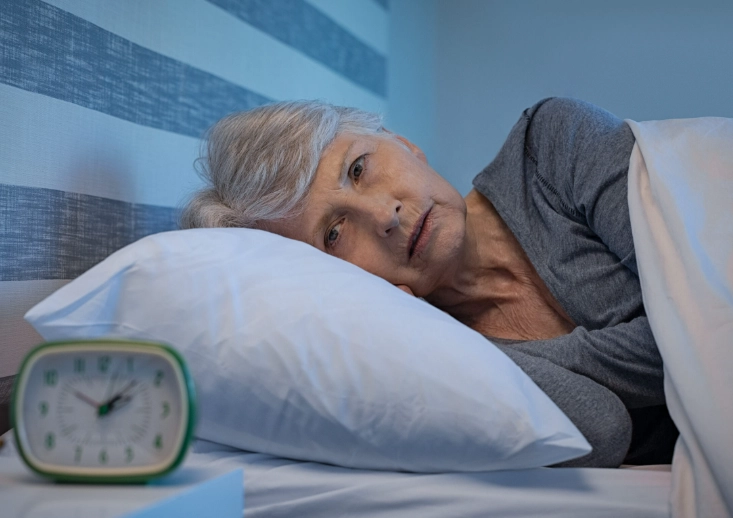
Hormonal Chaos
Sleep regulates leptin and ghrelin, the hunger hormones. One bad night and ghrelin ("eat!") spikes while leptin ("stop!") drops. That’s why you crave junk food when tired. Cortisol, the stress hormone, also stays elevated, keeping you in a state of chronic stress.
Cellular Repair and Memory Consolidation
Growth hormone, crucial for tissue repair, is primarily released during deep sleep. Meanwhile, the brain replays the day’s events during REM sleep, transferring memories from short-term to long-term storage. Skip sleep, and you impair both physical healing and learning.
I see a common, subtle mistake: people think they can "power through" and catch up later. The damage from sleep deprivation, particularly the cognitive and metabolic effects, isn’t always fully reversible with a couple of long nights. Some studies suggest chronic sleep loss may lead to lasting changes in brain structure.
What You Can Actually Do About Chronic Sleeplessness
If you’re struggling with insomnia, the goal isn’t to test your survival limit. It’s to reclaim sleep. Throwing generic advice like "just relax" at the problem is useless. You need a tactical approach.
First, rule out medical issues. See a doctor. Sleep apnea, thyroid problems, and chronic pain are common physical culprits. Treating these is non-negotiable.
Second, get serious about Cognitive Behavioral Therapy for Insomnia (CBT-I). This is the gold-standard treatment, recommended by the American Academy of Sleep Medicine. It’s not just talk therapy; it’s a structured program that retrains your sleep habits and thoughts. It’s more effective long-term than sleep medication. It involves:
- Sleep Restriction: Temporarily limiting time in bed to increase sleep drive.
- Stimulus Control: Re-associating the bed with sleep only (no phones, no TV).
- Cognitive Restructuring: Challenging the anxiety-inducing thoughts about sleep (e.g., "I’ll never sleep again").
Third, master your environment and routine. Keep it cool, dark, and quiet. Get bright light first thing in the morning. Stop caffeine by noon. Have a wind-down routine that doesn’t involve screens. This isn’t fluffy advice—it’s setting the biological stage for sleep.
And a personal, hard-won tip: If you’ve been awake for more than 20 minutes in bed, get up. Go to another room and do something boring in dim light until you feel sleepy. Lying there frustrated teaches your brain that the bed is a place for anxiety, not sleep. Breaking that association is powerful.
Reader Comments