Morning Insights
- What Does "Waking Up Naturally" Even Mean?
- The Great Debate: Pros and Cons of Catching More Z's
- Your Personal Decision Matrix: How to Choose in the Moment
- What Science Says About Sleep Fragmentation
- Long-Term Strategy: Train Your Body to Wake Up Right
- Answering Your Burning Questions
- Listening to Your Body vs. Overthinking It
You know the feeling. One minute you're dreaming, the next you're just... awake. No alarm, no noise, just your eyes opening on their own. It's 5:47 AM, or maybe 6:23. The room is still quiet. Your first thought, almost always, is that wonderful, tempting question: should you go back to sleep after waking up naturally?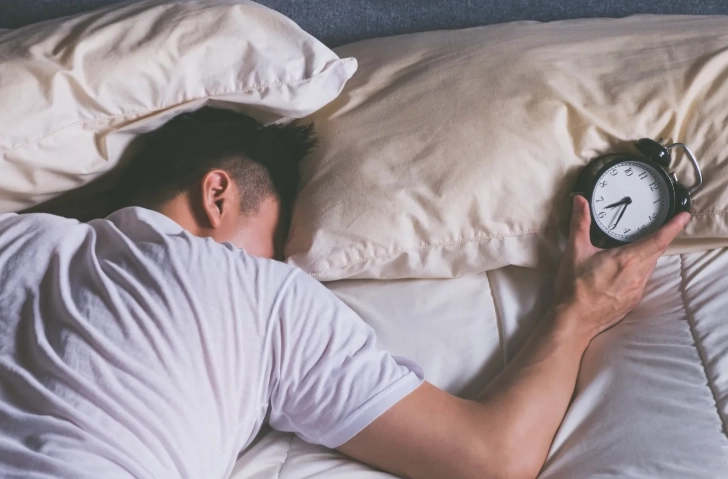
I've been there more times than I can count. Lying there, debating with myself. "Just another 20 minutes," one part of my brain pleads. "You'll feel so much better." The other part, the supposedly responsible one, argues back: "You're awake! Get up! You'll mess up your whole day if you sleep more." It's a morning mental tug-of-war that feels uniquely frustrating.
It turns out, the answer to should you go back to sleep after waking up naturally isn't a simple yes or no. It's a surprisingly complex little puzzle that sits at the intersection of your biology, your schedule, and how you actually feel in that moment. Getting it right can mean the difference between a vibrant, productive morning and one where you're dragging yourself through mud until noon.
Let's unpack this together, without the jargon. We'll look at what your body is trying to tell you, when hitting snooze on yourself is a good idea, and when it's a trap. Because honestly, who hasn't wondered about this?
What Does "Waking Up Naturally" Even Mean?
First things first. We need to be clear about what we're talking about. "Waking up naturally" means your body decided it was done sleeping for that cycle, without any external interruption. No screeching alarm, no garbage truck outside, no dog barking. It's you, coming to the surface of consciousness on your own internal schedule.
This is fundamentally different from being jolted awake. When an alarm cuts you off, you're often ripped out of deep sleep (slow-wave sleep) or REM sleep (the dream stage). That's why you feel so awful—it's like being abruptly yanked out of a movie during the best part. Your brain needs a few minutes to wrap things up, but it doesn't get the chance.
Waking naturally, in theory, means you've reached the end of a sleep cycle—or at least a lighter stage of sleep where transition to wakefulness is smoother. The National Sleep Foundation explains that sleep happens in cycles of about 90 minutes, moving from light sleep to deep sleep to REM sleep. Waking at the end of a cycle, especially from light sleep, is ideal.
But here's the catch. Just because you woke up without an alarm doesn't guarantee you finished a full cycle. You might have woken up because you were too hot, needed the bathroom, or a tiny noise filtered in. So the first thing to do when you find yourself awake is a quick body scan. Do you feel refreshed? Or do you feel like you were interrupted mid-process?
The Great Debate: Pros and Cons of Catching More Z's
So, you're awake. The big decision looms. Let's break down the potential benefits and the very real risks of deciding to go back to sleep. I find it helpful to see them side-by-side.
| Potential Benefits of Going Back to Sleep | Potential Risks of Going Back to Sleep |
|---|---|
| More Sleep Debt Repayment: If you're genuinely short on sleep, extra time in bed can help pay back that deficit. | Sleep Inertia: Falling back asleep and waking later (especially to an alarm) can plunge you into deeper sleep stages, leading to severe grogginess. |
| Completing a Cycle: If you woke near the end of a cycle, a short additional sleep might let you finish it properly. | Disrupting Your Rhythm: It can confuse your internal clock (circadian rhythm), making it harder to wake up naturally at the right time tomorrow. |
| Mental Comfort: The simple act of allowing yourself more rest can reduce morning anxiety and stress. | Poor Quality Sleep: That extra sleep is often light, fragmented, and less restorative. You're just lying there half-awake. |
| Dream Time: You might get back into REM sleep, which is crucial for memory and mood. | Wasting Your Morning: It eats into time you could use for a calm, productive start to your day. |
Looking at that table, the risks seem pretty heavy, don't they? Especially that first one—sleep inertia. It's the technical term for that awful, groggy, brain-fog feeling. Research shows it's worst when you wake from deep sleep. So if you doze off again and enter a new deep sleep cycle, only to be interrupted 30 minutes later, you're setting yourself up for a miserable morning.
The Core Dilemma
The central question of should you go back to sleep after waking up naturally boils down to this: Are you giving your body more of what it needs, or are you tricking it into a confusing and counterproductive nap that will leave you worse off?
Your Personal Decision Matrix: How to Choose in the Moment
Okay, theory is great. But what do you actually do at 5:47 AM? Here's a practical, step-by-step guide I've developed (and tested on myself). Think of it as a flowchart in your head.
Step 1: The Immediate Body Check (First 60 Seconds)
Don't move. Just assess.
- Energy Level: On a scale of 1-10, where 1 is "completely exhausted" and 10 is "springing out of bed," where are you? If you're at a 6 or above, getting up is usually the better call.
- Mental Clarity: Is your mind already racing with thoughts about the day? Or is it a peaceful, quiet blank? A busy mind might mean you're done sleeping.
- Physical Sensation: Do you feel any aches or stiffness that urge you to move and stretch? That's your body asking for activity, not more stillness.
Step 2: The Context Check
Now bring in the facts of your life.
- Time: How much longer could you sleep? If it's less than 90 minutes (a full cycle), the risk of waking mid-cycle is high. If it's 20 minutes or less, it's almost certainly a bad idea—you'll just be falling asleep as you need to get up.
- Last Night's Sleep: Did you get your full 7-9 hours? Or were you up late finishing a project? A significant sleep debt argues for more rest.
- Morning Plans: Do you have an important meeting early? Or is it a slow Saturday? Pressurized mornings favor getting up to prepare calmly.
Step 3: The "Test" Option (A Compromise)
If you're truly on the fence, try this. Tell yourself you can rest, but not sleep. Keep your eyes closed, breathe deeply, but consciously avoid "trying" to fall asleep. Focus on the feeling of rest itself. Often, 10-15 minutes of this deliberate, wakeful rest can be more refreshing than fitful extra sleep, and you avoid sleep inertia entirely. It's a way to honor the desire for more rest without the downsides.
Quick Checklist: When It's Probably Okay to Go Back to Sleep
- You feel a deep, heavy tiredness (not just laziness).
- You have at least 60, preferably 90, minutes before you MUST get up.
- You got significantly less sleep than usual last night.
- You have no pressing early-morning commitments.
Quick Checklist: When You Should Probably Get Up
- You feel reasonably alert and your mind is active.
- You have less than 30 minutes before your day officially starts.
- You got a full night's sleep.
- You know you tend to feel terrible after "second sleep."
This isn't an exact science. Some days you'll get it wrong. I still do. But having a framework beats lying there in anxious indecision.
What Science Says About Sleep Fragmentation
This is where it gets interesting. The medical term for our dilemma is "sleep fragmentation"—when sleep is broken up into pieces. For people with conditions like sleep apnea, this happens involuntarily all night long, and it's devastating to sleep quality.
Voluntarily fragmenting your sleep by going back to sleep after a natural awakening might have similar, if milder, effects. A study cited by the American Heart Association links poor sleep quality (which includes fragmentation) to various health concerns. The goal is consolidated, uninterrupted sleep.
So, from a pure sleep science perspective, the ideal scenario is: you fall asleep, cycle smoothly through all stages multiple times, and wake naturally at the end of a cycle, feeling done. Adding an extra, short segment after being awake for a bit disrupts that clean, consolidated pattern.
But life isn't ideal. Sometimes you need the extra rest. The key is to be intentional, not habitual. Making a conscious choice once in a while when you're exhausted is different from making "should I go back to sleep after waking up naturally" a daily, 20-minute anxiety spiral.
Long-Term Strategy: Train Your Body to Wake Up Right
The best solution to the morning dilemma isn't a better decision in bed; it's creating mornings where the decision is easy. If you consistently wake up naturally feeling refreshed, the question almost answers itself.
How do you get there?
- Consistency is King: Go to bed and wake up at roughly the same time every day, even weekends. This trains your circadian rhythm like clockwork. Your body will start to expect sleep and wakefulness at set times, making natural awakenings more likely to be well-timed.
- Light is Your Lever: Get bright light (sunlight is best) within 30 minutes of waking. This signals to your brain that the day has started and suppresses melatonin. At night, avoid bright screens before bed.
- Wind Down, Don't Crash: Have a pre-sleep routine. Read a book (a real one), listen to calm music, do some gentle stretching. It tells your brain it's time to transition.
- Evaluate Your Sleep Environment: Is it dark, cool, and quiet? A too-warm room or street light creeping in can cause those premature natural awakenings that tempt you back to sleep.
I started implementing a 10 p.m. to 6 a.m. schedule, with no phone after 9:30. It felt rigid at first, I won't lie. But after a few weeks, something shifted. I began waking up at 5:50, 5:55, feeling genuinely ready. The temptation to dive back under the covers faded because my body had gotten what it needed.
Answering Your Burning Questions
Let's tackle some specific scenarios people always ask about. I've scoured forums, talked to friends, and these come up again and again.
Listening to Your Body vs. Overthinking It
Here's the paradox. We've spent all this time analyzing, but the healthiest relationship with sleep often comes from less analysis, not more. There's a difference between listening to your body's genuine signal for more rest and your mind's craving for escape from the day.
The body's signal feels physical: a deep, heavy fatigue in the limbs, eyelids that genuinely struggle to stay open. The mind's escape feels more like a narrative: "Ugh, I don't want to deal with that email," "Just five more minutes of not being awake."
When you wake naturally, try to distinguish between the two. Is it your body asking for more, or your mind dreading the transition to consciousness? The former might warrant more sleep. The latter is better addressed by getting up and creating a morning you don't want to escape from—a warm drink, a good podcast, a few minutes of peace before the rush.
Ultimately, the goal is to move from asking should you go back to sleep after waking up naturally as a daily crisis, to it being an occasional, minor check-in. You'll know what's right most of the time because you'll have tuned into your own rhythms.
It's a practice. Some mornings you'll nail it. Other mornings, you'll hit snooze on your own consciousness and regret it. That's okay. The point is to be a little more informed, a little more intentional, and a lot kinder to yourself in those quiet, early moments when the whole day is still ahead.
Reader Comments