You're exhausted. The day is done. But the moment your head hits the pillow, your brain decides it's time for a full-scale review of every awkward conversation you've ever had, plus a preview of tomorrow's potential disasters. Sound familiar? Nighttime anxiety is incredibly common. The quiet and lack of distraction create a perfect storm for worries to take over. But reaching for a sleeping pill isn't your only option, and often not the best one long-term. You can learn how to calm anxiety at night naturally, and it starts with understanding why it happens and having a simple, actionable plan.
What You'll Find in This Guide
- Why Anxiety Peaks When You're Trying to Sleep
- Your Action Plan for a Calmer Night
- How to Create a Sleep Sanctuary?
- Calming Your Body: More Than Just Deep Breaths
- Quieting the Mental Chatter
- Building a Wind-Down Ritual That Sticks
- Long-Term Habits for Less Nighttime Anxiety
- Your Nighttime Anxiety Questions Answered
Why Anxiety Peaks When You're Trying to Sleep
It's not just you being "bad at sleeping." There are real, physiological reasons anxiety loves the night shift. During the day, you're distracted—work, chores, social media. At night, those distractions fall away. In the silence, your internal monologue gets a megaphone. Your body's stress response, which was helpful for facing daytime challenges, doesn't have an "off" switch you can just flip. Cortisol, the stress hormone, can have a natural secondary rise in the evening for some people, especially if their circadian rhythm is out of whack from poor sleep habits or chronic stress. Furthermore, lying still removes the physical outlet for nervous energy. That energy has to go somewhere, and often it turns into mental loops and physical restlessness.
I used to think I just needed to "try harder" to relax. That was my first mistake. Trying harder to sleep or stop thinking is like trying not to think of a pink elephant. It immediately backfires.
Your Action Plan for a Calmer Night
Forget complicated systems. When you're lying there with a racing heart, you need clear, simple steps. Think of this as a three-pronged approach: fix your environment, calm your body, then address your mind. You can't think your way out of a physiological stress state. You have to hack your body's nervous system first.
The Core Principle: You must signal safety to your nervous system. Anxiety is your body's alarm system saying "Danger!" Even if the danger is just an unpaid bill or a work email, your body reacts as if it's a physical threat. Natural calming techniques are all about sending the counter-signal: "You are safe. It is time to rest."
How to Create a Sleep Sanctuary?
Your bedroom environment is your first line of defense. It's hard to feel calm in a space that subconsciously screams "chaos" or "alertness."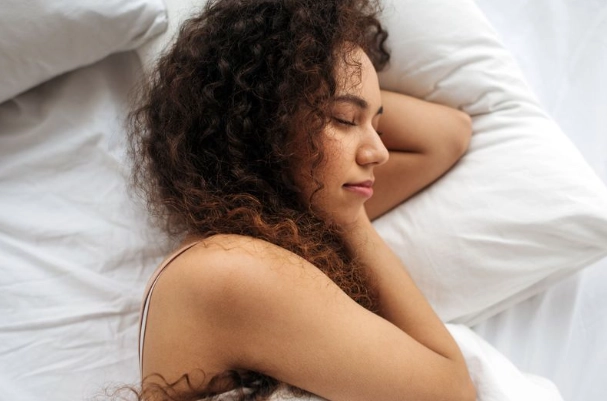
Light is Your Secret Weapon (or Enemy)
Blue light from screens is the usual villain, and for good reason—it suppresses melatonin. But it's not just screens. Overhead bright lights in the evening do the same thing. Start dimming lights 90 minutes before bed. Use lamps with warm bulbs. Consider blackout curtains. Even a tiny bit of streetlight seepage can subtly disrupt sleep quality, keeping your brain in a lighter sleep stage. I invested in good blackout shades and a sleep mask, and the difference in how deeply I slept was noticeable within days.
Sound and Temperature
Complete silence can make internal noises louder. A consistent, gentle sound can mask disruptive noises. A fan, a white noise machine, or a simple app playing brown noise (deeper than white noise) works wonders. As for temperature, the science is clear: most people sleep best in a cool room, around 65°F (18°C). A drop in core temperature is a key signal to your body that it's time for sleep. A hot room can lead to restlessness and more frequent awakenings.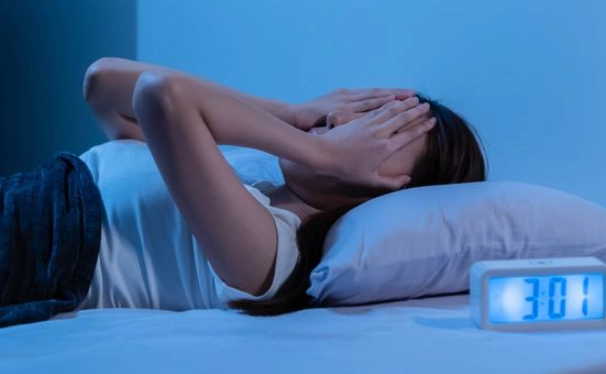
Calming Your Body: More Than Just Deep Breaths
Everyone says "take deep breaths," but most people do it wrong. Short, shallow chest breaths can actually increase anxiety. You need to engage your diaphragm.
The 4-7-8 Breathing Technique (Dr. Andrew Weil): This is my go-to. It's simple and forces the right pattern. Exhale completely through your mouth. Then, inhale quietly through your nose for a count of 4. Hold your breath for a count of 7. Exhale completely through your mouth, making a whoosh sound, for a count of 8. Repeat this cycle 4 times. It acts as a natural tranquilizer for your nervous system.
Progressive Muscle Relaxation (PMR): Anxiety often lives as tension in your body that you don't even feel anymore. PMR brings awareness to it. Lying in bed, start with your toes. Clench them tightly for 5 seconds, then release completely for 30 seconds, noticing the feeling of relaxation. Move up to your feet, calves, thighs, all the way to your face and scalp. By the time you finish, your body feels heavy and relaxed, making sleep a more natural next step.
Quieting the Mental Chatter
Now that your body is quieter, you can address the thoughts. The goal isn't to empty your mind—that's nearly impossible. The goal is to manage the traffic.
- The "Worry Dump": Keep a notebook by your bed. If thoughts are racing, sit up, turn on a dim light, and write everything down. Don't edit, don't judge, just dump. The act of externalizing the thoughts gets them out of the looping cycle in your head. Write a simple to-do list for tomorrow if tasks are bothering you. Close the book and tell yourself, "It's on paper now. I can let it go until tomorrow."
- Mindful Observation: Instead of fighting thoughts, watch them like clouds passing in the sky. Acknowledge, "There's the thought about my presentation," and let it drift by. Gently bring your focus back to the physical sensation of your breath or the weight of your body on the mattress. This practice, even for a few minutes, builds the mental muscle of non-attachment to anxious thoughts.
- The 15-Minute Rule: If you've been in bed for 15-20 minutes and feel more awake and anxious, get up. Go to another dimly lit room and do something boring—read a physical book (nothing stimulating), fold laundry, listen to a dull podcast. Only return to bed when you feel sleepy. This breaks the association between bed and anxious wakefulness.
Building a Wind-Down Ritual That Sticks
Consistency is key. Your brain loves predictability. A ritual signals the transition from "doing" mode to "being" and "resting" mode.
Start about 60 minutes before your target bedtime. Your ritual might include:
Dimming the lights.
Driving a cup of caffeine-free herbal tea like chamomile or lavender (the ritual of making it is part of the signal).
Doing 10 minutes of gentle stretching or yoga (no vigorous exercise).
Washing your face and brushing your teeth mindfully.
Reading a few pages of a fiction book (non-fiction can be too stimulating).
Doing your 4-7-8 breathing or a short body scan in bed.
The exact activities matter less than doing them consistently and with intention. It's your personal signal that the day is over.
Long-Term Habits for Less Nighttime Anxiety
While the above tactics help in the moment, these habits build resilience over time.
Morning Sunlight: Get bright light exposure within 30-60 minutes of waking. This resets your circadian clock, helping to regulate cortisol and melatonin release later. A 10-15 minute walk outside is perfect.
Manage Daytime Stress: Nighttime anxiety is often the overflow of unprocessed daytime stress. Incorporate short stress resets during the day—a 2-minute breathing break, a walk at lunch, setting boundaries on work hours. The National Institute of Mental Health notes that managing daily stress is foundational for preventing anxiety disorders.
Watch Your Diet: Heavy meals, caffeine, and alcohol too close to bedtime can wreak havoc. Caffeine has a half-life of 5-6 hours, so that 3 PM coffee might still be affecting you at 9 PM. Alcohol might make you fall asleep faster, but it fragments the second half of your sleep, leading to early morning awakenings and increased anxiety.
When to Seek Help: If your nighttime anxiety is severe, persistent, and significantly impacts your quality of life, talk to a doctor or therapist. Cognitive Behavioral Therapy for Insomnia (CBT-I) is a highly effective, evidence-based treatment that addresses the thoughts and behaviors perpetuating sleep problems and anxiety.
Your Nighttime Anxiety Questions Answered
Is nighttime anxiety a sign of an anxiety disorder?
Not necessarily. Occasional nighttime worry is normal. It becomes a potential sign of a disorder like Generalized Anxiety Disorder (GAD) if it's excessive, difficult to control, and happens more days than not for at least six months, and is accompanied by other symptoms like daytime restlessness, fatigue, or irritability. Persistent sleep-onset anxiety is a common feature, but one symptom alone isn't a diagnosis.
What's the difference between anxiety keeping me up and just regular insomnia?
The line is blurry, but the driver is different. With primary insomnia, the core issue is often a hyper-arousal of the nervous system and a learned association between bed and wakefulness. The anxiety is about not sleeping ("Oh no, I'm still awake, I'll be a wreck tomorrow!"). With anxiety-driven sleeplessness, the worry is about life issues (work, health, relationships) that happen to occur at night. The treatment for both can overlap significantly (like CBT-I), but understanding the root can help you target your approach.
Are natural supplements like magnesium or valerian root effective for sleep anxiety?
Some people find them helpful, but the evidence is mixed and they are not a magic bullet. Magnesium glycinate may help with muscle relaxation. Valerian root has mild sedative effects for some. The big mistake is relying on them without fixing your sleep hygiene and stress habits first. They should be a potential add-on, not the foundation. Always consult your doctor before starting any supplement, as they can interact with medications.
I try relaxation techniques, but my mind just fights them and jumps back to worrying. What am I doing wrong?
You're likely trying to use relaxation as a form of thought suppression—a weapon to beat the anxiety. That creates internal conflict. Instead, frame it as an experiment. Don't do breathing to make anxiety go away. Do it simply to observe what happens in your body. The goal shifts from outcome (no anxiety) to process (noticing the breath). This subtle shift in intention removes the struggle and often allows relaxation to occur naturally as a side effect.
How long will it take for these natural methods to work?
Some techniques, like 4-7-8 breathing or PMR, can have an immediate calming effect within minutes. Changing your environment (light, noise) can improve sleep within a night or two. However, retraining your brain's habitual response to bedtime and building new rituals is a process. Give any new habit at least 2-3 weeks of consistent practice before judging its effectiveness. The brain needs time to build new neural pathways and dissociate the bed from anxiety.
Reader Comments