Quick Navigation
- The Direct Kill Switch: When Your Brain Forgets How to Sleep
- The Indirect Killers: How Sleep Deprivation Paves the Road to Disaster
- The Stages of Sleep Deprivation: From Grumpy to Critical
- Your Practical Defense: How to Actually Fix Your Sleep (It’s Not Just “Go to Bed”)
- Common Questions About Sleep Deprivation and Death
- Final Thoughts: It’s a Choice, Not an Inevitability
You’ve probably been there. It’s 2 AM, you’re staring at a screen, knowing you have to be up in four hours. Your brain is foggy, your eyes burn, but you tell yourself, “I’ll be fine.” We’ve all worn our sleep deprivation like a weird badge of honor. “I only got four hours last night,” we say, almost boasting. But in the back of your mind, a quiet, persistent question lingers: can sleep deprivation kill you? Is this just making me tired, or is it genuinely dangerous?
Let’s be real. It’s not a simple yes or no answer. You’re not going to drop dead from one all-nighter (thankfully). But to dismiss chronic sleep loss as just being a bit groggy is like calling a hurricane a bit of wind. The science that’s come out in the last decade is frankly terrifying, and it paints a clear picture: while sleep deprivation might not pull the trigger directly, it loads the gun for a whole host of killers.
I remember pulling consecutive all-nighters in college. I’d stumble to exams fueled by caffeine and sheer panic, thinking I was being productive. My hands would shake, my heart would race oddly, and my mood was… volatile, to put it nicely. Looking back, I wasn’t just tired. I was putting my body through a low-grade crisis. That’s the personal lens I’m looking through today. We’re going to move past the simplistic warnings and dig into the gritty, biological mechanics of how a lack of sleep dismantles you from the inside out.
Here’s the bottom line upfront: Direct, total sleep deprivation leading to immediate death is incredibly rare in humans (though fatal familial insomnia, a prion disease, shows it’s biologically possible). The real, widespread danger is chronic partial sleep deprivation—consistently getting less than 6-7 hours. This is the silent, slow-burn killer that dramatically amplifies your risk of heart disease, stroke, diabetes, fatal accidents, and even suicidal ideation. So, can sleep deprivation kill you? Not usually with a single blow, but absolutely through a thousand cuts over time.
The Direct Kill Switch: When Your Brain Forgets How to Sleep
Let’s tackle the extreme case first, because it helps frame the severity. Can sleep deprivation kill you directly? In laboratory animals, the answer is a grim yes. Rats subjected to total sleep deprivation die within 2-3 weeks. They develop horrendous symptoms: metabolic failure, hypothermia, septicemia (blood poisoning) from a gut that essentially breaks down, and systemic collapse. Their bodies just give up.
In humans, the only clear-cut example is Fatal Familial Insomnia (FFI). It’s a brutally rare genetic prion disease. The thalamus, the part of the brain that regulates sleep, gets progressively destroyed. Patients completely lose the ability to sleep. Over months, they descend into a state of perpetual waking, followed by severe dementia, autonomic failure (body temperature and blood pressure go haywire), and death. It’s a horrific condition that proves, on a biological level, that prolonged, absolute sleep loss is incompatible with human life. The National Institute of Neurological Disorders and Stroke has more on this, though I warn you, it’s not light reading.
So, for 99.99% of us, FFI isn’t the concern.
Our concern is the slow poison.
The Indirect Killers: How Sleep Deprivation Paves the Road to Disaster
This is where the question “can sleep deprivation kill you” gets its real, terrifying weight. Think of your body as a complex city. Sleep is the nightly maintenance crew. They take out the trash (toxins like beta-amyloid, linked to Alzheimer’s), repair potholes (muscle tissue, cells), resupply the shops (hormone regulation), and let the police force rest (immune system). When the crew doesn’t show up night after night, the city decays. Systems fail. And eventually, something catastrophic happens.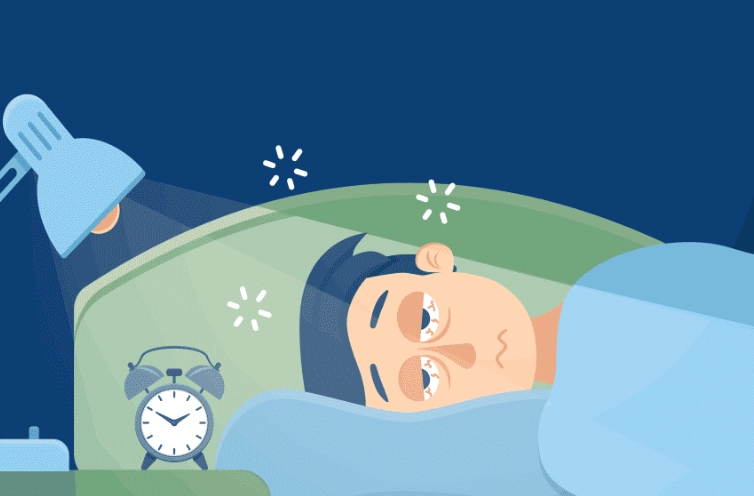
Killer #1: Your Heart and Blood Vessels
Chronic short sleep is public enemy number one for your cardiovascular system. The mechanisms are crystal clear:
- Blood Pressure: Sleep helps your blood pressure dip naturally at night (nocturnal dipping). Without it, your pressure stays high, putting constant strain on arteries. The Centers for Disease Control and Prevention (CDC) explicitly links poor sleep to hypertension.
- Inflammation: Sleep loss triggers the release of pro-inflammatory cytokines. This is like having a constant, low-grade fire in your blood vessels, damaging the lining and making it easier for plaque to build up.
- Stress Hormones: Cortisol (the stress hormone) stays elevated. So does adrenaline. Your body is stuck in a mild “fight or flight” mode 24/7, which is terrible for your heart rate and vascular health.
A massive review of studies published in the European Heart Journal found that people sleeping less than 6 hours had a 48% increased risk of developing or dying from coronary heart disease and a 15% greater risk of developing or dying from stroke. Those aren’t small numbers. That’s sleep deprivation acting as a major accomplice to death.
Killer #2: Metabolic Chaos and Diabetes
Your body’s ability to process sugar goes haywire when you’re sleep-deprived. It’s like your insulin (the key that lets sugar into cells) becomes blunt.
The Science in a Nutshell: Sleep loss makes your cells resistant to insulin. At the same time, your stressed-out body releases more glucose into the bloodstream for a false “emergency.” The result? Sky-high blood sugar. Do this repeatedly, and you’re laying the perfect groundwork for Type 2 diabetes—a major risk factor for heart disease, kidney failure, and more. A study cited by the National Institute of Diabetes and Digestive and Kidney Diseases shows just how profound this link is.
Killer #3: The Impaired Brain and Catastrophic Accidents
This one can kill you and others in an instant. We drastically underestimate how impaired we are. After 18 hours awake, your cognitive impairment is similar to having a blood alcohol content (BAC) of 0.05%. At 24 hours, it’s like a BAC of 0.10%—legally drunk in most places.
Your reaction time slows. Your situational awareness vanishes. Your judgment is shot. You become a danger behind the wheel, operating machinery, or even making simple decisions on a ladder. The National Highway Traffic Safety Administration estimates drowsy driving causes thousands of deaths annually. This isn’t just “feeling sleepy.” This is your brain’s essential systems for safe operation shutting down. Asking “can sleep deprivation kill you” on the road has a brutally quick answer: yes.
Killer #4: The Crumbling Mind and Mental Health
This is deeply personal and often overlooked. Sleep and mental health are a two-way street, but sleep deprivation is gasoline on the fire of conditions like depression and anxiety. The brain’s emotional center (the amygdala) goes into overdrive, while the prefrontal cortex (the rational brake) weakens. You become emotionally reactive, prone to negative thinking, and hopeless.
I’ve been in that dark place after a string of bad nights. Everything feels heavier. Small problems become insurmountable. The idea that “can sleep deprivation kill you” includes suicide isn’t an exaggeration—it’s a tragic, documented outcome of the profound despair and cognitive distortion that chronic sleep loss can cause.
Killer #5: The Sabotaged Immune System
You might not think of the flu as fatal, but for some, it is. In a landmark study, researchers found that people getting less than 7 hours of sleep were almost 3 times more likely to catch a cold than those getting 8 hours. Sleep deprivation cripples your T-cells and reduces the effectiveness of vaccines. In a world that’s seen a pandemic, the idea of voluntarily handicapping your primary defense against viruses is, frankly, foolish. Your immune system needs sleep to build its arsenal. Without it, you’re vulnerable.
The Stages of Sleep Deprivation: From Grumpy to Critical
It’s helpful to see this as a progression. Can sleep deprivation kill you at stage 1? No. But by stage 4, the risk factors are massively elevated.
| Stage | Time Frame (Consistent | Primary Symptoms & Risks |
|---|---|---|
| The Fog | 1-3 Days | Irritability, brain fog, increased appetite (especially for carbs), reduced coordination. Judgment begins to slip. |
| The Strain | 1 Week | Pronounced cognitive deficits. Hormones (cortisol, ghrelin/leptin) are significantly dysregulated. Marked increase in inflammatory markers. Blood pressure may begin to creep up. |
| The Degradation | 2 Weeks to Months | High risk of microsleeps (uncontrollable seconds of sleep). Immune function is measurably impaired. Insulin sensitivity drops. The risk of accidents (work, vehicle) spikes dramatically. |
| The Chronic Danger Zone | Months to Years | Statistically significant increased risk for hypertension, cardiovascular disease, stroke, obesity, Type 2 diabetes, mood disorders, and certain cancers. This is where the question “can sleep deprivation kill you” transitions from theoretical to a clear, probabilistic “YES.” |
Your Practical Defense: How to Actually Fix Your Sleep (It’s Not Just “Go to Bed”)
Okay, enough doom and gloom. Knowing the problem is useless without a solution. Here’s where I get practical. Forget generic advice. Let’s build a defense plan.
The Non-Negotiables (The Foundation)
- Schedule is King: Go to bed and wake up at the same time every day, even weekends. Yes, even weekends. This regulates your circadian rhythm more than anything else.
- Light is Your Lever: Get bright light (preferably sunlight) in your eyes within 30 minutes of waking. This sets your internal clock. Conversely, dim the lights and ditch screens 60-90 minutes before bed. Blue light blockers help, but a digital sunset is better.
- The Bedroom is for Sleep (and Sex): Not work, not watching thrilling shows, not doomscrolling. Make it cool (around 65°F or 18°C), dark (pitch black if possible), and quiet. A white noise machine can be a game-changer.
Advanced Tactics for the Truly Struggling
If the basics aren’t cutting it, you need to dig deeper.
Caffeine & Alcohol: Caffeine has a 6-8 hour half-life. If you sleep at 11 PM, your last coffee should be before 3 PM. Alcohol? It’s a sedative that wrecks your sleep architecture. It might knock you out, but it destroys restorative deep sleep and REM sleep. It’s a fraud.
The Wind-Down Ritual: You can’t go from 100 mph to 0. Create a 45-minute buffer zone. Read a physical book (nothing stressful). Listen to calm music or a boring podcast (my trick). Take a warm shower or bath (the body cooling afterwards promotes sleepiness). Do some light stretching or breathing exercises (4-7-8 breathing is magic: inhale 4, hold 7, exhale 8).
Deal with the “Monkey Mind”: If anxiety is keeping you up, get it out of your head. Keep a notebook by the bed. Before your wind-down, brain-dump every worry, to-do, or random thought. Tell your brain you’ve captured it and will deal with it tomorrow. It works surprisingly well.
Be patient.
You can’t fix years of bad habits in one night. Consistency is everything.
Common Questions About Sleep Deprivation and Death
Final Thoughts: It’s a Choice, Not an Inevitability
Look, life is busy. Kids, work, stress—they all steal sleep. I get it. Sometimes a bad night is unavoidable. But what we’re talking about here is the pattern. The consistent choice to sacrifice sleep for one more episode, one more hour of work, or just mindless scrolling.
After diving this deep into the science, my own view has hardened. Treating sleep as optional or negotiable is one of the most damaging things you can do to your health. It’s not a luxury. It’s a non-negotiable biological necessity, as vital as food, water, and air.
So, can sleep deprivation kill you? The direct path is rare. But the indirect, well-trodden path to chronic disease and catastrophic error is wide open for anyone who chronically shortchanges their sleep. You have more control here than you think. Start tonight. Not with a dramatic overhaul, but with one change. Maybe it’s turning off screens 30 minutes earlier. Maybe it’s setting a consistent wake-up time.
Your future self—healthier, sharper, and happier—will thank you. Because the goal isn’t just to avoid death. It’s to build a foundation for a vibrant, functional life. And that foundation is built every night, in the dark, while you’re asleep.
If you take away one thing, let it be this: Stop asking “can sleep deprivation kill you” as a hypothetical. Start acting like the answer is a resounding “yes, if I let it,” and protect your sleep accordingly. It’s the most important health investment you’ll ever make.
Reader Comments