Your Sleep Guide Highlights
You know the feeling. Your eyes snap open. It's still dark, or maybe the first hint of dawn is creeping in. You fumble for your phone, squint at the screen. 5:47 AM. You do the math. You crashed around midnight. That's just under six hours. Your brain, now annoyingly awake, immediately presents the million-dollar question: Should I go back to sleep if I wake up after 6 hours?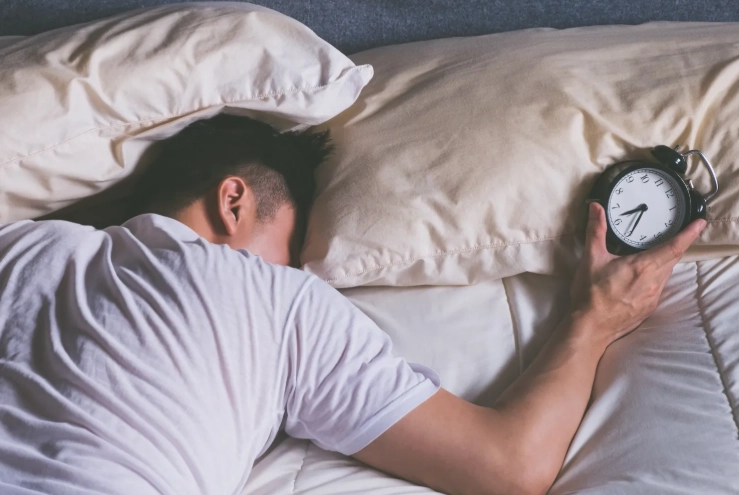
I've been there more times than I can count. Sometimes I'd force myself back to sleep and wake up feeling groggy and robbed of my morning. Other times, I'd get up and hit a wall of fatigue by 2 PM. It felt like a gamble every single time. So, I decided to dig into the science and the real-world strategies, moving past the oversimplified "8-hour rule" to figure out what actually works.
The short, unsatisfying answer is: it depends. But the *useful* answer is a framework for figuring out what it depends on for you. Let's break it down, because this decision impacts your whole day.
Why Six Hours Is Such a Tricky Zone
Six hours of sleep sits right on a fascinating, frustrating border in sleep science. For decades, we've been told eight is the gold standard. The CDC and the National Sleep Foundation generally recommend 7-9 hours for adults. So, six feels like you're coming up short. And often, you are.
But here's the twist. Sleep isn't just a bulk commodity you measure in hours, like gasoline. It's a series of cycles. Each cycle, lasting about 90 minutes, goes through stages of light sleep, deep sleep, and REM (Rapid Eye Movement) sleep, which is crucial for memory and mood. Waking up naturally usually happens at the end of a cycle, during a period of light sleep.
The Core Issue: When you ask, "Should I go back to sleep if I wake up after 6 hours?" you're really asking: "Did I wake up at the end of a sleep cycle, or did something jolt me out of deep or REM sleep?" Six hours is exactly four 90-minute cycles. If you fell asleep instantly, you might have just finished cycle four. But if it took you 20 minutes to doze off, you might be wrenched from the middle of a cycle. That middle-of-cycle awakening is what leaves you feeling like you got hit by a truck, even if you technically got 6 hours.
I remember one brutal week where my 6-hour wake-ups felt completely different day to day. Tuesday, I was alert. Wednesday, I was a zombie. It made no sense until I started tracking my rough sleep times and realized the Tuesday wake-up lined up with a 4.5-hour sleep (3 cycles) plus a 1.5-hour nap later. My brain had completed its cycles. The Wednesday disaster? Smack in the middle of deep sleep, thanks to a neighbor's garbage truck.
The Decision Matrix: To Sleep or Not to Sleep?
Okay, so you're awake at the 6-hour mark. Instead of just lying there in a state of anxious deliberation, run through this quick mental checklist. I literally have this saved in the notes on my phone for my own foggy-brain mornings.
Ask Yourself These Questions Immediately
- How do you feel RIGHT NOW? Be brutally honest. Is there a heavy, groggy pressure behind your eyes (a sign of sleep inertia, likely from a cycle interruption)? Or is your mind already racing with thoughts about the day (a sign you may be sufficiently rested)?
- Can you fall back asleep easily? If you're truly sleepy, you'll drift off within 10-15 minutes. If you're just "awake" and staring at the ceiling for 20 minutes, that's your body's way of saying the sleep drive is low. Lying in bed frustrated is worse than getting up.
- What's your schedule like? Do you have a critical morning meeting or can your day start slowly? If you go back to sleep for 90 minutes (one full cycle) and overshoot, will it cause panic?
- What kind of sleeper are you, naturally? This is huge. The whole "Should I go back to sleep if I wake up after 6 hours" question has a different answer for a natural short sleeper versus a natural long sleeper.
Let's talk about that last point. Society tells us we all need the same amount, but it's a lie. Genetics play a massive role.
| Sleep Need Profile | Typical Need | Signs You Might Be One | 6-Hour Wake-Up Likely Means... |
|---|---|---|---|
| The Natural Short Sleeper | 5-6.5 hours | Wake without an alarm, feel fine on less sleep, family history of short sleep. | You're probably done. Going back to sleep might lead to fragmented, light sleep. |
| The Average Sleeper | 7-8.5 hours | Need an alarm most days, feel best with ~8 hours, weekend catch-up sleep. | You're likely 1-2 cycles short. A 90-minute extension could be perfect. |
| The Natural Long Sleeper | 9+ hours | Never feel rested on 8 hours, crave long sleeps, may be labeled "lazy." | You are significantly short. If possible, another full cycle (90 min) is a minimum. |
Most of us are in that middle category. So for the average person, waking up after 6 hours often signals a deficit. But the key is the *quality* of that wake-up. A natural, end-of-cycle wake-up after 6 hours might leave an average sleeper feeling okay-ish, but not optimal. A jarring wake-up will feel terrible.
I suspect I'm an average sleeper leaning long. On the rare days I wake up naturally exactly at 6 hours, I feel functional but... thin. Like my mental buffer is smaller. I'm more prone to irritation. That's my cue that while I can *survive*, I haven't *thrived* on that sleep quota.
The Science of Sleep Cycles and Your 6-Hour Dilemma
To really own the decision, you need to understand what's happening in your brain. In the first half of the night, we get most of our deep sleep (N3). This is the physically restorative sleep. In the second half, REM sleep dominates. This is for mental restoration, memory consolidation, and emotional processing.
When you get only 6 hours, you're often cutting short the later, REM-rich cycles. This is why you might wake up after 6 hours feeling physically okay but mentally foggy, forgetful, or emotionally fragile. You've skimped on your brain's filing and processing time.
The research is pretty clear on consistent 6-hour sleep. A famous study by Van Dongen et al. found that getting 6 hours of sleep per night for two weeks created cognitive impairments equivalent to being legally drunk. The scary part? The participants *felt* they were adapting. They didn't realize how impaired they were.
So, if your pattern is consistently asking "should I go back to sleep if I wake up after 6 hours," the bigger issue isn't that single morning's decision. It's that you're chronically restricting your sleep. Your body is sending you a bill, and it will cash it in the form of focus issues, health risks, or mood problems.
That said, one night of 6 hours isn't a catastrophe. The human body is resilient. This is where the concept of sleep debt comes in. Think of it like a bank account. A 6-hour night puts you in a 1-2 hour debt (if you need 7-8). You can pull from the account occasionally, but you need to repay it. The best way to repay isn't always by forcing more sleep that same morning.
Practical Strategies for the 6 AM Crossroads
Let's get tactical. You're awake. The clock says 6 hours. Here are your concrete options, beyond just staring at the ceiling.
Option 1: Commit to Getting Up
If you choose this path, do it with purpose. Don't just slump on the couch.
- Seek Light Immediately: Get bright light, especially sunlight, into your eyes. This signals your circadian rhythm master clock that the day has started, suppressing melatonin. Go outside for 5 minutes.
- Move Your Body: Do 5-10 minutes of light movement—stretching, walking, gentle yoga. It increases core body temperature and alertness.
- Hydrate: Drink a large glass of water. You're dehydrated after hours of breathing.
- Plan a Strategic Nap: Schedule a 20-minute power nap for the early afternoon (1-3 PM). This can help repay a bit of sleep debt without causing deep sleep inertia.
This is a good choice if you feel alert upon waking and know you're a short sleeper, or if you've been lying awake for more than 20 minutes.
Option 2: Strategically Go Back to Sleep
If you feel that deep, groggy pull and have the time, this can be brilliant. But do it right.
- Aim for a Full 90-Minute Cycle: Set a gentle alarm for 90 minutes later. This allows you to complete a full sleep cycle, minimizing sleep inertia when you wake up.
- Avoid the 30-60 Minute Trap: Falling back asleep for just 30-60 minutes is risky. You're highly likely to enter deep sleep and then be wrenched out of it, leaving you feeling worse than when you started. This is the number one mistake people make.
- Create a Conducive Environment: If light is coming in, use an eye mask. Use white noise if needed. The goal is to fall back asleep quickly to maximize the 90-minute window.
Honestly, I've had mixed results with this. When it works—when I successfully get that extra cycle—I feel like a new person. When I misjudge and get a fragmented 45 minutes, I regret it all day. It's a skill you learn about yourself.
Pro Tip: If you decide to go back to sleep, don't pick up your phone. The blue light and mental stimulation are alerting. Just decide, set the alarm, and close your eyes. The mental debate itself is what kills your chance of more sleep.
Long-Term Fixes: Stop Waking Up After 6 Hours Altogether
If "should I go back to sleep if I wake up after 6 hours" is a daily or weekly question, you need to look upstream. Why are you waking up at 6 hours consistently?
Common Culprits and How to Tackle Them
Stress and Anxiety: This is the big one. Your mind hits the 6-hour mark and decides it's time to start worrying. Practice a brief before-bed meditation or write a "brain dump" list to park your thoughts for the night.
Light and Noise: Early morning light or sounds can trigger awakening. Blackout curtains and a white noise machine are investments that pay off every single day.
Sleep Schedule Instability: Going to bed at wildly different times confuses your internal clock. Try to stabilize your bedtime and wake time, even on weekends, within an hour.
Caffeine or Alcohol Too Late: Caffeine has a long half-life. Alcohol might make you fall asleep faster, but it wrecks sleep quality in the second half of the night, leading to early awakening. Cut off caffeine by 2 PM and be mindful of alcohol.
Needing the Bathroom: Limit fluids 90 minutes before bed.
I fixed my own chronic 5:30 AM awakenings by addressing two things: total darkness (I got blackout shades that actually sealed the edges) and managing a low-grade anxiety about my daily to-do list by planning my next day before dinner, not before bed.
Putting It All Together: Your Morning Action Plan
So tomorrow, when it happens again, don't just ponder "should I go back to sleep if I wake up after 6 hours." Have a plan.
- Pause and Assess: Don't look at your phone immediately. Just notice how you feel. Groggy or alert?
- The 15-Minute Rule: Give yourself 15 minutes in bed. If sleep is coming back, you'll drift off. If you're just getting more anxious, abort mission.
- Make the Strategic Choice:
- Feel awful & have time? -> Set alarm for 90 minutes later. Go for another full cycle.
- Feel alert or have been awake >20 min? -> Get up immediately. Seek light, move, hydrate.
- Feel awful & have NO time? -> Get up. Use light, cold water on face, and plan that afternoon nap.
- Forgive and Observe: Whatever you choose, don't waste energy regretting it. Observe how you feel throughout the day. That data will help you make a better choice next time.
It's not about perfection. It's about making a informed choice instead of a panicked one.
The goal isn't to never have a 6-hour night. Life happens. The goal is to understand your body's signals, respect your sleep need, and have the tools to manage the occasional short night without letting it ruin your day. So the next time you find yourself awake after 6 hours, you won't just have a question. You'll have a plan.
Answering Your Specific Questions (FAQ)

Reader Comments