You know the feeling. It's 11 PM, you're exhausted, but the moment your head hits the pillow, your brain decides it's time to replay every awkward conversation you've ever had. Or maybe you fall asleep quickly, only to wake up at 3 AM feeling wired. If this sounds familiar, you're not just "bad at sleeping." You're likely missing a crucial transition period between your day and your night. That's where the 3:2:1 sleep rule comes in. It's not a magic pill, but a structured, time-based framework designed to gently guide your body and mind from "on" mode to "off" mode. Forget complex sleep gadgets for a moment. This is about behavioral boundaries.
Quick Navigation: What's Inside This Guide
What Exactly Is the 3:2:1 Sleep Rule?
The 3:2:1 sleep rule is a pre-sleep wind-down routine structured around three simple time boundaries before your target bedtime. It's a countdown to sleep.
3 hours before bed: Stop eating large meals and consuming caffeine. This gives your digestive system time to settle and prevents stimulants from interfering with your sleep drive.
2 hours before bed: Stop working. This includes mentally demanding tasks, checking work emails, or planning tomorrow's stressful meetings. The goal is to halt the production of stress hormones like cortisol.
1 hour before bed: Stop screen time. Put away phones, tablets, laptops, and turn off the TV. This minimizes exposure to blue light, which suppresses melatonin, and stops the mental stimulation from content.
The core idea isn't about deprivation, but about creating space. Space for digestion, for mental deceleration, and for natural melatonin production to rise. It turns sleep from a sudden crash into a gradual, intentional descent.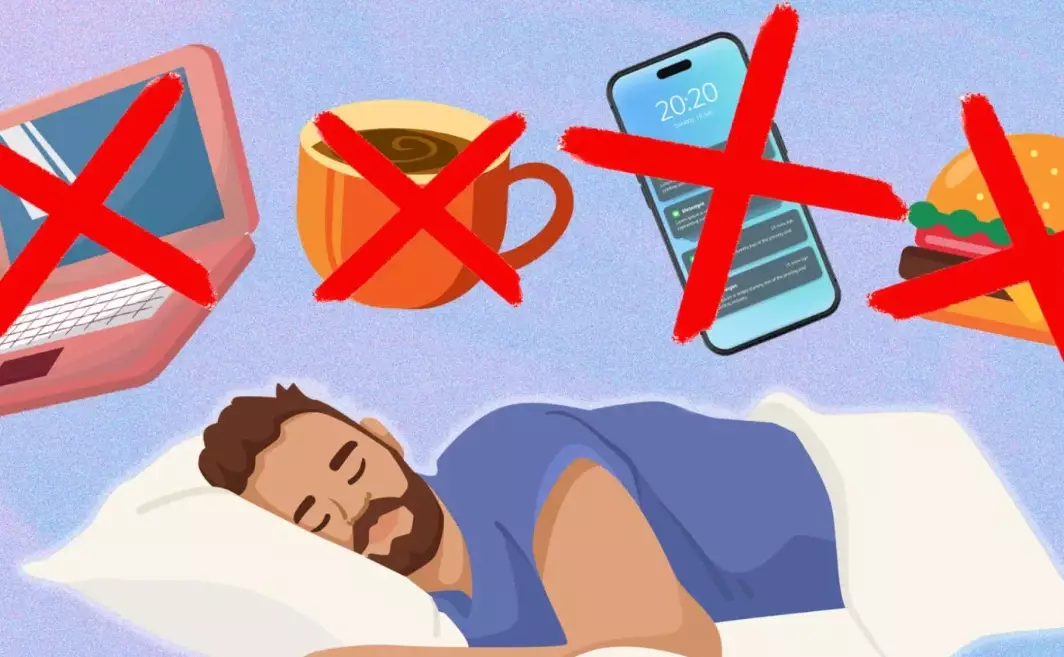
Is the 3:2:1 Rule Backed by Science?
While you won't find a study titled "The Efficacy of the 3:2:1 Rule," each component is supported by sleep research. It's a practical packaging of established principles.
Let's break down the science behind each number.
The 3-Hour Food & Caffeine Window: A heavy meal too close to bedtime can cause indigestion and reflux, disrupting sleep architecture. Research cited by the National Sleep Foundation suggests finishing eating 2-3 hours before bed. For caffeine, its half-life is about 5-6 hours. Having a coffee at 4 PM means at 10 PM, about half that caffeine is still circulating in your system, potentially reducing sleep depth.
The 2-Hour Work Cutoff: This tackles cognitive arousal. When you work late, you're not just doing tasks; you're activating the prefrontal cortex and sympathetic nervous system (the "fight or flight" system). A study published in the Journal of Occupational Health Psychology found that psychological detachment from work in the evening was crucial for recovery and sleep quality. The 2-hour buffer is a forcing function for that detachment.
The 1-Hour Digital Sunset: This is the most researched part. Screens emit blue light, which tricks the brain's suprachiasmatic nucleus (your internal clock) into thinking it's daytime, delaying melatonin release. A Harvard Health publication details how blue light exposure in the evening can shift circadian rhythms and suppress melatonin for twice as long as other light wavelengths. Furthermore, the content itself—scrolling social media, watching thrilling shows—creates emotional and mental stimulation that's the opposite of winding down.
How to Implement the 3:2:1 Rule: A Step-by-Step Guide
Knowing the rule is one thing. Applying it is another. Here’s how to translate those numbers into a real evening.
First, work backwards from your target sleep time. If you want to be asleep by 11 PM, your countdown starts at 8 PM.
| Time Before Bed | Action: STOP | Action: START INSTEAD | Why It Helps |
|---|---|---|---|
| 3 Hours (e.g., 8 PM) | Large meals, caffeine, alcohol (as a sleep aid). | A light snack if needed (e.g., banana, handful of almonds, yogurt). Herbal tea (chamomile, valerian root). Focus on hydration with water. | Allows digestion to complete, avoids blood sugar spikes, prevents caffeine/alcohol from fragmenting sleep later. |
| 2 Hours (e.g., 9 PM) | Answering work emails, intense planning, stressful conversations, demanding mental tasks. | Light chores (tidying), gentle stretching, reading a physical book, listening to calm music, light conversation, preparing for tomorrow (like picking clothes) in a non-stressful way. | Signals to your nervous system that the day's demands are over. Begins the shift from sympathetic (stressed) to parasympathetic (restful) dominance. |
| 1 Hour (e.g., 10 PM) | Smartphones, tablets, laptops, television, video games. | Reading (real books), journaling, meditation, deep breathing exercises, taking a warm bath/shower, gentle yoga or mobility work, listening to podcasts/audiobooks with the screen off. | Removes blue light source, allowing melatonin to rise naturally. Cuts off content-driven mental stimulation, calming the mind. |
I see people treat the final hour as a vacuum. They put their phone down and just stare at the ceiling, which often leads to rumination. You must have a positive, engaging alternative activity ready. For me, that's always been a physical book—something engaging enough to hold my attention but not so thrilling it has the opposite effect.
Where Most People Go Wrong (And How to Fix It)
After talking to hundreds of people about their sleep routines, I've noticed consistent pitfalls.
The "Cheat" Mentality: "It's just one email at 9:30 PM." That one email can trigger a cascade of thoughts about work that lasts an hour. The rule isn't about the activity's duration, but about the mental gate it opens. Treat the boundaries as non-negotiable for a week and see what happens.
Ignoring the "Start Instead" Column: This is the biggest failure point. The rule tells you what to stop, but your success depends entirely on what you start. If you don't plan enjoyable wind-down activities, you'll revert to old habits.
Being Too Rigid: Life happens. A late dinner with friends or an urgent work deadline might break the 3-hour or 2-hour rule. The mistake is thinking "I failed" and abandoning the entire system. The 1-hour screen-free rule is the most critical. If you have to break the others, still protect that final digital-free hour fiercely. It's your anchor.
Making It Work For You: Customizing the 3:2:1 Rule
The standard 3:2:1 is a template, not a prison sentence. The goal is the principle: a staged, gradual wind-down.
For the night owl or shift worker: Your "3 hours before bed" might start at 2 AM. The principle remains the same. The consistency relative to your unique schedule is what matters.
If 3 hours without food feels impossible: Start with a 2-hour no-food window and a firm 1-hour no-screen window. Master that, then extend the food window. Progress beats perfection.
The 2-hour work stop is brutal for entrepreneurs: Try a modified 2:1:1 rule. 2 hours before bed: stop reactive work (email, messages). 1 hour before: stop creative/strategic work. 1 hour before: screens off. This creates a two-stage mental descent.
Think of it as dials you can adjust. The most important dial, backed by the most robust science, is the screen-time dial. Start by turning that one to zero for 60 minutes before bed, no matter what.
Your 3:2:1 Sleep Rule Questions, Answered
 I've tried the last hour without screens, but I just get bored and my mind races. What can I do?
The 3:2:1 sleep rule won't fix an underlying sleep disorder, but for the vast majority of people struggling with "sleep procrastination" or restless nights, it's a game-changer. It's not about adding more to your to-do list; it's about strategically subtracting the things that hijack your biology in the hours that matter most. Start with the final hour. Protect it. Build out from there. Your sleep isn't just something that happens to you after you turn out the light. It's the final act of your day, and it deserves a proper curtain call.
Reader Comments