Key Points
- First Things First: What Even Is a Sleep Score?
- So, What is a Good Sleep Score by Age? The Breakdown
- Why Age Changes the Sleep Score Game
- Beyond the Number: Factors That Mess With Your Score
- Action Plan: How to Actually Improve Your Sleep Score for Your Age
- Common Questions (The Stuff You're Actually Searching For)
- The Biggest Mistake: Becoming a Slave to the Score
Hey there. So you've got a sleep tracker, you're staring at this "sleep score" every morning, and you have no idea if that number is something to celebrate or a reason to worry. Sound familiar? You're definitely not alone. I remember when I first got my fitness band, I'd wake up, see a score of 78, and think, "Is that... good?" I had absolutely no frame of reference. Was it like a test score? Should I be aiming for a perfect 100 every night? The apps don't always make it clear, and it can feel like you're being graded on something you have little control over.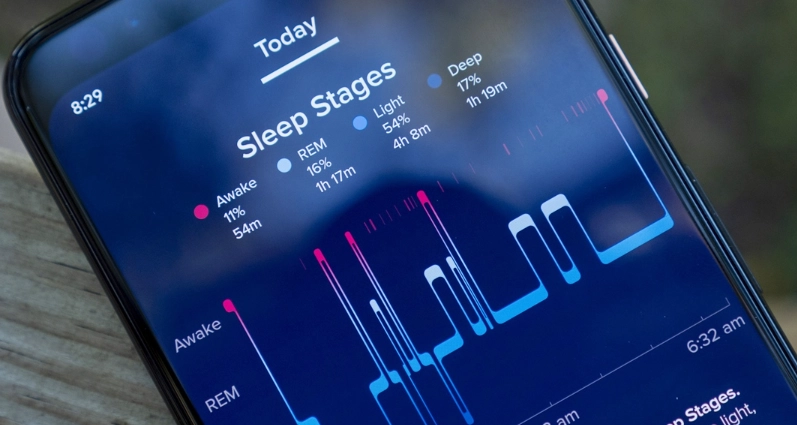
That's exactly why we need to talk about what a good sleep score by age really means. It's not a one-size-fits-all number. What's stellar for a 60-year-old might be just average for a 25-year-old. And obsessing over the number without understanding the context can actually make your sleep worse by creating anxiety. I've been there, checking the app at 2 a.m. because I was worried about ruining my score—talk about counterproductive!
Let's break down the mystery. We'll look at how these scores are cooked up, what the benchmarks are for different stages of life, and most importantly, what you can actually do with that information to sleep better. Forget the generic advice; we're getting specific.
First Things First: What Even Is a Sleep Score?
Before we jump into age brackets, we have to understand what we're measuring. A sleep score is a single number, usually out of 100, that your sleep tracking device or app generates to summarize the quality of your night's sleep. It's a handy digest, but it's a composite. Think of it like your final grade in a class—it's made up of several individual assignments (your sleep metrics).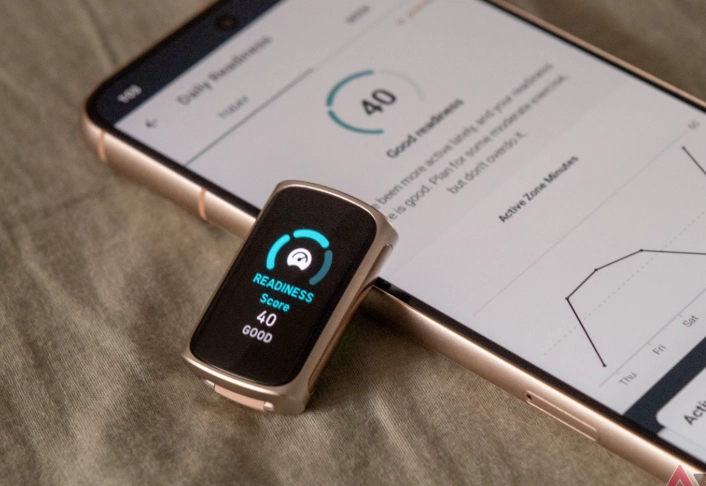
Different brands use slightly different formulas, but they almost always mix together a few key ingredients:
- Sleep Duration: The total time you spent asleep. This is the most straightforward part, but it's heavily weighted. If you only slept 4 hours, it's hard to get a high score no matter how "good" those 4 hours were.
- Sleep Stages: The breakdown of your night into light, deep, and REM (Rapid Eye Movement) sleep. Each stage plays a different role in physical restoration, memory consolidation, and mood regulation. Trackers use movement and heart rate to make their best guess at these stages.
- Sleep Consistency: Did you go to bed and wake up around the same time as usual? Our bodies love a predictable rhythm.
- Restlessness: How much did you toss, turn, or get up during the night? Less movement generally means more solid, restorative sleep.
- Time to Fall Asleep (Sleep Latency): The golden window is usually between 10 and 20 minutes. Taking over 30 minutes to drift off can ding your score.
- Time Awake During the Night: Waking up briefly is normal, but prolonged periods of wakefulness after initially falling asleep will bring the number down.
It's crucial to remember these are estimates. Your watch isn't a medical-grade EEG machine. It can confuse lying still while awake with light sleep, for instance. So, while the score is a useful trend indicator, don't treat it as an absolute, precise truth. Use it as a guide, not a gospel.
My Take: I've worn three different trackers over the years, and they all gave me different scores for the same night. One would call it an 82, another a 75. It was frustrating at first, but it taught me to focus on the trends within one app, not the absolute number. If my usual score on my current device is in the mid-80s and it suddenly drops to the 70s for a week, that's a signal worth investigating, regardless of what another brand might have called it.
So, What is a Good Sleep Score by Age? The Breakdown
Here's the core of it. Sleep architecture—the pattern and proportion of our sleep stages—changes as we get older. A newborn's sleep looks nothing like a teenager's, which looks nothing like a retiree's. Therefore, the definition of a "good" score has to shift accordingly. The algorithms from companies like Fitbit, Oura, and Whoop are often (though not always transparently) tuned to account for these age-related norms.
Let's get practical. The table below gives a general framework for what you might aim for. Remember, these are typical healthy ranges, not strict mandates. Individual variation is huge.
| Age Group | Typical "Good" Sleep Score Range | Key Context & What's "Normal" |
|---|---|---|
| Young Adults (18-25) | 80 - 90+ | This is peak sleep efficiency for many. Bodies are resilient, and sleep drive is strong. Consistently scoring below 75 might be a sign of poor sleep habits, stress, or an underlying issue. Deep sleep is usually at its highest proportion here. |
| Adults (26-64) | 75 - 85 | The reality of life sets in: careers, families, stress. Sleep often becomes more fragmented. A score of 80 is excellent for this group. The focus should be on consistency—a steady 78 is better than a wild swing between 90 and 60. |
| Older Adults (65+) | 70 - 80 | Sleep naturally becomes lighter and more fragmented with age. Total sleep time may decrease, and awakenings increase. Therefore, a score of 75 for a 70-year-old can represent very healthy, age-appropriate sleep. Chasing a score of 90 is likely unrealistic and stressful. |
See the pattern? The expectation adjusts downward with age.
This is the most direct answer to "what is a good sleep score by age?" But if we stop here, we're doing a disservice. Why does this shift happen? Understanding the "why" makes the numbers feel less like a personal failure and more like a biological fact.
Why Age Changes the Sleep Score Game
It's not just that we get worse at sleeping. Our needs and patterns evolve.
For young adults, the brain is still doing a lot of heavy wiring and rewiring. Deep sleep (also called slow-wave sleep) is crucial for this physical brain development and for processing the massive amount of learning that happens in these years. That's why they can—and need—to log more deep sleep, which boosts those scores.
Jump to middle age. The total amount of deep sleep we get begins a gradual, lifelong decline. It's just part of the deal. What becomes paramount is sleep continuity—stringing those sleep cycles together without major interruptions. Your score in your 40s and 50s is less about the sheer amount of deep sleep and more about protecting the sleep you do get from the chaos of life: work stress, caring for kids or parents, hormonal changes (like perimenopause, which can wreak havoc on sleep).
By the time we reach our senior years, the sleep structure has shifted significantly. We spend much more time in lighter stages of sleep (Stages 1 and 2) and less in deep and REM sleep. We also experience a phase advance—getting sleepy earlier in the evening and waking up earlier in the morning. This is normal. So, when an older adult looks at their sleep tracker and sees lots of light sleep and a few awakenings, they shouldn't panic. The algorithm for their age group should be grading on a curve. The key metric shifts to whether they feel rested and function well during the day, not whether they hit some youthful ideal.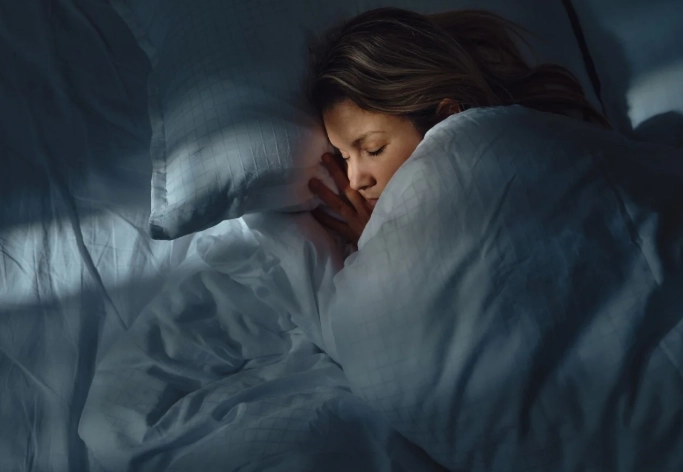
"The most common mistake I see is a 70-year-old comparing their sleep data to their 30-year-old child's. It sets up an unrealistic and frustrating expectation. Healthy sleep at 70 looks different than healthy sleep at 30, and that's perfectly okay."
Beyond the Number: Factors That Mess With Your Score (At Any Age)
Okay, so you've checked the age chart and your score is still lower than you'd like. Before you despair, consider these other huge influencers. Age is a major factor, but it's not operating in a vacuum.
- Your Device Itself: As I hinted at, not all scores are created equal. A study comparing consumer trackers found they can vary widely in accuracy, especially for sleep stages. Know your tool's quirks.
- Alcohol: This is a big one. Alcohol might help you fall asleep faster, but it absolutely butchers sleep quality in the second half of the night. It suppresses REM sleep early on (leading to a rebound later), causes more awakenings, and leads to much lighter, less restorative sleep. A night of drinking will almost guaranteed trash your sleep score, regardless of your age.
- Caffeine & Late-Night Meals: Stimulants and digestion can keep your body too "on" to settle into deep, restful stages.
- Stress and Mental Health: Anxiety, depression, and chronic stress are public enemy number one for sleep continuity. Racing thoughts lead to prolonged sleep latency and frequent awakenings.
- Sleep Disorders: Conditions like sleep apnea or restless legs syndrome directly fragment sleep. If you consistently have a low score and feel exhausted, snore loudly, or have been told you stop breathing at night, it's time to talk to a doctor, not just stare at your tracker.
- Exercise Timing: Intense exercise right before bed can raise your core temperature and heart rate, making it harder to fall asleep. On the flip side, regular exercise earlier in the day is one of the best things for sleep quality.
Action Plan: How to Actually Improve Your Sleep Score for Your Age
Knowledge is pointless without action. So, you know what a good sleep score by age is, and you've considered the other factors. How do you move the needle? Throwing spaghetti at the wall with random sleep hacks is exhausting. Be strategic.
Start with one or two of these areas, track for two weeks, and see what happens to your score and how you feel.
Universal Foundations (Work at Any Age)
- Protect Your Sleep Schedule: This is the number one most effective thing. Go to bed and wake up within the same 60-minute window, even on weekends. Yes, even on Saturday. Your circadian rhythm thrives on predictability.
- Master the Wind-Down: The last 60 minutes before bed are a runway. Create a ritual: dim lights, read a physical book (not a screen), listen to calm music, do some gentle stretching. Tell your brain it's safety time.
- Optimize Your Cave: Make your bedroom a sanctuary for sleep. That means cool (around 65°F or 18°C), dark (blackout curtains are gold), and quiet. A white noise machine can be a game-changer for masking disruptive sounds.
Age-Tailored Tweaks
For Younger Adults (18-25): Your challenge is often lifestyle. Social life, screen time, and erratic schedules conflict with great sleep. Prioritize consistency. Use app limits on your phone. Understand that pulling all-nighters destroys your sleep architecture for days, not just one night.
For Middle-Aged Adults (26-64): Your battle is against stress and time fragmentation. This is where mindfulness or a brief meditation before bed can pay massive dividends in lowering sleep latency. Schedule worry time earlier in the day, not in bed. Also, be mindful of hormonal shifts—if you're in perimenopause and sleep falls apart, talk to a healthcare provider; it's a common and treatable issue.
For Older Adults (65+): Focus on sleep hygiene and daytime habits. Get bright light exposure first thing in the morning to solidify your circadian rhythm. Limit naps to 20-30 minutes, before 3 p.m. If you wake up and can't fall back asleep after 20 minutes, get out of bed and do something quiet and boring in dim light until you feel sleepy. Lying in bed awake trains your brain that the bed is for being awake.
Common Questions (The Stuff You're Actually Searching For)
Is a sleep score of 72 good?
It depends entirely on your age and baseline! For a 25-year-old, a 72 might be below average and worth looking into. For a 75-year-old, a 72 could be a perfectly solid, healthy score. The key question is: do you feel reasonably rested? If your score is 72 and you feel terrible, there's an issue. If your score is 72 and you feel fine, you're probably doing okay for your life stage.
Why is my sleep score high but I'm still tired?
This is a classic disconnect. It usually points to a few possibilities. First, your tracker might be overestimating your actual sleep time (confusing rest with sleep). Second, you could have a sleep disorder like sleep apnea that causes frequent, brief arousals you don't remember, preventing deep restoration. The tracker sees you as "asleep," but your brain is constantly being jolted. Third, the score is just an algorithm—it can't measure sleepiness disorders or other medical conditions (like anemia or thyroid issues) that cause fatigue. If you're consistently tired despite good scores, a medical check-up is the next step.
How accurate are these sleep scores anyway?
They're decent for estimating sleep duration and decent for distinguishing sleep from wake, but they are notoriously less accurate for pinpointing specific sleep stages (like deep vs. REM). A clinical polysomnogram (sleep study) uses brain wave monitors and is the true gold standard. For the average person without major sleep disorders, consumer trackers are great for spotting trends. Use them to see if a new habit (like cutting off caffeine at 2 p.m.) improves your score over a week. Don't obsess over the difference between 22% and 24% deep sleep on a single night—that's likely within the margin of error.
Which brings me to my final, most important point.
The Biggest Mistake: Becoming a Slave to the Score
I've done it. You wake up at 3 a.m., glance at the clock, and your first thought is, "Oh no, there goes my sleep score." That thought itself releases cortisol (the stress hormone), which makes it harder to fall back asleep, which then actually ruins your score. It's a self-fulfilling prophecy of anxiety.
The ultimate goal of asking "what is a good sleep score by age?" is not to achieve a perfect number. It's to use that number as a friendly, objective nudge towards behaviors that lead to feeling more rested, energized, and healthy. The score is a tool for you to use, not a judge handing down a verdict.
If understanding what a good sleep score by age looks like helps you make one positive change—maybe you start winding down 30 minutes earlier, or you stop having that evening nightcap—then it's served its purpose brilliantly. Track the trend, not the daily fluctuation. And please, for the sake of your actual sleep, if the data is making you anxious, take a break from the tracker for a week. Sleep is a natural process, not a performance metric.
At the end of the day (pun intended), how you feel when you're awake is the most important scorecard of all. Use the number to inform your habits, but let your own energy, mood, and clarity be the final judge.
Reader Comments