Quick Navigation
You know the feeling. The day is done, the lights are out, and your body is begging for rest. But your brain? It's just getting started. It's running a highlight reel of every awkward thing you've ever said, planning tomorrow's to-do list with military precision, and suddenly deciding now is the perfect time to solve world hunger or remember the name of that actor from that movie you saw in 2003. You lie there, staring at the ceiling, asking the universe the same desperate question: why won't my brain shut off and let me sleep?
It's not just you. Far from it. This experience of nighttime mental chatter—what sleep experts often call "cognitive arousal" or simply "racing thoughts"—is one of the most common complaints I hear about, and honestly, one I've battled myself. It's incredibly frustrating because sleep feels like it should be the one thing we can just do. But when your mind is stuck in overdrive, it's like trying to park a Formula 1 car. The engine is redlining, and the brakes feel useless.
The Real Reasons Your Brain Refuses to Power Down
When you're lying there wondering, "Why won't my brain shut off?", you're touching on a complex interplay between your body's stress systems, your daily habits, and the very design of your modern life. It's rarely just one thing. More often, it's a perfect storm of several factors. I like to break them down into two main camps: the psychological gremlins and the physiological saboteurs.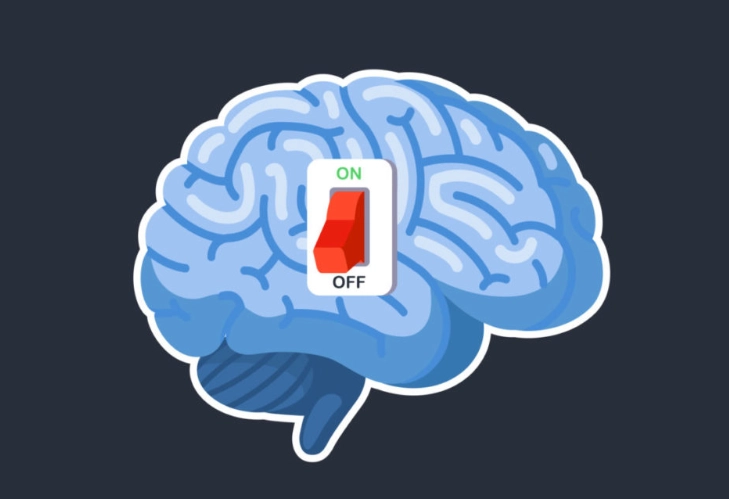
The Psychological Gremlins: Anxiety, Stress, and the "To-Do" Tapes
This is the big one for most people. During the day, we're distracted. Work, kids, screens, conversations—they all create enough noise to drown out the background hum of our worries. But night time? It's quiet. There are no more distractions. Suddenly, the mental space you've been avoiding all day opens up, and everything you've been suppressing comes rushing in.
- The Anxiety Amplifier: Generalized anxiety doesn't clock out at 5 PM. For someone with an anxious mind, bedtime can feel like a trap. The lack of external stimulation means internal worries take center stage. "What if I fail that presentation?" "Did I send that important email?" "What was that weird sound?" Your brain, in a misguided attempt to protect you, is scanning for threats. The problem is, it's scanning the landscape of tomorrow's possibilities and yesterday's regrets, finding plenty to be nervous about. The Anxiety and Depression Association of America (ADAA) notes that sleep problems are a core symptom of most anxiety disorders.
- Stress Storage: Chronic stress keeps your body's cortisol (the primary stress hormone) levels elevated. While cortisol should naturally dip in the evening to allow melatonin (the sleep hormone) to rise, high stress can blunt this rhythm. You're physiologically stuck in "go" mode. Your body is still prepared for action, not rest.
- Rumination Station: This is the mental loop of replaying past events, often negative ones, and analyzing them to death. "Why did I say that? What did they think of me?" It's unproductive problem-solving focused on things you can no longer change. Rumination is a major fuel for insomnia.
- The Planning Paradox: Sometimes, the thoughts aren't even negative. They're just... relentless. Planning, organizing, brainstorming. Your brain sees the quiet of night as prime, uninterrupted thinking time. It's trying to be productive, but it's sabotaging the very rest you need to be productive tomorrow.
The Physiological Saboteurs: Your Body's Betrayal
Your mind and body are a team, and sometimes the body's signals are what's keeping the mind awake. You can't think your way out of these.
| Saboteur | How It Keeps You Awake | The Common Mistake |
|---|---|---|
| Circadian Rhythm Disruption | Your internal clock is confused. Blue light from screens late at night suppresses melatonin production, telling your brain it's still daytime. Shift work or inconsistent bedtimes worsen this. | Scrolling in bed, thinking "just a few minutes" won't hurt. |
| Caffeine & Stimulant Hangover | Caffeine has a half-life of 5-6 hours. That afternoon coffee or even dark chocolate dessert can still be significantly blocking sleep-inducing adenosine receptors in your brain at midnight. | Assuming you're "immune" to caffeine's effects or not counting hidden sources (soda, tea, medication). |
| Sleep Environment | A room that's too warm, too bright, or too noisy is sub-optimally signaling "sleep time" to your brain. Your senses are still processing stimuli, preventing full shutdown. | Using the bedroom for work, entertainment, or stressful conversations, weakening its mental association with sleep. |
| Late-Night Eating & Alcohol | Digestion requires energy and can cause discomfort. Alcohol may help you fall asleep initially, but it fragments sleep architecture and causes rebound arousal as it metabolizes, often in the early morning hours. | Using a "nightcap" as a sleep aid, or eating a heavy meal too close to bedtime. |
| Lack of Physical Activity | Regular exercise promotes deeper sleep and helps regulate stress hormones. A completely sedentary day means your body hasn't accumulated enough sleep pressure (adenosine buildup). | Being mentally exhausted but physically restless, creating a mismatch. |
See how these can combine? A stressful day (high cortisol), followed by a late work email on your laptop (blue light), with a glass of wine to unwind (alcohol disruption), while you're worrying about the email (anxiety). It's a recipe for a brain that simply will not shut off.
Action Plan: How to Actually Quiet the Noise and Get Some Sleep
Knowing why is only half the battle. The real question is: what can you do about it, especially when you're in the thick of it at 2 AM? Throwing your hands up and accepting a lifetime of exhaustion isn't an option. The good news is there are highly effective strategies, but they require a shift from trying to sleep to creating the conditions for sleep to happen.
Strategy 1: Build a "Brain Dump" Ritual (Do This BEFORE Bed)
This is the single most effective tool I've found for dealing with racing thoughts. The goal is to get the planning and worrying out of your head and onto paper, where it can't loop back on itself.
- Grab a notebook (not your phone!) about 60-90 minutes before your target bedtime.
- Write two lists:
- List 1: "What's on my mind." Dump everything—worries, reminders, ideas, random thoughts. No filtering. The point is evacuation, not elegance.
- List 2: "Tomorrow's Game Plan." Write down the 3-5 most important tasks for the next day. This tells your brain, "It's noted. It's handled. We can revisit this at 8 AM."
- Close the book literally and mentally. Say to yourself, "That's enough for today. My work is done." The physical act of closing the book is a powerful cue.
This practice addresses the core plea of "why won't my brain shut off and let me sleep?" directly. It externalizes the chatter. Your brain no longer has to cling to these thoughts for fear of forgetting them.
Strategy 2: Master the Wind-Down Hour
You can't sprint full speed into a wall and expect to stop instantly. Your brain needs a runway. The 60 minutes before bed are non-negotiable for sleep hygiene.
- Light is Law: Dim the overhead lights. Use lamps. Install blue light filters on all devices (like Flux) or, better yet, implement a strict digital curfew 60 minutes before bed. Read a physical book (a boring one is a bonus!).
- Temperature Drop: Start cooling your environment. A cool room (around 65°F or 18°C) supports the natural drop in core body temperature that initiates sleep. Take a warm bath or shower about 90 minutes before bed—the subsequent cool-down mimics this temperature drop.
- Calm the Nervous System: Engage in activities that promote the "rest and digest" (parasympathetic) state, not "fight or flight" (sympathetic). This means gentle stretching, deep breathing exercises, light tidying (not frantic cleaning), or listening to calming music or a sleep story.
Strategy 3: What to Do When You're Already in Bed and Your Brain is Racing
So you did everything "right" and you're still asking, "why won't my brain shut off?" Here's the in-the-moment playbook. The golden rule: If you're awake and frustrated for more than 20 minutes, get out of bed. Seriously. This is crucial. You must break the association between your bed and anxiety/awakeness.
- Get up quietly. Don't check the time (that just increases anxiety).
- Go to a dimly lit chair or another room. Do something boring and non-screen-based. Read a dull book (a physical copy). Listen to a very calm, spoken-word podcast or audio book. Do a simple, repetitive puzzle.
- Only return to bed when you feel sleepy (eyes heavy, head nodding). Not just tired, but sleepy. This reinforces that bed = sleep.
- Repeat if necessary. It's annoying, but it's the behavioral foundation of Cognitive Behavioral Therapy for Insomnia (CBT-I), which is considered the gold-standard, first-line treatment for chronic insomnia by sleep specialists.

Strategy 4: Train Your Brain During the Day
A calm mind at night is built during the day.
- Schedule Worry Time: Sounds weird, but it works. Set a 15-minute appointment with yourself in the afternoon to actively worry and plan. When anxious thoughts pop up at other times, note them and defer them to your "worry appointment." This contains the anxiety and prevents it from spilling into the night.
- Mindfulness & Meditation: This isn't just hippie stuff. Practicing mindfulness for even 10 minutes a day trains your brain to observe thoughts without getting entangled in them. You learn that a thought about work is just a mental event, not a command to start problem-solving. Apps like Headspace or Calm have great beginner courses. The National Center for Complementary and Integrative Health provides research-backed overviews of these practices.
- Physical Activity: Get moving, preferably in the morning or afternoon. It's a powerful stress-burner and sleep-promoter. Even a 30-minute walk makes a difference.
Common Questions (And Real Answers) About the Brain That Won't Quit
That last point is important.
The Long Game: Reframing Your Relationship with Sleep and Your Thoughts
Beating the midnight brain requires patience. You're undoing years of habit and neural pathways. Some nights will be better than others. The goal isn't perfection; it's progress.
The ultimate shift is moving from "I need to make my brain shut up so I can sleep" to "I am creating a calm, safe space, and sleep will come when my body and mind are ready." It's a subtle but profound difference. The first is a struggle for control (which creates more anxiety). The second is an act of trust and preparation.
Your brain is a powerful tool. It's trying to solve problems, plan for your survival, and make sense of your world. The question "why won't my brain shut off and let me sleep?" is really a sign of that incredible activity. The work isn't to defeat your brain, but to guide it, to schedule its brilliant, annoying diligence for the daylight hours, and to teach it that the night is for restoration. It takes practice. It takes consistency. But the reward—waking up after a night where your brain actually did shut off and let you sleep—is worth every bit of the effort.
Start tonight. Not with everything. Pick one thing. Maybe it's writing down three things on your mind 30 minutes before bed. Maybe it's charging your phone in another room. Just one thing. That's how you start answering the desperate midnight question, not just with an explanation, but with a solution.
Reader Comments