Let's cut to the chase. Is it better to sleep 7 or 8 hours? The question feels simple, but the answer is frustratingly personal. For years, I chased the perfect 8-hour night, feeling like a failure when I woke up after 7.5. The truth I discovered after digging into the science and tracking my own sleep is that the magic number isn't universal. It's a moving target shaped by your age, genetics, and the quality of those hours in bed.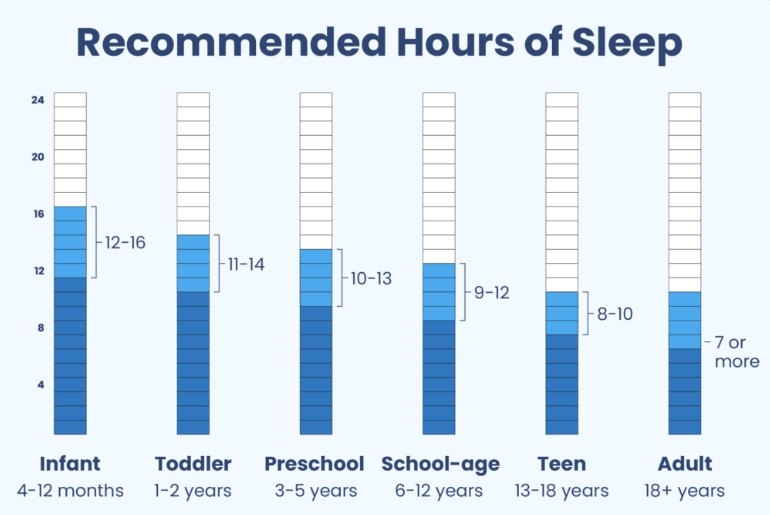
What You'll Discover
The Science of Sleep Duration: What Research Really Says
You've heard "get 8 hours" so often it feels like a law. But large-scale studies paint a more nuanced picture. One massive review published in the journal Sleep Health that analyzed data from hundreds of thousands of people found the lowest risk of mortality and cardiovascular issues was associated with 7 hours of sleep for middle-aged and older adults.
That doesn't make 7 hours the new universal gold standard. It highlights a range.
Research consistently shows a U-shaped curve for health risks. Sleeping too little (consistently under 6 hours) and sleeping too much (consistently over 9 hours for adults) are both linked to higher risks of health problems like weight gain, diabetes, and cognitive decline. The sweet spot for most adults seems to land squarely in the 7 to 9-hour range, as recommended by organizations like the American Academy of Sleep Medicine and the National Sleep Foundation.
Where does the 8-hour myth come from? It's likely a rounded-up, easy-to-remember average from an era before sleep tracking. It ignores individual variance, which is huge.
How Your Age Changes the 7 vs 8 Hour Debate
Asking if 7 or 8 hours is better without considering age is like asking what shoe size is best. A teenager's needs are wildly different from a retiree's. The National Sleep Foundation's expert panel provides age-based guidelines that make this crystal clear.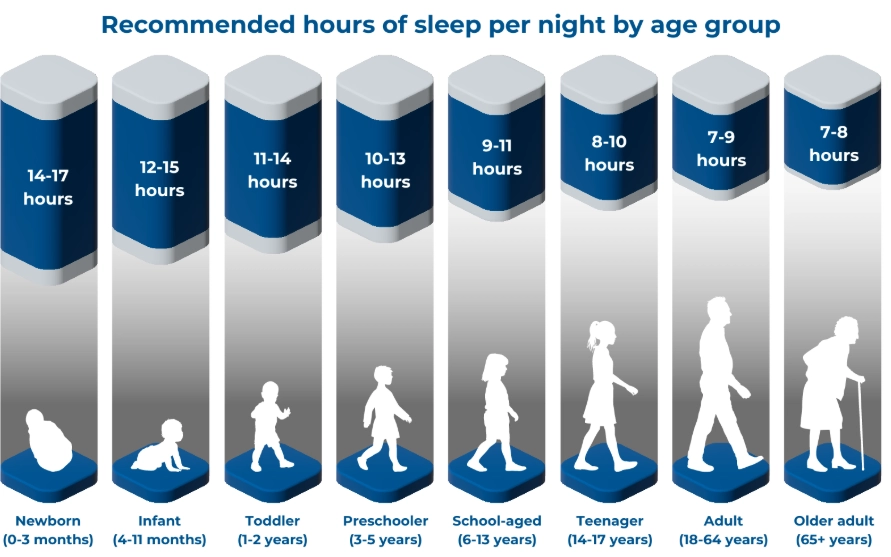
| Age Group | Recommended Sleep Duration | Is 7-8 Hours in Range? |
|---|---|---|
| Newborns (0-3 months) | 14-17 hours | No |
| Infants (4-11 months) | 12-15 hours | No |
| Toddlers (1-2 years) | 11-14 hours | No |
| Preschoolers (3-5) | 10-13 hours | No |
| School-age (6-13) | 9-11 hours | No |
| Teenagers (14-17) | 8-10 hours | 8 hours is the minimum |
| Young Adults (18-25) | 7-9 hours | Yes, both are ideal |
| Adults (26-64) | 7-9 hours | Yes, the core debate zone |
| Older Adults (65+) | 7-8 hours | Yes, 8 hours is the upper limit |
Look at that table. For a teenager, 7 hours is sleep deprivation. For an older adult, consistently hitting 9 hours might warrant a chat with a doctor. For the broad "adult" category (26-64), both 7 and 8 hours are textbook perfect. The fight over which is better happens entirely within the green zone of health.
I see parents stressing because their 16-year-old only gets 8 hours. They should be stressing if they get less than 8. Context changes everything.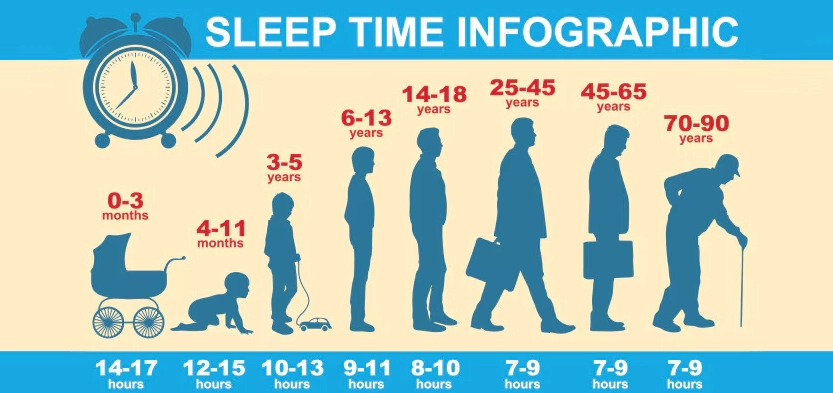
Why Sleep Quality Beats a Perfect Number Every Time
Here's the part most sleep articles gloss over: Sleep quality is infinitely more important than hitting a specific hourly target. You can lie in bed for 9 hours with fragmented, light sleep and feel worse than someone who gets 6.5 hours of solid, uninterrupted deep and REM sleep.
What does quality sleep even mean? It's not a vague feeling. It's measurable through a few key metrics:
- Sleep Efficiency: The percentage of time in bed you're actually asleep. Aim for 85% or higher. Tossing and turning for an hour kills this.
- Sleep Latency: How long it takes to fall asleep. Under 20 minutes is good. Over 30 might signal a problem.
- Sleep Stages: Getting enough deep sleep (for physical restoration) and REM sleep (for memory and mood). Most adults need about 1.5-2 hours of deep sleep and 1.5-2 hours of REM per night.
- Awakenings: Waking up briefly once or twice is normal. Waking up 10 times and struggling to fall back asleep is not.
Think of it this way. Obsessing over 7 vs 8 hours is like arguing whether a car should have 15 or 16 gallons in its tank, while ignoring that the engine is misfiring and the tires are flat. Fix the engine first—the quality. Then figure out how much fuel—the quantity—you personally need to run smoothly.
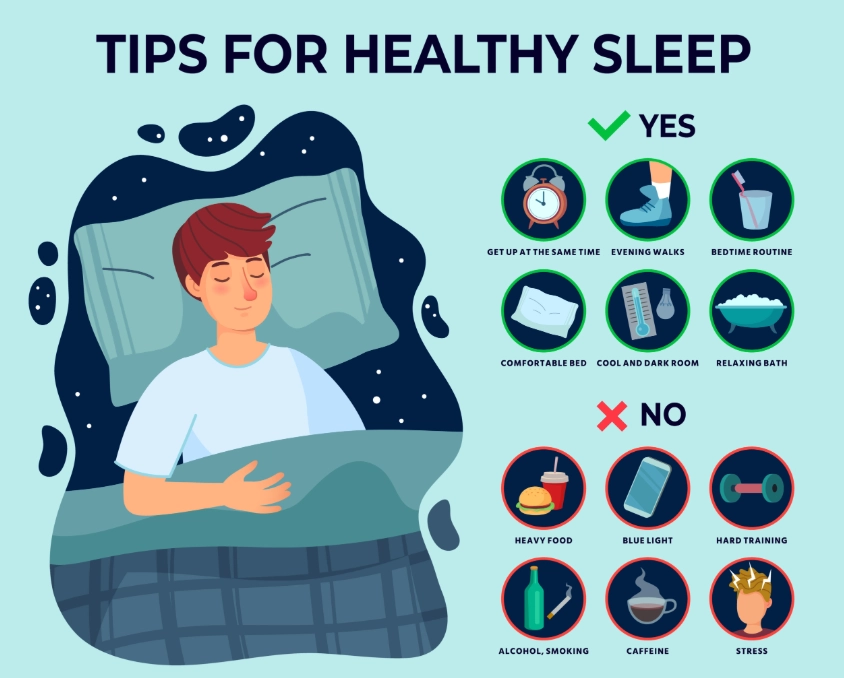
A common mistake I see? People use a rigid bedtime to control duration, but do nothing to improve their pre-sleep routine. They scroll in bed, drink coffee after 2 PM, then wonder why their 8 hours feel like garbage. The problem was never the number.
Signs Your Sleep Quality Needs Work (Even If You Hit 8 Hours)
You might need to focus on quality if you regularly experience these, despite getting "enough" hours:
- Waking up feeling unrefreshed, needing an alarm to drag you out of bed.
- Heavy reliance on caffeine to function before noon.
- Frequent awakenings during the night, aware of the time.
- Your partner says you snore loudly, gasp, or are restless.
- Waking up with a dry mouth or headache.
How to Determine Your Personal Optimal Sleep Duration
Forget the debate. Let's find your number. This isn't instant, but a one-week experiment can reveal more than years of guessing.
The Vacation Sleep Test: This is the gold standard, but requires a week off work. Go to bed when you feel naturally tired (no screens!). Don't set an alarm. Let yourself wake up naturally. Do this for several days, allowing your body to pay off any sleep debt. By the last few days, the amount you sleep naturally is very close to your true need.
Most of us can't take a week off. Here's a practical alternative.
The Two-Week Tracker Method:
- Fix Your Wake-Up Time: Pick a consistent time to wake up every day, even weekends. This anchors your body clock.
- Track Variables: For two weeks, log: bedtime, estimated sleep onset time, wake-up time, number of awakenings, and most importantly, your energy level at 11 AM and 4 PM on a scale of 1-10.
- Listen to Your Body: Don't force 8 hours. If you're tired, go to bed 15 minutes earlier the next night. If you wake up naturally before your alarm feeling refreshed, note that duration.
- Analyze the Pattern: After two weeks, look for the nights where your next-day energy scores were highest. What was the sleep duration on those nights? That's your target zone. You'll likely see a cluster around 7 hours, 7.5, or 8.
I did this. My high-energy days clustered after 7 hours 15 minutes to 7 hours 45 minutes of sleep. Forcing myself to stay in bed for 8 hours often led to more fragmented sleep and grogginess. My personal answer to "7 or 8" was neither—it was 7.5.
Your Top Sleep Duration Questions, Answered
 Is sleeping 9 hours worse than sleeping 7?
 So, is it better to sleep 7 or 8 hours? The final answer is maddeningly simple: It's better to sleep the amount that leaves you feeling consistently alert and restored during the day. For many adults, that will be somewhere between 7 and 9 hours. Your job isn't to hit a cultural ideal, but to become a detective of your own sleep. Track it, note your energy, prioritize unbroken, high-quality sleep, and let your body's clear signals—not an arbitrary number—guide you to your personal best.
Reader Comments