You know the feeling. You drag yourself out of bed after what felt like a full night, but your body and brain argue otherwise. Most people chalk it up to stress, a bad pillow, or too much coffee. But here's what I've learned after years of talking to sleep specialists and reading between the lines of patient stories: your body is sending you specific, often repeated, SOS signals at night. Ignoring them or mislabeling them as "just tiredness" is where the real problem starts. Sleep disorder symptoms are a language. This guide is your translator.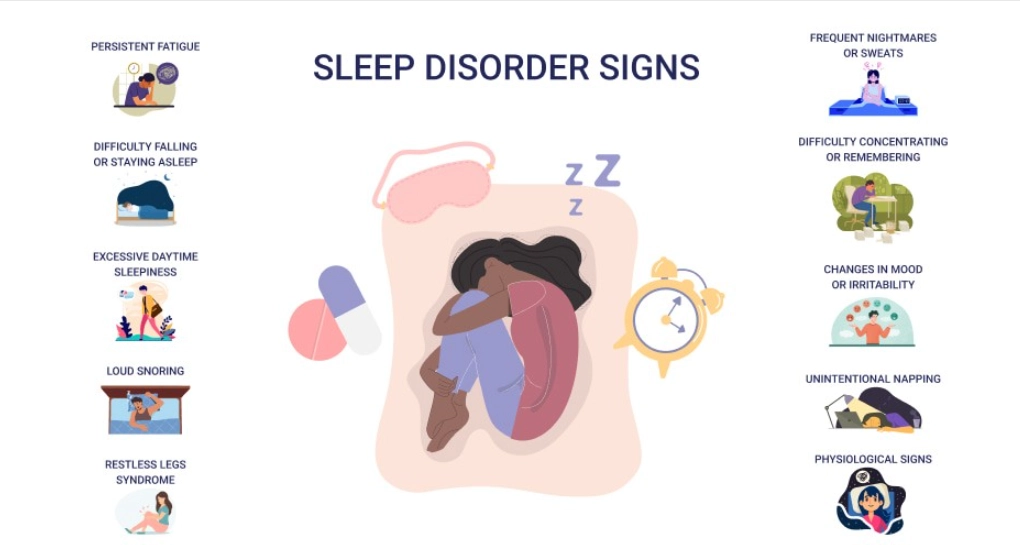
What You'll Learn in This Guide
How to Tell If Your Sleepiness Is a Disorder
The biggest mistake? Only looking for problems at night. Sleep disorders are 24-hour conditions. Their most telling evidence often shows up in daylight, disguised as personality quirks or work habits.
I once coached a client, Mark, a sharp software developer. He blamed his 3 PM fog on boring meetings. Turns out, his "fog" was severe daytime hypersomnia—a core symptom of sleep apnea. His brain was literally suffocating for micro-seconds all night long. He wasn't bored; he was exhausted.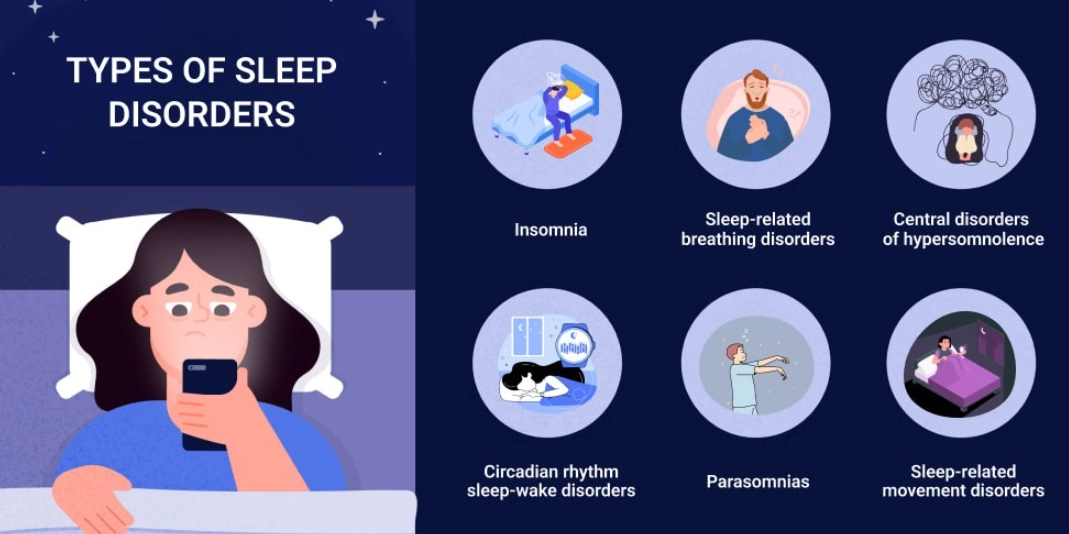
The Daytime Symptom Checklist
Ask yourself, how many of these sound familiar on a regular basis (3+ times a week)?
- Mental Fog: Struggling to concentrate, forgetfulness, slow thinking. It's not aging; it's often sleep debt.
- Emotional Volatility: Quick to irritability, feeling overwhelmed by minor tasks, uncharacteristic anxiety or low mood. Sleep deprivation hacks your emotional regulation.
- Physical Sluggishness: A heavy feeling in your limbs, constant low energy, relying on multiple caffeinated drinks just to function at baseline.
- Microsleeps: Those brief, uncontrollable episodes of dozing off—during a meeting, while reading, or, dangerously, while driving. This is a major red flag.
- Dependence on Alarms: Needing multiple, earth-shattering alarms to wake up, and still feeling groggy (sleep inertia) for over 30 minutes.
If you checked more than two, your nighttime sleep likely isn't restorative. The "why" is what we need to dig into next.
What Are the Most Common Sleep Disorder Symptoms?
Let's move beyond "I can't sleep." Here’s a breakdown of symptom clusters that point to specific issues. Think of this as matching your experience to patterns.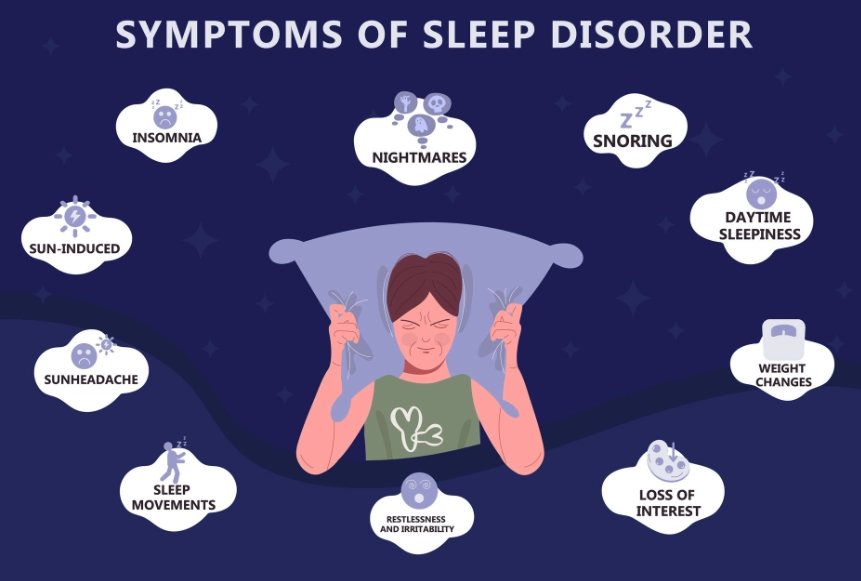
The Insomnia Pattern: Your Brain Won't Hit Pause
Insomnia symptoms aren't just about duration. It's about a persistent difficulty with the process of sleeping, despite having the opportunity to sleep. The American Academy of Sleep Medicine defines it by its key features:
- Sleep Onset Struggle: Lying awake for more than 30 minutes most nights, your mind racing with thoughts you can't dismiss.
- Sleep Maintenance Chaos: Waking up multiple times during the night and finding it hard to drift back off. You might watch the clock for an hour at 2 AM.
- Early Morning Awakening: Waking up far earlier than planned (e.g., 4 AM when you need to be up at 7) and being unable to return to sleep.
- Non-Restorative Sleep: The cruelest part. You might even clock 7-8 hours, but you wake up feeling like you never lost consciousness.
A nuance most articles miss: true clinical insomnia causes significant distress or impairment in your daytime function. A few bad nights before a big event is normal. A pattern lasting over three months that wrecks your mood and focus is a disorder.
The Sleep Apnea Pattern: The Silent Nighttime Struggle
This is where symptoms are often reported by a partner first. Sleep apnea symptoms involve breathing disruptions.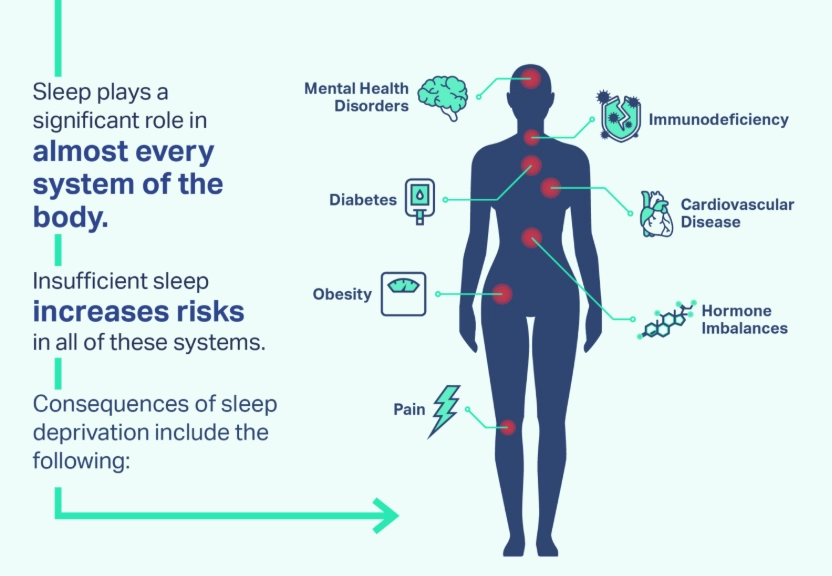
Listen to your bed partner. If they complain about your snoring, or worse, describe moments where you stop breathing followed by a gasp or choke, take it seriously. They are your best witness.
- Loud, Chronic Snoring: Not just gentle rumbling, but snoring that can be heard from another room.
- Witnessed Breathing Pauses: The hallmark sign.
- Gasping or Choking at Night: Waking yourself up with a sudden intake of air.
- Nocturia: Waking up multiple times to urinate. This isn't always a prostate or bladder issue; it's a common neural response to the stress of apnea events.
- Morning Headaches: Waking up with a dry mouth and a dull headache from fluctuating oxygen levels.
The Restless Legs Syndrome (RLS) Pattern: The Uncontrollable Urge
RLS symptoms are uniquely sensory-motor. It’s not just "fidgeting." Patients describe it as a deep, creepy-crawly, itching, or throbbing sensation inside the calves (sometimes arms). The only temporary relief is movement. Key markers:
- Symptoms Worsen at Rest: The sensations kick in or intensify when you're sitting or lying down, especially in the evening.
- Urge to Move: An overwhelming, voluntary need to move the legs.
- Evening/Nighttime Peak: Symptoms have a clear circadian rhythm, peaking at night, directly interfering with sleep onset.
- Partial Relief with Movement: Stretching, walking, or jiggling the legs provides relief, but only as long as the movement continues.
| Disorder | Core Nighttime Symptoms | Core Daytime Symptoms | Often Reported By |
|---|---|---|---|
| Insomnia | Difficulty falling/staying asleep, early waking | Fatigue, brain fog, irritability, poor concentration | Self |
| Sleep Apnea | Loud snoring, breathing pauses, choking | Excessive daytime sleepiness, morning headaches, poor mood | |
| Restless Legs Syndrome (RLS) | Uncomfortable leg urges, need to move at night | Daytime fatigue from disrupted sleep, sometimes leg discomfort |
When to Worry: The Symptom Thresholds That Demand Action
So when do these signs cross the line from nuisance to "need to see a doctor"? It's not about a single bad night. It's about frequency, duration, and impact.
Use the "Three and Three" rule of thumb: If your symptoms occur on three or more nights per week and have persisted for three months or more, and they are negatively affecting your daytime life (work, mood, safety), it's time for a professional evaluation.
Immediate red flags that warrant quicker action:
- Falling asleep during active tasks (driving, in conversations).
- A bed partner confirming you stop breathing at night.
- Symptoms causing significant depression, anxiety, or relationship strain.
- You've tried improving sleep hygiene consistently for a month with zero improvement.
How to Track Your Symptoms Like a Pro (Before Seeing a Doctor)
Walking into a doctor's office saying "I'm tired" gets you nowhere. Walking in with a two-week sleep diary is powerful. It turns vague complaints into data.
Forget fancy apps at first. Grab a notebook. For 14 days, track these things every morning and evening:
Morning Log (within 30 mins of waking):
1. Time you got into bed last night.
2. Estimated time you fell asleep.
3. Number of times you woke up & for how long.
4. Final wake-up time.
5. Sleep quality score (1-10).
6. Morning mood/energy (1-10).
7. Did you snore/gasp? (ask partner).
8. Did you have RLS sensations?
Evening Log (before bed):
1. Daytime naps (time & duration).
2. Caffeine/Alcohol intake (time & amount).
3. Exercise.
4. Stress level (1-10).
5. Notable daytime sleepiness episodes.
This log reveals patterns. You might see that alcohol, even one glass, correlates with terrible sleep maintenance. Or that your RLS flares up on high-stress days. This is gold for your doctor.
Your Action Plan: From Symptoms to Solutions
1. Start Tracking: Do the 2-week diary. No shortcuts.
2. Primary Care Visit: Take your diary. Describe symptoms using the specific language here ("I have sleep maintenance insomnia," "My partner reports breathing pauses").
3. Sleep Specialist Referral: Your GP will likely refer you to a sleep medicine specialist or a pulmonologist for suspected apnea.
4. Sleep Study Possibility: For apnea, RLS, or complex insomnia, an overnight sleep study (polysomnography) or a home sleep apnea test may be recommended. Don't fear it; it's just data collection.
5. Explore Root Causes: Treatment isn't just pills or a CPAP machine. It could involve Cognitive Behavioral Therapy for Insomnia (CBT-I), iron supplementation for RLS, or lifestyle changes.
The goal isn't just to silence the symptoms but to understand the message they're carrying.
Your Top Sleep Symptom Questions Answered
 I toss and turn all night. What sleep disorder does that indicate?
Reader Comments