Quick Guide to Deep Sleep
- Why Pills Aren't Always the Answer (And Where Nature Steps In)
- The Top Contenders: A Deep Dive into Proven Natural Sleep Aids
- Beyond Supplements: The Non-Negotiable Foundation
- Putting It All Together: A Sample Night for Deep Sleep
- Answers to the Questions You're Probably Asking
- The Final Word: It's a Personal Experiment
Let's be real. Tossing and turning at 3 AM, mind racing about everything and nothing, is a special kind of torture. You've probably tried everything from white noise apps to fancy pillows, and maybe even stared at the ceiling wondering if you'll ever feel properly rested again. I've been there. The frustration is real. And while the internet is flooded with quick fixes and miracle cures, finding genuine, natural remedies for deep sleep that actually work can feel like searching for a needle in a haystack.
That's why I wanted to cut through the noise. This isn't about selling you a magic potion. It's about looking at the science, the traditional wisdom, and the practical, actionable steps you can take to coax your body and mind into that coveted state of deep, restorative sleep. We're talking about the kind of sleep where you wake up feeling like a human being again, not a zombie.
Why Pills Aren't Always the Answer (And Where Nature Steps In)
Look, I get the appeal of a sleeping pill. When you're desperate, you want something that works now. But here's the thing my doctor told me that stuck: many prescription and over-the-counter sleep aids work on the brain in a blunt way. They can knock you out, but they often don't produce the same quality, architecture-rich sleep your body needs. You might be unconscious, but are you truly resting and repairing? Plus, the side effects—next-day grogginess, dependency, weird dreams—can be a high price to pay.
Natural remedies for deep sleep take a different approach. They're more about supporting your body's own sleep-wake cycle (your circadian rhythm) and calming the nervous system, rather than forcing it to shut down. Think of it as gently persuading your body to sleep, not clubbing it over the head.
It requires a bit more patience, I won't lie. But the payoff is a more sustainable, side-effect-free relationship with sleep.
The Top Contenders: A Deep Dive into Proven Natural Sleep Aids
Alright, let's get into the specifics. Not every herb or supplement works for everyone—our bodies are weirdly unique. But based on research and a lot of anecdotal chatter (including my own experiments), here are the heavy hitters in the world of natural sleep support.
Valerian Root: The Ancient Sedative
This one's been used since the times of ancient Greece and Rome. Valerian root is often called "nature's Valium," which is a bit of a dramatic comparison, but it gets the point across. It's thought to increase levels of a calming neurotransmitter called GABA in the brain.
The good: Several studies, including some analyzed by the National Center for Complementary and Integrative Health (NCCIH), suggest it can help people fall asleep faster and improve sleep quality. It's one of the most researched herbal options.
The not-so-good: The smell. Honestly, it smells like old socks. You get used to it, but the first time is a shock. Also, it doesn't work instantly. You often need to take it consistently for a few weeks to feel the full effects. And for a small subset of people, it can have a paradoxical stimulating effect—so maybe don't try it for the first time before a big important day.
Magnesium: The Relaxation Mineral
This isn't just a sleep supplement; it's a crucial mineral that most of us are borderline deficient in. Magnesium plays a role in over 300 biochemical reactions, many related to muscle and nerve relaxation.
When you're low on magnesium, your muscles might be more prone to twitching or cramping at night (sound familiar?), and your nervous system stays in a higher state of alert. Supplementing, particularly with forms like magnesium glycinate or citrate, can be a game-changer. It's like giving your body's electrical system a gentle, calming signal.
I found adding a magnesium supplement about an hour before bed helped with that "restless leg" feeling I sometimes got.
Chamomile & Lavender: The Gentle Soothers
Sometimes the simplest remedies are the best. A cup of chamomile tea isn't just a placebo; it contains an antioxidant called apigenin that binds to certain receptors in your brain, promoting sleepiness and reducing anxiety.
Lavender is similar. Inhaling its scent (via essential oil in a diffuser or a few drops on your pillow) has been shown in studies to slow down heart rate and blood pressure, putting you in a more parasympathetic (rest-and-digest) state. The Sleep Foundation cites research on its mild sedative effects. It's not a knockout punch, but it's a fantastic part of a calming bedtime ritual.
Glycine & L-Theanine: The Amino Acid Allies
These are a bit more "niche" but gaining serious traction. Glycine is an amino acid that sends a cooling signal to your body, helping to lower core body temperature—a key trigger for sleep onset. Some studies show it helps people fall asleep faster and feel more refreshed in the morning.
L-Theanine, found abundantly in green tea, promotes alpha brain waves (associated with relaxed alertness) and increases GABA. The cool part? It can take the edge off anxiety without causing drowsiness during the day, making it great for daytime stress that otherwise ruins your night.
| Remedy | How It's Thought to Work | Best For... | Typical Form & Timing | A Quick Note |
|---|---|---|---|---|
| Valerian Root | Increases GABA, a calming neurotransmitter. | Those who have trouble falling asleep and staying asleep. Needs consistency. | Capsule/Tincture/Tea, 30-60 mins before bed. | Can smell strong. Avoid with alcohol/sedatives. |
| Magnesium (Glycinate) | Relaxes muscles & nervous system, regulates melatonin. | People with muscle tension, restless legs, or general anxiety at night. | Capsule/Powder, 1 hour before bed. | Start with a lower dose to assess tolerance. |
| Chamomile | Apigenin antioxidant binds to brain receptors for sedation. | A gentle, ritual-based wind-down. Mild sleep support. | Tea, 45 mins before bed. | Very safe. Great for establishing a routine. |
| Lavender (Aromatherapy) | Inhalation calms the limbic system, lowers heart rate. | Reducing pre-sleep anxiety and creating a sleep-conducive environment. | Essential oil in diffuser or on pillow. | Use therapeutic-grade oil. Can be skin-irritating for some. |
| Glycine | Lowers core body temperature, a signal for sleep. | Improving sleep quality and morning alertness. Those who sleep "hot." | Powder (dissolves in water), 1 hour before bed. | Has a slightly sweet taste. Very well-tolerated. |
Beyond Supplements: The Non-Negotiable Foundation
Here's a hard truth you might not want to hear: popping a valerian root capsule while scrolling through stressful work emails in bed under bright lights is like trying to bail out a sinking boat with a teaspoon. The supplements can help, but they work best on a solid foundation. These are the boring, unsexy habits that make the biggest difference. Ignore them at your own peril.
Light: Your Master Clock's Best Friend and Worst Enemy
Your circadian rhythm is primarily set by light. Blue light from screens (phones, laptops, TVs) in the evening tricks your brain into thinking it's still daytime, suppressing melatonin production. It's one of the most disruptive things for modern sleep.
What to do: Get bright, natural light first thing in the morning. This sets your clock. In the evening, dim the lights. Use blue light blocking glasses or enable night shift modes on devices at least 90 minutes before bed. And for heaven's sake, try not to use your phone in bed. I know it's hard. I still slip up. But the difference on nights I leave it charging in another room is stark.
The Wind-Down Ritual (No, Really, You Need One)
Your brain needs a signal that the workday is over and it's safe to power down. A consistent 30-60 minute wind-down routine is that signal. It's not optional if you're serious about fixing your sleep.
This could look like: gentle stretching or yoga, reading a physical book (not a thriller!), taking a warm bath (the rise and subsequent drop in body temperature promotes sleepiness), listening to calming music or a sleep story, or doing a short meditation or breathing exercise. The key is consistency and doing things that you find genuinely relaxing, not stimulating.
Your Bedroom Environment: Optimize the Cave
Your bedroom should be a sanctuary for sleep (and intimacy), not a secondary office or entertainment center. The ideal sleep cave is:
- Cool: Around 65°F (18°C) is optimal for most people.
- Dark: Pitch black. Use blackout curtains and cover any little LED lights from electronics.
- Quiet: Use earplugs or a white noise machine if needed.
- Clutter-free: A messy room can lead to a messy mind, even subconsciously.
Putting It All Together: A Sample Night for Deep Sleep
Let's make this practical. How might these natural remedies for deep sleep look in a real evening?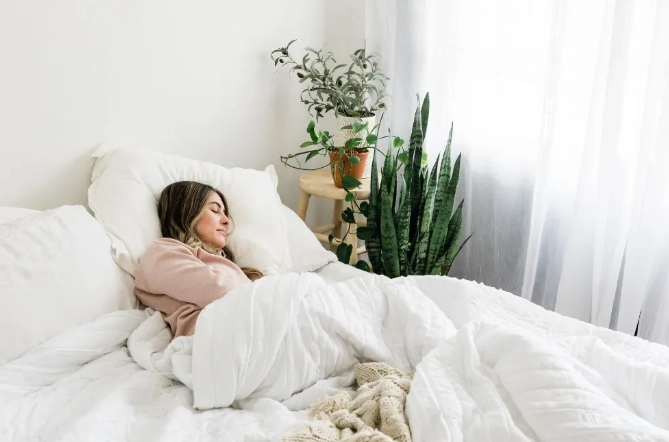
9:00 PM: Screens go on night mode. Overhead lights are dimmed. I might put a few drops of lavender oil in the diffuser.
9:15 PM: Take my magnesium glycinate supplement and maybe some glycine powder in a little water.
9:30 PM: Do 10-15 minutes of very gentle yoga or just some deep stretching on the floor while listening to an ambient podcast.
9:45 PM: Brew a cup of chamomile tea and read a novel (a real book) for 20 minutes.
10:15 PM: Quick bathroom routine. Into a cool, dark bedroom. Maybe a few minutes of focused, slow breathing in bed.
10:30 PM: Lights out.
This isn't about being rigid, but about creating a flow that tells your body what's coming next. Some nights it's shorter, some nights I skip a step. But having the framework is 80% of the battle.
Answers to the Questions You're Probably Asking
The Final Word: It's a Personal Experiment
Finding the right combination of natural remedies for deep sleep is a personal journey. My friend swears by tart cherry juice (it has natural melatonin). Another finds that ashwagandha in the afternoon manages her stress enough to sleep at night. I've found my sweet spot with magnesium, glycine, and a strict no-phone-after-10 rule.
The core idea is to shift your mindset from seeking a single magic bullet to building a holistic sleep-supportive lifestyle. Start with the foundation: master your light exposure, create a wind-down ritual, and optimize your bedroom. Then, if you need an extra boost, explore one supplement at a time, with guidance.
It takes more effort than opening a pill bottle. But the reward—waking up actually feeling restored, without side effects—is worth every bit of it. Sweet dreams.
Reader Comments