If anxiety keeps you up at night, you're not alone. I've worked with hundreds of people who toss and turn, their minds racing with worries. The good news? A targeted bedtime routine can break that cycle. It's not about quick fixes but retraining your brain to see bedtime as safe, not stressful. Let's dive into a practical, science-backed approach that actually works.
What You'll Find in This Guide
Why Anxiety and Sleep Feed Each Other
Anxiety triggers your body's fight-or-flight response, releasing cortisol and adrenaline. At night, this means your heart might race, thoughts spiral, and sleep feels impossible. Poor sleep then lowers your threshold for stress the next day, creating a vicious loop. The American Psychological Association notes that sleep problems are both a cause and effect of anxiety disorders. It's a chicken-and-egg situation, but breaking it starts with evening habits.
Think about it. When you're anxious, your brain is on high alert, scanning for threats. Bedtime becomes a battlefield. A structured routine signals safety, telling your nervous system it's okay to power down.
Building Your Anxiety-Reducing Bedtime Routine
This isn't a one-size-fits-all list. It's a flexible framework based on what I've seen work in clinical settings. Aim to start 60-90 minutes before you want to sleep.
Step 1: The 60-Minute Wind-Down (No Exceptions)
Set an alarm for 60 minutes before bed. This is your cue to stop all stimulating activities. That means no work emails, no intense conversations, no action movies. I had a client who kept checking work Slack until 10 PM—no wonder she lay awake until 2 AM. Switch to calm tasks like tidying up or gentle stretching.
Step 2: Create a Sleep Sanctuary
Your bedroom environment matters more than you think. Cool, dark, and quiet is the mantra. But for anxiety, add "comforting." Use heavy curtains to block light, a white noise machine to mask disruptive sounds (I recommend the Marpac Dohm Classic—it's a game-changer), and keep the temperature around 65°F (18°C). Make your bed inviting with soft sheets. This isn't just fluff; it's about creating a physical cue for relaxation.
Step 3: Mind and Body Relaxation Techniques
Here's where most routines fail. They suggest meditation but don't say how. For anxiety, start with body-focused methods. Try progressive muscle relaxation: tense each muscle group for 5 seconds, then release, working from toes to head. It grounds you in your body, away from anxious thoughts. Another trick is 4-7-8 breathing: inhale for 4 seconds, hold for 7, exhale for 8. Do this for 5 cycles. It slows your heart rate and activates the parasympathetic nervous system.
If your mind races, try "thought dumping." Keep a notebook by your bed and write down every worry—no editing. It gets them out of your head. I've seen people fall asleep faster just by doing this for 5 minutes.
Step 4: The Digital Detox (30 Minutes Before Bed)
Screens emit blue light that suppresses melatonin, the sleep hormone. But for anxiety, it's worse. Scrolling through news or social media can spike stress. Turn off all devices 30 minutes prior. If you must use something, try an e-reader with a warm light or listen to a calm podcast. The Sleep Foundation advises this cutoff to improve sleep quality.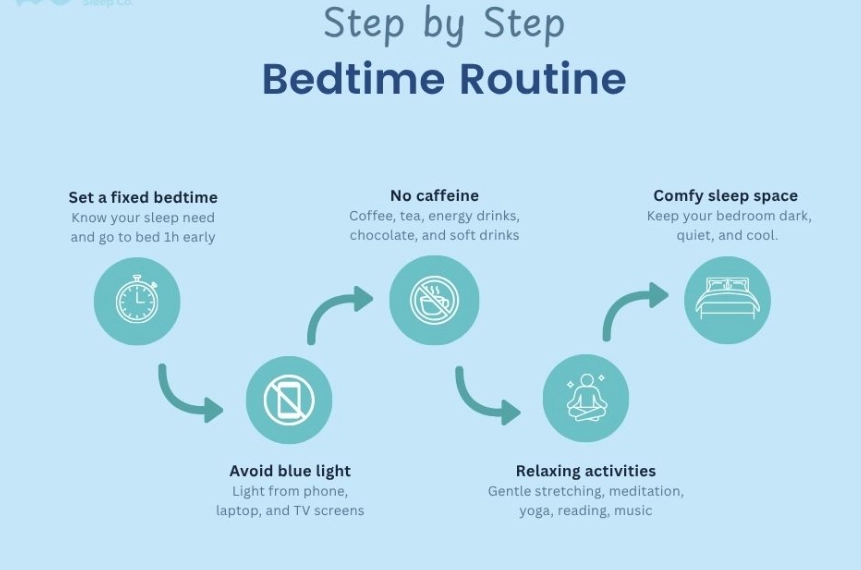
Here's a quick summary table of the routine timeline:
| Time Before Bed | Activity | Why It Helps Anxiety |
|---|---|---|
| 60-90 minutes | Start wind-down; stop stimulating tasks | Signals nervous system to shift from alert to rest |
| 60 minutes | Environment check: dim lights, set temperature | Creates physical safety cues |
| 45 minutes | Relaxation technique (e.g., breathing, stretching) | Reduces physiological arousal |
| 30 minutes | Digital detox; screen off | Prevents mental stimulation and blue light exposure |
| 15 minutes | Thought dumping or gentle reading | Clears anxious thoughts from mind |
Stick to this for at least two weeks. Consistency trains your brain to associate these steps with sleep.
Common Mistakes Even Smart People Make
One big error: using bedtime routines as a performance metric. If you're tracking sleep scores obsessively, you might increase anxiety. I've had clients who couldn't sleep because they were anxious about not sleeping enough—it's counterproductive. Focus on the process, not the outcome.
Another mistake is over-relying on sleep aids like melatonin or alcohol. They might help short-term, but they don't address the root anxiety. Alcohol, in particular, can disrupt sleep cycles and worsen anxiety later. The National Institute of Mental Health highlights that lifestyle changes, including routines, are key for managing anxiety-related sleep issues.
Also, avoid stimulating activities even if they seem relaxing. For example, reading a thriller or watching intense TV can keep your brain wired. Stick to calm, boring content.
FAQ: Your Top Questions Answered
 Remember, this is a marathon, not a sprint. I've seen people transform their sleep by sticking with these habits. Start small, maybe with just the digital detox, and build from there. Your mind needs time to learn that bedtime is safe.
Reader Comments