Quick Guide
Let's cut to the chase. Do people with ADHD fall asleep easily? If you're reading this, you probably already know the answer. It's a hard no. A frustrating, exhausting, lie-awake-staring-at-the-ceiling-for-hours kind of no. It's not about being lazy or not trying. It feels like your brain has a separate night shift that kicks in just as your body is begging for rest.
I remember countless nights as a kid, and honestly, even now as an adult. The house is quiet. Everyone else is asleep. But my mind? It's hosting a chaotic festival of thoughts, replaying awkward conversations from three years ago, planning a hypothetical garden I'll never plant, and wondering why we pronounce "knight" the way we do. Sleep feels like a destination I can see but can't reach.
If that sounds familiar, you're not broken. You're not doing it wrong. The link between ADHD and sleep is one of the most well-documented, yet frustratingly overlooked, parts of the condition. It's not a side effect; for many, it's a core feature. This isn't just about feeling tired. Chronic sleep problems wreck your mood, erase your focus the next day (making ADHD symptoms worse), and tank your overall health. It's a vicious cycle.
So why does this happen? And more importantly, what can we actually do about it? Let's dig in.
The Bottom Line Up Front: The vast majority of people with ADHD do not fall asleep easily. Research suggests up to 70-80% of adults with ADHD report significant, chronic sleep problems, compared to about 10-30% of the general population. The question "Do people with ADHD fall asleep easily?" almost answers itself for those living with it.
Your Brain's Broken Off Switch: The Science of ADHD and Sleeplessness
It's easy for people to say "just turn off your thoughts." Right. Tell that to a brain wired for high alert and low boredom tolerance. The sleep struggle in ADHD isn't one thing; it's a perfect storm of biological and psychological factors crashing into each other at bedtime.
First, the biology. ADHD is closely tied to dysregulation in key neurotransmitter systems—dopamine and norepinephrine. These aren't just for focus and motivation; they're master regulators of your sleep-wake cycle. Think of your brain's sleep system like an orchestra. The conductor (your circadian rhythm) and the various sections (hormones, alertness signals) need to be in sync. In many ADHD brains, the conductor is a bit off-beat, and the wind section (the alertness signals) just won't stop playing.
Then there's the delayed sleep phase. This is a huge one. Many with ADHD have a natural body clock that runs 2-3 hours behind the typical 24-hour cycle. Your body's internal "sleepy time" might be 2 AM, not 11 PM. Forcing yourself to sleep at a "normal" time is like trying to fall asleep in the middle of the afternoon. It's biologically contradictory. The National Institute of Mental Health (NIMH) notes that circadian rhythm disturbances are common across many neuropsychiatric conditions, including ADHD.
Psychologically, bedtime is a nightmare for the ADHD brain. It's unstructured, quiet, and devoid of external stimulation. That's an open invitation for your mind to run wild. The thoughts you kept at bay all day come rushing in. Anxiety about tomorrow, ruminations about today, random creative ideas—it's mental traffic jam. Plus, many with ADHD experience a perverse "revenge bedtime procrastination." You've had no control over your time all day, meeting demands and deadlines. The quiet night hours feel like the only time that's truly yours. So you resist sleep, scrolling or watching videos, to reclaim a sense of autonomy. It's self-sabotage, but it makes emotional sense in the moment.
The medication piece is tricky, too.
Stimulant medications, the first-line treatment for ADHD, can definitely interfere with sleep if taken too late in the day. But here's the twist: for many, properly managed medication actually improves sleep by calming the chaotic daytime symptoms, making it easier to unwind at night. It's a delicate balance that needs a doctor's guidance.
More Than Just Insomnia: The ADHD Sleep Disorder Catalog
When we ask, "Do people with ADHD fall asleep easily?" we often picture classic insomnia—trouble falling asleep. But the sleep issues in ADHD wear many masks. It's a whole spectrum of disruption.
| Sleep Problem | What It Feels Like | Why It's Common in ADHD |
|---|---|---|
| Initial Insomnia | The classic "can't switch off" experience. Lying in bed for an hour or more, mind racing. | Low dopamine at night seeking stimulation, anxiety, delayed circadian phase. |
| Restless Legs Syndrome (RLS) | An irresistible, creepy-crawly urge to move your legs when resting. | Strongly linked to dopamine dysfunction and iron metabolism, both implicated in ADHD. |
| Sleep-Disordered Breathing (e.g., Sleep Apnea) | Loud snoring, gasping, pauses in breathing during sleep. Waking up unrefreshed. | Higher prevalence in ADHD populations; symptoms (daytime fatigue, inattention) overlap and worsen ADHD. |
| Delayed Sleep Phase Syndrome (DSPS) | You're a true night owl. You fall asleep very late (e.g., 2-4 AM) and struggle to wake early. | A core circadian rhythm misalignment. Your internal clock is fundamentally set later. |
| Poor Sleep Quality & Fragmented Sleep | You might fall asleep but wake up multiple times. Sleep feels light and unrestorative. | Hyperarousal of the nervous system, sensitivity to noise/light, racing thoughts upon waking. |
| Nighttime Revenge Procrastination | Intentionally delaying sleep to enjoy free time, despite being tired. | A behavioral response to a day spent meeting external demands. A reclaiming of autonomy. |
See what I mean? It's a mess. You might face one or several of these. Personally, the initial insomnia combined with a delayed phase is my particular cocktail. I've had nights where I felt physically exhausted but my brain was buzzing like a trapped fly. It's incredibly frustrating when your body and brain are completely out of sync.
Flipping the Script: Actionable Strategies for the ADHD Brain
Okay, enough about the problem. Let's talk solutions. Standard sleep hygiene advice often fails for ADHD. "Have a consistent routine" is great, but executive dysfunction makes routines famously hard to maintain. The key is to adapt strategies for an ADHD brain, focusing on reducing mental activation and syncing with your biology, not fighting it.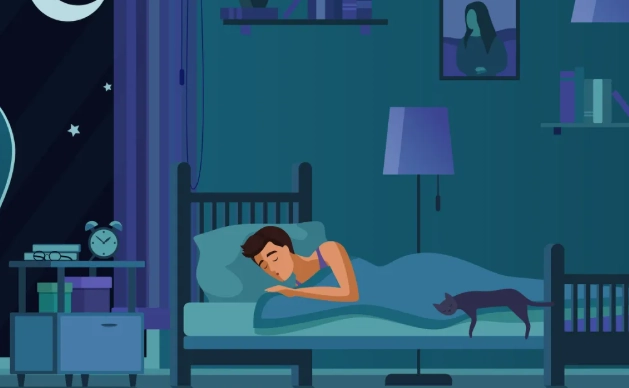
The goal isn't perfection. It's marginal, sustainable gains. A 30-minute improvement is a victory.
Master Your Environment: Build a Sleep Cave
Your bedroom should scream "sleep" and whisper "nothing else." This is non-negotiable.
The Environmental Overhaul:
- Banish the Blue Light (Seriously): Phone in another room. If you must use it, a red-light filter app isn't enough. Try grayscale mode—it makes screens profoundly boring. Better yet, charge it outside the bedroom.
- Cold, Dark, Quiet: A cool room (around 65°F/18°C), blackout curtains, and a white noise machine or fan. The fan does double duty—sound and temperature.
- The Bed is for Sleep (and Sex): No work in bed. No doomscrolling. No watching stressful shows. Break this association if you can. This is tough, I know. My laptop sometimes sneaks in, and it always backfires.
- Weighted Blankets: This isn't a gimmick for everyone. The deep pressure touch can be incredibly calming for a restless, overactive nervous system. It feels like a hug, quieting the internal noise.
Hack Your Wind-Down: The 60-Minute Pre-Sleep Ritual
You can't go from 100 mph to 0. You need a runway. This ritual is about lowering stimulation, not forcing relaxation.
Other wind-down tactics that can work:
- Audio-Only Content: A boring audiobook or a calm podcast (nothing thrilling). Listening in the dark prevents visual stimulation. I use a old-school mp3 player with no screen.
- Progressive Muscle Relaxation: Tense and release each muscle group from toes to head. It gives your busy brain a simple, physical task to focus on.
- Non-Screen Hobbies: Knitting, coloring, simple puzzles. Something mildly engaging that uses your hands.
- Warm Bath or Shower: The rise and subsequent drop in body temperature mimics the natural dip that promotes sleepiness.
Work With Your Biology, Not Against It
This is where you might need to get creative and forgive yourself for not being a "9-to-5" sleeper.
If you have a strong delayed phase, fighting it is torture. Can you adjust your life slightly? A job with later start times? Structuring your deep work for when you're naturally alert in the evening? If that's impossible, light therapy can help. Getting bright light exposure (sunlight is best) first thing in the morning can help nudge your clock earlier. Conversely, wear blue-light blocking glasses a few hours before your target bedtime.
Talk to your doctor about medication timing. A short-acting afternoon booster might be causing your sleep issues. Or, a small dose of a non-stimulant medication at night might help. There are also medications specifically for ADHD-related sleep onset issues, like clonidine or guanfacine (extended-release), which can be prescribed off-label for this purpose. This is medical territory—don't self-prescribe.
Let's talk about melatonin. It's a hormone your body makes to signal sleep. Some studies show people with ADHD may produce it later at night. A small dose (0.5mg to 3mg) taken 1-2 hours before your desired bedtime can act as a timing signal, not a knockout pill. Think of it as resetting the "start sleep" program, not forcing sleep itself. The Sleep Foundation has good resources on its appropriate use.
Your ADHD Sleep Questions, Answered
When to Get Professional Help (And What to Ask)
If your sleep problems are severely impacting your life, mood, or health, it's time to call in the pros. This isn't admitting defeat; it's being strategic.
Start with your primary care doctor or your psychiatrist. Be specific. Don't just say "I can't sleep." Say: "I have ADHD, and it takes me an average of two hours to fall asleep every night. I've tried X and Y with little improvement. I'm concerned about how this is affecting my daytime function." This gives them a clear clinical picture.
They might refer you for a sleep study (polysomnography). This isn't just for sleep apnea. It can identify restless legs syndrome, periodic limb movement disorder, and the overall architecture of your sleep. Knowing if you're getting enough deep sleep or REM sleep is crucial information.
Consider seeing a therapist who specializes in CBT for Insomnia (CBT-I). This is the gold-standard non-drug treatment for chronic insomnia. A good therapist can adapt the principles for the ADHD brain, helping you challenge sleep-related anxieties and build sustainable habits.
Look, the path to better sleep with ADHD is rarely straight.
You'll have good nights and terrible nights. A strategy will work for a month and then stop. That's okay. The key is self-compassion and curiosity, not self-blame. Treat it like an experiment. Track what helps, even a little. Notice patterns.
So, do people with ADHD fall asleep easily? The evidence and lived experience say overwhelmingly no. But can people with ADHD learn to fall asleep more easily and get more restorative sleep? Absolutely. It requires understanding your unique brain, abandoning society's one-size-fits-all sleep rules, and building your own personalized toolkit for quiet. Your journey to better sleep starts by accepting that the struggle is real, it's neurological, and it's conquerable—on your own terms.
Reader Comments