Quick Guide
- The Mental and Emotional Culprits: When Your Brain Is the Enemy
- Lifestyle and Behavioral Factors: The Sleep Saboteurs We Invite In
- Physical Health and Medical Conditions
- Your Sleep Environment: Is Your Bedroom Working Against You?
- Putting It All Together: A Quick-Reference Table of Sleep Disruptors
- Digging Deeper: Common Questions About the Causes of Poor Sleep
- Where to Go From Here
Let's be honest. We've all been there. You're lying in bed, staring at the ceiling, and your brain just won't shut off. The clock ticks past midnight, then 1 AM, then 2 AM. You know you need to be up in a few hours, and the anxiety about not sleeping makes it even harder to actually sleep. It's a vicious cycle. So, what gives? What are the main causes of poor sleep that keep millions of us from getting the rest we desperately need?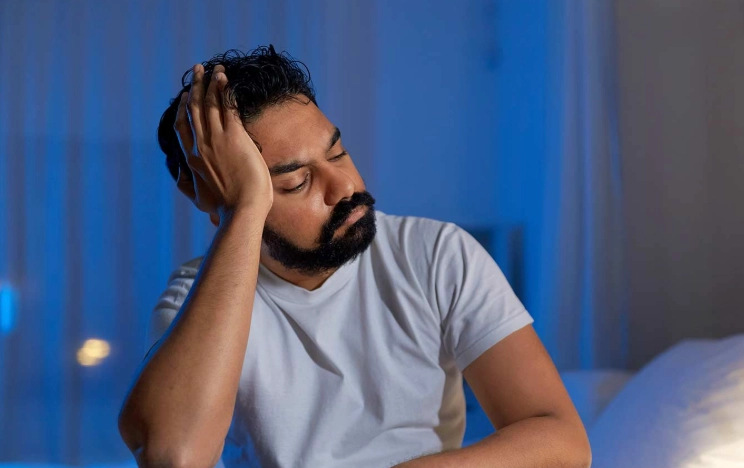
It's rarely just one thing. More often, it's a perfect storm of habits, thoughts, and physical factors that gang up on you once the lights go out. I've spent years digging into this, partly because I used to be a terrible sleeper myself. I'd blame it on stress or coffee, but the truth was much more layered.
This guide isn't about quick fixes or magic pills. It's about understanding the root causes. Once you know what's really hijacking your sleep, you can start to take it back, piece by piece.
The Mental and Emotional Culprits: When Your Brain Is the Enemy
This is where it starts for most people. Your body is tired, but your mind is running a marathon at full speed.
Stress and Anxiety: The Prime Suspects
This is the big one. When you're stressed, your body pumps out cortisol—the “alert” hormone. Evolutionarily, this was great for running from predators. For modern humans trying to sleep, it's a disaster. Your heart rate goes up, your mind races with “what-ifs,” and relaxation feels impossible.
It's not just major life crises. The low-grade, constant stress of work deadlines, family responsibilities, or financial worries can keep your nervous system in a state of low-grade alarm 24/7. Your bed stops being a place of rest and becomes another venue for your worries.
Depression and Mood Disorders
The link between sleep and mood is a two-way street. Poor sleep can worsen depression, and depression famously disrupts sleep patterns. Often, it doesn't just cause insomnia (trouble falling asleep). It can cause early morning awakening—waking up at 4 AM with a feeling of dread and being unable to drift off again.
The National Institute of Mental Health (NIMH) clearly outlines sleep disturbances as a core symptom of major depressive disorder. If your sleep problems are accompanied by persistent low mood, loss of interest, or changes in appetite, it's crucial to speak with a healthcare professional. Treating the underlying mood issue is often the key to restoring sleep.
Rumination is a huge part of this. That's the mental loop of replaying past mistakes or worrying about future ones. It's incredibly common when your head hits the pillow, because it's finally quiet. Your brain, seeking to “solve” your problems, starts churning through them instead.
Lifestyle and Behavioral Factors: The Sleep Saboteurs We Invite In
These causes are frustrating because they're often within our control, but they're so woven into daily life that we don't see them as problems.
The Blue Light and Screen Time Trap
You've heard it a million times: screens are bad for sleep. But why? The light from phones, tablets, and laptops emits a strong blue wavelength. This light tricks your brain into thinking it's daytime, suppressing the production of melatonin, the hormone that makes you feel sleepy.
It's not just the light, though. The content matters. Scrolling through social media can trigger anxiety or FOMO (fear of missing out). Reading stressful news or answering work emails activates your brain. You're injecting mental stimulation directly into your pre-sleep routine.
I tried the “no screens an hour before bed” rule and failed miserably at first. What worked better was a gradual shift: reading an actual book on my Kindle (with the warm light setting), or listening to a calm podcast instead of watching YouTube.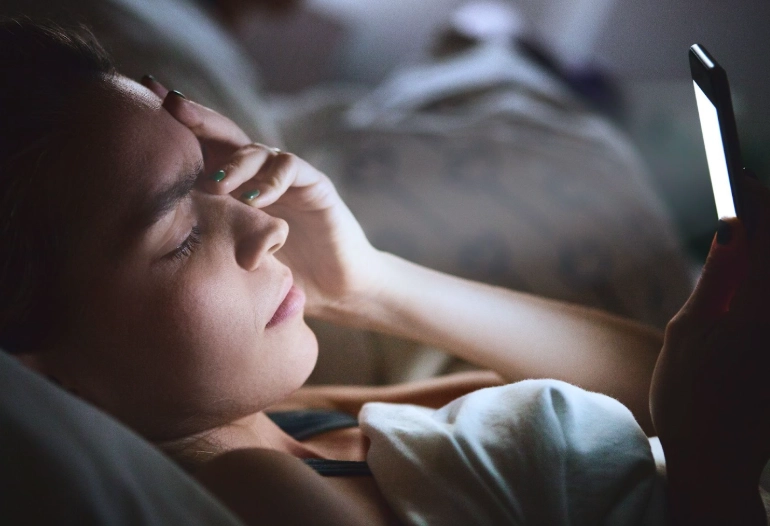
Caffeine, Alcohol, and Diet
Ah, caffeine. The great modern paradox. We use it to wake up, but it's a major reason we can't wind down. Caffeine has a half-life of about 5-6 hours. That means if you have a coffee at 4 PM, half the caffeine is still in your system at 10 PM. For some people, even a morning coffee can affect sleep quality by making it more fragmented and less restorative.
Alcohol is a sneaky one. It's a sedative, so it might help you fall asleep faster. But as your body metabolizes it, it causes withdrawals that fragment the second half of your sleep. You might wake up frequently after 2 or 3 AM and find it hard to get back to sleep. The sleep you do get is less restorative, which is why you wake up tired even after a “full” night.
Eating a large, heavy, or spicy meal too close to bedtime can cause indigestion or acid reflux when you lie down, making it physically uncomfortable to sleep.
Irregular Sleep Schedule
Your body loves rhythm. It has a master clock called the circadian rhythm that regulates sleepiness and wakefulness. When you go to bed and wake up at wildly different times every day (a huge difference between weekdays and weekends, known as “social jetlag”), you confuse this clock.
It's like constantly changing time zones. Your body doesn't know when to release melatonin or when to ramp up cortisol for waking. Consistency is arguably more important than the exact hour you choose.
Physical Health and Medical Conditions
Sometimes, the causes of poor sleep are signals from your body that something else is wrong.
Chronic Pain
This one is painfully obvious (pun intended). Arthritis, back pain, headaches, or any persistent ache makes finding a comfortable position a nightly battle. The pain itself can wake you up, and the anxiety about the pain returning can keep you from falling asleep in the first place. It becomes a cycle of pain, poor sleep, increased inflammation, and more pain.
Sleep Apnea
This is a major and often undiagnosed cause of poor sleep quality. Sleep apnea involves repeated pauses in breathing during sleep. Each pause jolts you briefly awake (often so briefly you don't remember it) to restart breathing. This can happen dozens or even hundreds of times a night.
The result? You never get into the deep, restorative stages of sleep. You might “sleep” for 8 hours but wake up exhausted, with a headache, and still feeling sleepy. Loud snoring, gasping for air at night, and excessive daytime sleepiness are key red flags. The American Academy of Sleep Medicine (AASM) provides excellent resources on recognizing and treating this serious condition.
Restless Legs Syndrome (RLS)
This is an overwhelming, often creepy-crawly or aching urge to move your legs when you're at rest, especially in the evening. The only relief is to move them, which of course, prevents you from falling asleep. It's incredibly frustrating and can significantly delay sleep onset.
Hormonal Changes
Women are particularly vulnerable to this cause. Fluctuations in estrogen and progesterone during the menstrual cycle, pregnancy, perimenopause, and menopause can directly affect sleep. Night sweats, hot flashes, and increased sensitivity to stress or temperature can make sleep elusive. It's a biological factor that often gets overlooked in general sleep advice.
Your Sleep Environment: Is Your Bedroom Working Against You?
You might have the quietest mind and perfect habits, but if your bedroom is a sleep disaster zone, you'll still struggle.
Light: Even small amounts of light from street lamps, electronics, or a crack under the door can interfere with melatonin production and sleep cycles. Total darkness is ideal.
Noise: Intermittent noises (a partner snoring, traffic, a dripping tap) are more disruptive than constant white noise. They cause micro-arousals that pull you out of deep sleep.
Temperature: Most people sleep best in a cool room, around 65°F (18°C). Your body temperature naturally drops to initiate sleep. A room that's too warm prevents this drop.
Your Mattress and Pillow: An old, sagging mattress or one that doesn't support your sleeping position can cause aches and pains that disrupt sleep. You spend a third of your life in bed—your mattress is not the place to cut corners.
Putting It All Together: A Quick-Reference Table of Sleep Disruptors
It can feel overwhelming. Here’s a breakdown of the main causes of poor sleep, their primary symptoms, and a starting point for addressing them.
| Category | Main Causes | Typical Sleep Symptoms | First Step to Address It |
|---|---|---|---|
| Mental/Emotional | Stress, Anxiety, Depression, Rumination | Racing mind at bedtime, trouble falling asleep, early morning awakening with worry. | Establish a 30-minute “wind-down” routine with no screens. Try journaling worries before bed. |
| Lifestyle/Habits | Irregular schedule, Caffeine/Alcohol, Late meals, Screen time | Falling asleep at different times, waking up groggy, needing stimulants to function. | Fix wake-up time first (even on weekends). Cut off caffeine by 2 PM. |
| Physical Health | Chronic Pain, Sleep Apnea, RLS, Hormones | Frequent awakenings, unrefreshing sleep, specific physical sensations (pain, urge to move legs). | Talk to a doctor. These often require medical diagnosis and treatment. |
| Environment | Light, Noise, Temperature, Uncomfortable Bed | Light sleep, easily disturbed, trouble getting comfortable. | Invest in blackout curtains, a white noise machine, and ensure your room is cool. |
See where you fit? Most people see themselves in two or three of these rows.
Digging Deeper: Common Questions About the Causes of Poor Sleep
Where to Go From Here
Figuring out what are the main causes of poor sleep for you is a detective game. It requires some honest observation. Keep a simple sleep log for a week: note bedtime, wake time, caffeine/alcohol intake, stress level, and how you felt in the morning. Patterns will emerge.
Don't try to fix everything at once. That's a recipe for failure and more stress. Pick one area from the table above that seems most relevant to you. Master that. Then move to the next.
For me, it started with a consistent wake-up time and banning my phone from the bedroom. That alone created a foundation. Then I worked on my pre-bed anxiety with a bit of meditation (which I still find boring, but it works).
The goal isn't perfection. It's progress. It's moving from dreadful, anxious nights to mostly restful ones. Understanding the main causes of poor sleep is the power to change them. Your bed should be a sanctuary, not a battleground. Start taking it back tonight.
Reader Comments