You got your eight hours. You followed all the rules. But you still woke up feeling like you wrestled a bear all night. Sound familiar? That's because good sleep quality isn't just a checkbox for duration. It's a complex, multi-layered state of restoration that most people misunderstand. As someone who's spent years obsessing over sleep science and coaching others, I've seen the same mistake over and over: focusing solely on the clock. Let's fix that. Good sleep quality is the efficient, uninterrupted progression through all sleep stages, leaving you feeling physically restored and mentally sharp. If that's not happening, the number on your sleep tracker is just a pretty lie.
What You'll Learn
What Does "Good Sleep Quality" Actually Mean?
Forget the vague wellness advice. Scientifically, sleep quality refers to how well your sleep serves its biological functions. The National Sleep Foundation and sleep researchers generally assess it through a combination of objective measures (what happens in your brain and body) and subjective feelings (how you feel the next day).
The biggest myth? That more sleep automatically equals better sleep. I've had clients sleeping nine hours but stuck in light, fragmented sleep, feeling worse than when they slept six solid hours. The goal isn't just to be unconscious for a long time; it's to complete the necessary cycles of repair.
Think of it like building a house. Duration is how long you have the construction crew on site. Sleep quality is whether they successfully poured the foundation, framed the walls, installed the plumbing, and put on the roof. Without quality, you just have people hanging around on an empty lot.
The 4 Pillars of Truly Restorative Sleep
Break down good sleep quality into these four components. If one is off, the whole structure wobbles.
Pillar 1: Sleep Duration (The Foundation)
Yes, it still matters, but as a foundation, not the entire building. Most adults need 7-9 hours. The key nuance here is sleep opportunity time vs. actual sleep time. If you're in bed for 8 hours but take 45 minutes to fall asleep and wake up twice, your actual sleep might be only 6.5 hours. That gap is your first clue that quality is suffering.
Pillar 2: Sleep Continuity (The Glue)
This is the most underrated pillar. How many times do you wake up, even briefly? Good sleep quality means consolidated sleep—falling asleep reasonably quickly (within 20-30 minutes), staying asleep through the night with minimal awakenings (that you remember), and easily falling back asleep if you do wake up.
Fragmented sleep, even if it totals 8 hours, disrupts the progression through sleep stages, especially cutting short deep sleep and REM cycles. It's like trying to watch a movie with someone hitting pause every ten minutes. You get the full runtime, but the experience is ruined.
Pillar 3: Sleep Depth (The Restoration Phase)
This is where the magic happens. Sleep isn't a uniform state. You cycle through light sleep (N1, N2), deep sleep (N3, or slow-wave sleep), and REM sleep. Each has a critical job.
- Deep Sleep (N3): Physical restoration. Tissue repair, muscle growth, immune system strengthening, and memory consolidation happen here. Waking up during this stage often results in that groggy "sleep inertia."
- REM Sleep: Mental and emotional restoration. This is for cognitive function, learning, mood regulation, and dreaming. Skimp on REM, and you might feel foggy and emotionally raw.
Good sleep quality means getting sufficient amounts of both deep and REM sleep, distributed appropriately across your cycles. In a typical night, you'll have more deep sleep in the first half and more REM in the second half.
Pillar 4: Sleep Timing (The Rhythm)
Your body has a master clock—the circadian rhythm. Good sleep quality means sleeping in sync with it. This is about consistency (going to bed and waking up at roughly the same time, even on weekends) and phase (sleeping during the night for most people). Sleeping from 3 a.m. to 11 a.m. for 8 hours often yields poorer quality than sleeping 11 p.m. to 7 a.m. because it fights your natural biology.
How to Measure Your Sleep Quality: Objective vs. Subjective
You can't manage what you don't measure. Here are the tools, from high-tech to no-tech.
Subjective Measures (How You Feel)
This is your most important gauge. Ask yourself these questions in the morning:
- Did I wake up feeling refreshed, or did I need multiple alarms to drag myself out of bed?
- Was I able to maintain focus and energy through the morning without a caffeine IV?
- Did my mood feel stable, or was I irritable and quick to frustration?
A simple tool is the Sleep Efficiency Percentage. Calculate it: (Actual Sleep Time / Time Spent in Bed) x 100. For example, if you were in bed for 8 hours (480 minutes) but slept only 6.5 hours (390 minutes), your sleep efficiency is (390/480)*100 = 81%. A consistently high percentage (above 85%) is a good sign of solid continuity.
Objective Measures (The Data)
| Tool | What It Measures | Pros & Cons for Measuring Quality |
|---|---|---|
| Sleep Trackers/Wearables (Oura, Whoop, Apple Watch) | Movement, heart rate, heart rate variability (HRV), sometimes temperature. They estimate sleep stages. | Pro: Great for tracking trends in sleep duration and continuity. Con: Sleep stage data (deep/REM) is an educated guess, not medical-grade. Can cause anxiety. |
| Sleep Diary / Journal | Your own records of bedtime, wake time, perceived quality, and factors like caffeine/alcohol. | Pro: Free, insightful for linking habits to feelings. Captures subjective experience. Con: Relies on memory and honesty. |
| Polysomnography (Lab Sleep Study) | Brain waves (EEG), eye movement, muscle activity, breathing, oxygen levels. The gold standard. | Pro: Provides definitive, accurate data on sleep architecture and disorders. Con: Expensive, not for routine use, and sleeping in a lab can be unnatural. |
My advice? Use a wearable for trend data on duration and restlessness, but pair it with a simple morning journal note on your energy and mood. The combination is powerful.
How to Improve Your Sleep Quality: Practical Steps
Improving sleep quality isn't about one magic trick. It's about stacking small, sustainable habits that support the four pillars.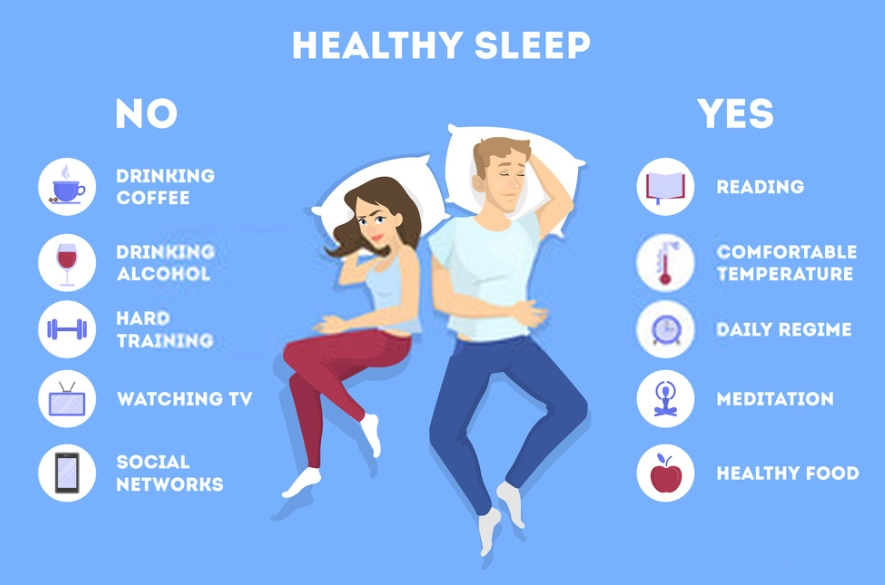
Optimize Your Sleep Environment (For Continuity & Depth)
This is non-negotiable. Your bedroom must be a cave.
- Darkness: Pitch black. Use blackout curtains and cover every tiny LED light. Even small amounts of light can suppress melatonin and fragment sleep. I use electrical tape on devices.
- Cool Temperature: Aim for 65-68°F (18-20°C). Your core body temperature needs to drop to initiate and maintain sleep. A hot room prevents this.
- Quiet: Use earplugs or a white noise machine to mask disruptive sounds. Consistent low noise is better than unpredictable silence punctuated by a garbage truck.
- Your Mattress & Pillow: They don't need to cost a fortune, but they must support your preferred sleeping position without causing pain. If you wake up with aches, it's a direct hit to your sleep quality.
Master Your Pre-Sleep Routine (For Timing & Ease of Onset)
The hour before bed is a wind-down ritual, not a wind-up.
Light is your #1 lever. Dim overhead lights 90 minutes before bed. Use lamps. Avoid blue light from screens, or use serious blue-light blocking glasses and device night modes. This signals your circadian rhythm that night is coming.
Do something relaxing that doesn't involve problem-solving or adrenaline. Read a physical book (not a thriller). Listen to calm music or a boring podcast. Try light stretching or breathing exercises. The goal is to lower your cognitive and physiological arousal.
Watch Your Daytime Habits (They Build the Foundation)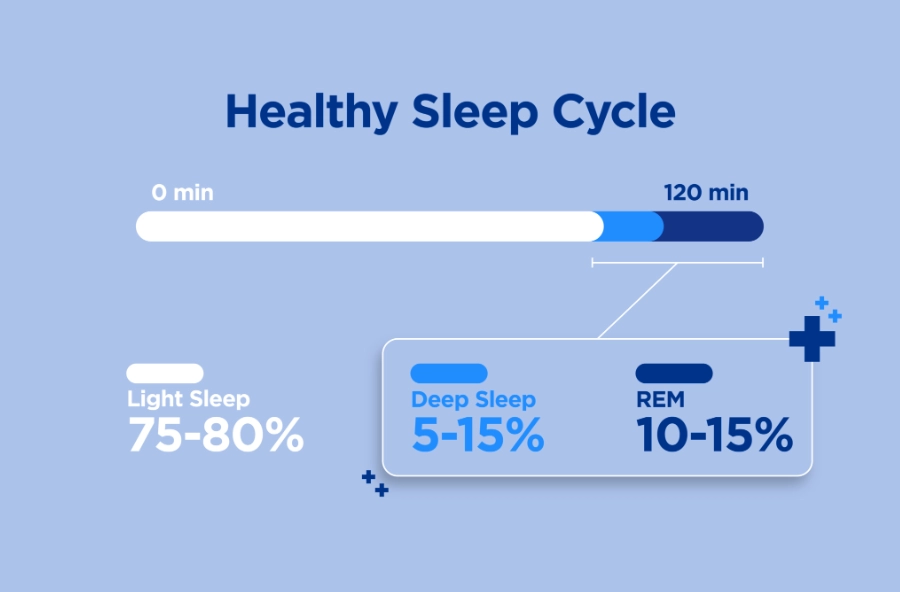
Sleep quality is built during the day.
Morning Light Exposure: Get bright light, ideally sunlight, within 30-60 minutes of waking. This resets your circadian clock, strengthening the sleep-wake signal for that night.
Exercise Regularly: Even moderate exercise improves sleep depth and continuity. But finish intense workouts at least 3 hours before bedtime, as they can be stimulating.
Manage Caffeine and Alcohol: Caffeine has a half-life of 5-6 hours. That 3 p.m. coffee can still be 25% in your system at 10 p.m., chipping away at sleep depth. Alcohol might make you fall asleep faster, but it notoriously wrecks sleep architecture in the second half of the night, suppressing REM and causing fragmentation. It's a sleep quality saboteur in disguise.
 My sleep tracker says I get lots of deep sleep, but I feel awful. Why?
Reader Comments