You drag yourself through the day, eyelids heavy, muscles aching. The moment your head hits the pillow, it should be lights out. But instead, your mind flips on. Thoughts race. The clock ticks louder. You lie there, physically drained but mentally wide awake, asking the same frustrating question: why can't I sleep when I'm so tired?
It feels like a cruel joke your body is playing on you. The truth is, this exhaustion-insomnia paradox is incredibly common, and it points to a critical misunderstanding about sleep. Being physically fatigued is not the same as being sleepy. Sleepiness is a brain-driven signal for sleep. Fatigue is often a body-driven signal of depletion. When they're out of sync, you get the worst of both worlds.
I've been there myself, staring at the ceiling at 2 AM after a brutal day, feeling utterly betrayed by my own nervous system. The standard advice—"just relax"—feels insulting. Let's cut through that and look at what's actually happening.
What's Inside: Your Quick Guide
The Big Mix-Up: Fatigue Is Not Sleepiness
This is the foundational mistake. We use "tired" to describe both states, but your brain treats them very differently.
Physical fatigue comes from muscle exertion, poor recovery, or illness. Your body is out of fuel. Sleepiness (or sleep drive) is a neurological state governed by adenosine, a chemical that builds up in your brain the longer you're awake. It's the pressure to sleep.
You can be utterly fatigued from a long hike but have a low sleep drive if you slept in that morning. Conversely, you can be physically rested but have a high sleep drive after pulling an all-nighter.
The National Sleep Foundation notes that confusing these states is a primary reason people get into bad sleep habits, like napping too late because they "feel tired," which then torpedoes nighttime sleep drive.
The Two-Process Model of Sleep
Sleep scientists talk about the two-process model: Process S (sleep drive, from adenosine) and Process C (your circadian rhythm, the 24-hour internal clock). For perfect sleep onset, these two need to align like gears. When you're exhausted but not sleepy, Process C is often the culprit—it's not yet signaling "sleep time" to your brain, even though your body is spent.
You're Stuck in Hyperarousal (The #1 Culprit)
This is the expert-level insight most generic articles miss. Hyperarousal is a state of heightened psychological and physiological activation. Your nervous system is stuck in "fight-or-flight" mode (sympathetic dominance), even though you're physically still.
Think of it like a car with the engine revving wildly while the parking brake is on. You feel the strain (fatigue), but the system is too activated to shut down.
What fuels hyperarousal at night?
- Unprocessed Stress: The worries, deadlines, and conflicts of the day don't magically disappear. Your brain, finally free of distractions, tries to process them all at once.
- Conditioned Anxiety: After a few nights of struggling to sleep, your bed itself becomes a trigger for anxiety. You start dreading bedtime, which releases cortisol—the very hormone that keeps you alert.
- Mental Activity: Planning tomorrow, replaying conversations, creative problem-solving. This is cognitive arousal, and it's kryptonite for sleep onset.
The subtle mistake here? Trying to force sleep. The more you try, the more you engage your conscious mind and raise arousal. Sleep is a passive process you have to let happen, not an active one you can achieve through effort.
Your Internal Clock Is Off-Schedule
Your circadian rhythm is run by a tiny part of your brain called the suprachiasmatic nucleus (SCN). It uses light as its primary cue. Mess with light, and you mess with sleep timing.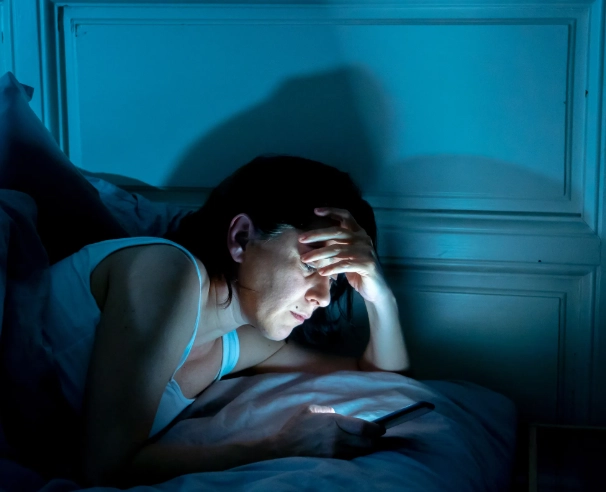
Evening blue light exposure from phones, tablets, and TVs is public enemy number one. It tricks your SCN into thinking it's still daytime, suppressing melatonin production. You might feel body-tired, but your brain is getting a "stand by" signal.
Another common scenario: the "weekend shift." Staying up late and sleeping in on weekends can delay your internal clock. Come Sunday night, your body is ready for sleep at 1 AM, not 11 PM, even if you're fatigued from the weekend's activities.
Common (But Fixable) Sleep Hygiene Mistakes
Sleep hygiene isn't just about routine; it's about creating the right biological conditions. Here’s where people with fatigue-driven insomnia often go wrong:
| Common Mistake | Why It Backfires When You're Tired | The Better Move |
|---|---|---|
| Napping after 3 PM | It reduces your sleep drive (adenosine) right before bed. Your body is tired, but your brain's "need to sleep" tank is half-empty. | If you must nap, cap it at 20 minutes before 2 PM. |
| Using the Bed for Everything | Weakens the mental association between bed and sleep. Your brain learns the bed is for work, worry, and Netflix, not just sleep. | Reserve the bed for sleep and intimacy only. No screens, no work. |
| Heavy Late-Night Meals | Your digestive system working overtime can cause discomfort and keep your core body temperature elevated, hindering the drop needed for sleep. | Finish large meals 2-3 hours before bed. A light snack is okay. |
| "Winding Down" with Intense Content | Thrillers, intense news, or heated social media debates stimulate emotional arousal, directly counteracting relaxation. | Switch to boring content: documentaries, light reading, calming music. |
Could It Be Something Else?
Sometimes, persistent fatigue with sleeplessness is a flag for an underlying condition. It's worth considering, especially if lifestyle changes don't help.
- Restless Legs Syndrome (RLS): An irresistible urge to move your legs, often worse at rest and in the evening. The discomfort can prevent sleep onset, leaving you exhausted.
- Sleep Apnea: You might not even know you have it. Frequent, brief awakenings to breathe fragment sleep, leading to severe daytime fatigue despite spending 8 hours in bed.
- Anxiety or Depression: These are master fuelers of hyperarousal and can severely disrupt both sleep architecture and the perception of fatigue.
- Chronic Pain: Pain levels often feel more intense at night due to lack of distraction, making it impossible to settle into sleep.
If you suspect any of these, a conversation with your doctor or a sleep specialist is a crucial next step. Resources from the American Academy of Sleep Medicine can help you find accredited specialists.
Your Action Plan to Break the Cycle
Knowing why is half the battle. Here’s what to do about it. Don't try all at once; pick one or two to start.
1. Build a "Buffer Zone" Before Bed
This is non-negotiable. You need 60-90 minutes to transition from "doing" mode to "being" mode. This isn't just about routine; it's about lowering physiological arousal.
Minimize blue light (use device night modes or, better yet, keep them out of the bedroom). Do something monotonous: listen to a calm podcast, do light stretching, tidy up (without urgency). The goal is boredom, not engagement.
2. Get Strategic with Light
View bright light (preferably sunlight) within 30 minutes of waking. This resets your SCN and starts the melatonin countdown for that evening. In the evening, dim the lights. This supports your body's natural melatonin production.
3. Practice Getting Out of Bed
This is the core of Cognitive Behavioral Therapy for Insomnia (CBT-I), the gold standard treatment. If you're not asleep (or falling asleep) after 20 minutes, get up. Go to another room and do that boring activity under dim light until you feel sleepy. Then return to bed.
This breaks the anxiety-bed connection. It's frustrating at first, but it's the most powerful way to tell your brain "bed is for sleep."
4. Reframe the Fatigue
When you lie there tired but awake, instead of thinking "I need sleep to function tomorrow," try "my body is resting even if my mind is awake." This reduces performance anxiety about sleep. Deep, relaxed breathing while lying still still provides some physical restoration.
Questions You're Probably Asking
The feeling of being exhausted yet wide awake is a clear signal that your sleep system is out of balance. It's not about trying harder to sleep. It's about identifying which lever is stuck—be it hyperarousal, a mistimed clock, or counterproductive habits—and gently nudging it back into place. Start with your pre-bed buffer zone and be kind to yourself. The path to better sleep isn't a straight line, but understanding these reasons is the first step off the frustrating treadmill.
Reader Comments