Let's be honest. Your current "bedtime routine" probably involves scrolling through your phone until your eyes glaze over, then wondering why you can't fall asleep for another hour. I've been there. For years, I treated sleep like an inconvenient off-switch, not a vital biological process. The result? Mornings fueled by caffeine, brain fog by 3 PM, and a constant, low-grade irritability.
Then I got serious about building a real bedtime routine for adults. Not the fluffy, generic advice you see everywhere. I'm talking about a deliberate, science-informed sequence of actions that tells your nervous system, in no uncertain terms, that it's time to shut down for the night.
The difference was staggering. Falling asleep became easier. The sleep felt deeper. Waking up stopped feeling like a punishment.
This guide isn't about perfection. It's about building a practical, personalized framework you can actually stick with. We'll move beyond the "avoid screens" platitude and into the actionable steps that create lasting change.
What's Inside: Your Quick Sleep Fix Guide
Why a Bedtime Routine Isn't Just for Kids
We don't question routines for babies. Bath, book, bed. It's a sacred ritual. But somewhere along the way, we decide we've outgrown it. Adulthood becomes synonymous with chaotic sleep schedules.
That's a mistake.
Your brain craves predictability. A consistent bedtime routine acts as a series of powerful cues. It's a signal that cuts through the noise of the day and tells your amygdala (the brain's fear center) to stand down. It tells your pineal gland to start pumping out melatonin. It tells your core body temperature to begin its slow, deliberate drop—a key physiological trigger for sleep.
Without these cues, you're asking your body to go from 60 to 0 in an instant. It's like slamming the brakes on a highway. It's jarring, inefficient, and stressful on the system.
The Science Behind the Sleep Connection
This isn't just feel-good advice. Research from institutions like Harvard Medical School consistently shows that behavioral interventions—like establishing regular pre-sleep rituals—are foundational for treating sleep-onset problems.
Here’s what’s happening under the hood when you have a routine:
- Cortisol Down, Melatonin Up: Stress hormones like cortisol need to decline for sleep to initiate. Calming activities (reading, gentle stretching) facilitate this. Darkness and routine then trigger melatonin production.
- The Power of Conditioning: This is classic Pavlovian response. If you always read a physical book in a certain chair before bed, that chair and book become conditioned stimuli for drowsiness. Your brain learns the pattern.
- Parasympathetic Nervous System Activation: Your "fight-or-flight" system (sympathetic) needs to disengage. A routine engages the "rest-and-digest" (parasympathetic) system through slow, mindful activities.
One study I find particularly compelling looked at individuals with mild insomnia. Those who implemented a structured, consistent wind-down period showed significant improvements in sleep latency (time to fall asleep) and perceived sleep quality compared to those who didn't. The routine itself became a sleep aid.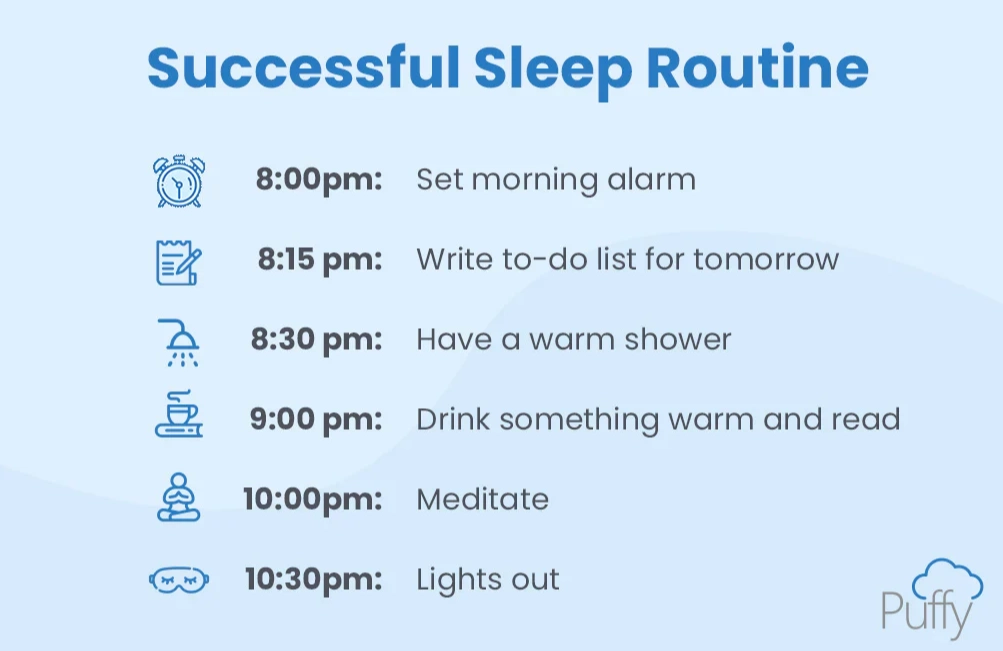
Building Your Personalized Bedtime Routine: A 60-Minute Blueprint
Forget the rigid, one-size-fits-all lists. Think of this as a menu. Pick and choose what resonates, and sequence it in a way that makes sense for your life. The goal is a 60-90 minute wind-down window.
Here’s a breakdown of phases and activities, moving from higher to lower stimulation.
| Time to Bed | Phase | Activity Ideas & Purpose | What to Avoid |
|---|---|---|---|
| 60-30 mins before | The Transition | Gentle house tidying (signals day is ending). Prepare for tomorrow (layout clothes, make lunch). Dim overhead lights, use lamps. Start a calming herbal tea (chamomile, passionflower). | Starting complex work projects. Intense discussions or arguments. Heavy meals or alcohol. |
| 30-15 mins before | The Disconnect | This is the most critical step. Put all phones, tablets, and laptops on "Do Not Disturb" and place them in another room (or at least across the room). If you use your phone as an alarm, buy a cheap alarm clock. This is non-negotiable for a reason. | Checking "one last" email or social media. Watching stimulating TV or movies. Video games. |
| 15-5 mins before | The Wind-Down | Light stretching or gentle yoga (focus on relaxing poses like child's pose). 5-minute meditation or deep breathing (try 4-7-8 breathing). Read a physical book or magazine (nothing too thrilling). Listen to a calming podcast or audiobook (with a sleep timer). | High-intensity exercise. Reading on a backlit e-reader (unless it's e-ink with no front light). Problem-solving or planning. |
| 5-0 mins before | The Final Cues | Brush & floss teeth, wash face. Complete any skincare routine. Set bedroom temperature to cool (around 65°F or 18°C is ideal). Get into bed. Practice a 2-minute gratitude reflection or simply notice your breath. | Turning on bright bathroom lights. Checking the time obsessively. |
Personalizing Your Path to Sleep
Your routine should feel good, not like a chore. Hate reading? Try an adult coloring book or simple knitting. Find meditation frustrating? Try a progressive muscle relaxation audio guide instead. The key is consistent, low-stimulus activity.
I personally combine the "Disconnect" and "Wind-Down" phases. My phone goes away 45 minutes before bed. I then spend 20 minutes reading a novel in my living room chair (never in bed), followed by 10 minutes of very gentle stretching on a yoga mat. That's my signal. The moment I start the stretching, my brain knows sleep is next.
The 3 Most Common Bedtime Routine Mistakes (And How to Fix Them)
After talking to hundreds of people about their sleep struggles, I see the same pitfalls again and again.
Mistake #1: Inconsistency. Doing a perfect routine Tuesday and then scrolling until 1 AM on Wednesday. Your brain doesn't learn the cue.
The Fix: Start absurdly small. Commit to just one thing for two weeks. Maybe it's "phone away 30 minutes before bed." Just that. Nail it. Then add a second element.
Mistake #2: Bringing Stress to Bed. Using your wind-down time to mentally replay the day's problems or tomorrow's to-do list. This activates the stress response you're trying to quiet.
The Fix: Institute a "worry dump." Earlier in the evening, spend 5 minutes writing down everything on your mind on a piece of paper. Close the notebook. Tell yourself, "It's on the paper, I don't need to hold it in my head." This cognitive offloading is powerful.
Mistake #3: Expecting Instant Perfection. You'll have off nights. You'll cave and check your phone. The goal isn't perfection; it's direction. Beating yourself up creates more stress, which is worse for sleep than skipping the routine.
The Fix: Practice self-compassion. Acknowledge the slip, and gently recommit to the process the next night. Progress over perfection, always.
How to Know If Your Routine is Working
Don't just go by feel. Look for tangible signs:
- Faster Sleep Onset: You're falling asleep in under 20-25 minutes most nights.
- Fewer Night Wakings: You sleep more soundly through the night.
- Improved Morning Mood: You wake up feeling more refreshed, not groggy.
- The Routine Itself Becomes Sleepy: You start feeling genuinely drowsy during your wind-down activities. This is the ultimate sign of successful conditioning.
Give it at least 3-4 weeks of consistent effort before evaluating. You're rewiring years of habit.
Your Bedtime Routine Questions, Answered
 What's the biggest mistake people make with their bedtime routine?
 The journey to better sleep starts not when your head hits the pillow, but 60 minutes earlier. It starts with a decision to create a space—both physically and mentally—that welcomes rest. Your bedtime routine is that space. It's your nightly ritual of care, a contract with yourself that says your sleep matters. Don't overcomplicate it. Start tonight. Pick one thing from the blueprint. Do it. Then do it again tomorrow. That's how you build a foundation for sleep that lasts a lifetime.
Reader Comments