You know the feeling. It's 2 AM, the room is dark and quiet, but your brain is hosting a chaotic town hall meeting. Replaying that awkward conversation from work, worrying about tomorrow's deadline, feeling your heart thump just a little too fast against your ribs. This isn't just trouble sleeping; it's a tangled knot of insomnia and anxiety, each one feeding the other until you're exhausted but wide awake. If common advice like "just relax" or "count sheep" feels laughably inadequate, you're not alone. The real solution isn't about forcing sleep. It's about untangling the anxiety that's holding it hostage.
What's Inside This Guide
The Foundation: Habits That Build Sleep Pressure (Not Just "Hygiene")
Most articles talk about sleep hygiene. That's fine, but it's passive. It's like keeping a clean kitchen. What we need is the active ingredient for sleep: sleep pressure. This is your body's natural drive to sleep, built up by being awake and depleted by sleep. Anxiety hijacks this system, making you feel tired but wired. Your goal is to strengthen the sleep pressure signal so it can punch through the anxiety noise.
Light and Schedule: Resetting Your Internal Clock
Your circadian rhythm is your master clock. Anxiety loves to break it. Here's how to fix it.
Morning light is non-negotiable. Within 30 minutes of waking, get 10-15 minutes of outdoor light (even on cloudy days). Don't just open a curtain; go outside. This signals your brain that the day has started, starting a countdown for melatonin release roughly 14 hours later. If you wake up anxious, this is more effective than lying in bed ruminating.
Be ruthless about your wake-up time. This is the single most important schedule anchor. Wake up at the same time every day, even weekends, even if you slept poorly. Yes, even on Saturday. Consistency tells your brain when to be alert and when to start winding down. Sleeping in "to catch up" confuses the system and makes the next night harder.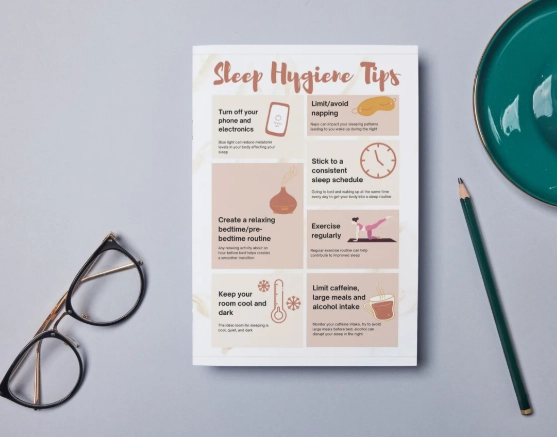
A Common Mistake Most People Make
People focus on a strict bedtime. That's a trap. Your bedtime should be fluid, based on sleepiness. A fixed wake time creates a stable structure; a forced bedtime creates performance anxiety ("I must sleep now!"). Go to bed only when you feel drowsy, not just tired. If you're not drowsy after 20 minutes, get up and do something quiet in dim light.
The Wind-Down Routine That Actually Works
The hour before bed isn't for finishing emails or watching thrilling shows. It's a transition zone from "doing" to "being."
- Dim the lights: Lower overhead lights 60-90 minutes before bed. Use lamps. This supports natural melatonin production.
- Create a "worry dump": Take 10 minutes, earlier in the evening, to write down every anxious thought, to-do, or problem. Get it out of your head and onto paper. Close the notebook. Symbolically, you're parking those thoughts until tomorrow.
- Choose calming activities: Read a physical book (fiction is great), listen to a boring audiobook or calm music, do some gentle stretching. Avoid problem-solving tasks.
How to Quiet a Racing Mind at Night (When Anxiety Peaks)
This is the core battle. You're in bed, the thoughts are spiraling. Trying to "stop thinking" is like trying not to think of a pink elephant. You need strategies that engage your brain in a different, non-threatening way.
Breathing Techniques That Calm Your Nervous System
Forget "take deep breaths." Be specific. Anxious breathing is shallow and high in the chest. We need to trigger the parasympathetic (rest-and-digest) response.
The 4-7-8 Method: Inhale quietly through your nose for 4 seconds. Hold your breath for 7 seconds. Exhale completely through your mouth, making a whoosh sound, for 8 seconds. Repeat 4 times. The extended exhale is key—it stimulates the vagus nerve, which tells your body to calm down.
Box Breathing: Inhale for 4, hold for 4, exhale for 4, hold for 4. It's simple, rhythmic, and gives your mind a concrete task to focus on besides worry.
Cognitive Distraction: The "Boring Game"
If breathing feels too focused, try mental distraction. The goal is something just engaging enough to occupy your working memory, but too boring to be stimulating.
- Name all the US states alphabetically. >List every character you can remember from your favorite TV show.
- Recite the lyrics to a song you know well, slowly and deliberately.
The key is to stick with one task. When your mind wanders back to anxiety (and it will), gently guide it back to naming states starting with "M."
Progressive Muscle Relaxation (PMR) for Physical Tension
Anxiety lives in the body—tight shoulders, clenched jaw. PMR teaches you to recognize and release it.
Start at your feet. Tense all the muscles in your feet as hard as you can for 5 seconds. Then release completely, noticing the feeling of relaxation for 15 seconds. Move up to your calves, thighs, abdomen, hands, arms, shoulders, neck, and face. By the time you reach your forehead, your body often feels heavier, signaling readiness for sleep.
The CBT-I Approach: Rethinking Your Relationship with Sleep
Cognitive Behavioral Therapy for Insomnia (CBT-I) is the gold-standard treatment, endorsed by the American Academy of Sleep Medicine. It works because it targets the thoughts and behaviors that perpetuate sleep problems. You don't need a full program to use some of its principles.
Challenge Catastrophic Sleep Thoughts
Anxious minds love predictions: "If I don't sleep tonight, tomorrow will be a disaster." This thought itself creates anxiety, making sleep impossible. Challenge it.
Ask yourself: Has there ever been a night where you slept poorly but still got through the next day? Probably. Did you literally collapse? Unlikely. The reality is you'll be tired and grumpy, not non-functional. Removing the "disaster" label from a bad night reduces the fear around it.
Stimulus Control: Re-Learning that Bed = Sleep
For people with insomnia, the bed becomes a cue for anxiety and wakefulness, not sleep. Stimulus control breaks that association.
- Use the bed only for sleep and intimacy. No reading, scrolling, watching TV, or worrying in bed.
- The 20-Minute Rule: If you're not asleep or you wake up and can't return to sleep within about 20 minutes, get out of bed. Go to another room. Do something quiet and boring in dim light (no screens). Return to bed only when you feel sleepy. Repeat as needed.
This is hard. It feels disruptive. But over a week or two, it powerfully re-trains your brain to associate the bed with sleepiness, not frustration.
Sleep Restriction (A Supervised Power Tool)
This is the most counterintuitive but effective part of CBT-I. It involves temporarily reducing your time in bed to match your actual sleep time. If you're averaging 6 hours of sleep over 8 hours in bed, your time in bed is limited to 6 hours (e.g., 1 AM to 7 AM). This builds strong, rapid sleep pressure, consolidates sleep, and increases sleep efficiency.
Important Caution
Sleep restriction should be done carefully, preferably with guidance from a therapist or using a reputable digital program like Sleepio or CBT-I Coach (developed with the VA). Starting too aggressively can cause excessive daytime sleepiness. The goal is to increase time in bed gradually as your sleep efficiency improves.
The takeaway? Stop trying to "get" sleep. Focus on creating the right conditions for sleep pressure to build and for your nervous system to feel safe enough to let go. It's a practice, not a perfect.
Your Questions, Answered
I feel anxious the moment my head hits the pillow. What's the first thing I should do?
Get out of bed. Seriously. The worst thing you can do is lie there and stew. Go to a chair. Practice your 4-7-8 breathing or do a "worry dump" on paper there. Only return to bed when you feel physically drowsy (heavy eyelids, nodding off). This breaks the cycle of immediate bed-anxiety pairing.
Are sleep medications or melatonin a good solution for anxiety-induced insomnia?
They can be a short-term bridge, but rarely a long-term fix. Prescription sleep aids can lose effectiveness and don't address the underlying anxiety. Melatonin is a timing hormone, not a knockout pill; it's best for jet lag or shift work, not for quieting a racing mind. The risk is becoming psychologically dependent on a pill to sleep, which undermines your confidence in your own ability to sleep. CBT-I is more effective long-term because it builds that confidence.
My anxiety wakes me up at 3 AM every night and I can't get back to sleep. Why this specific time?
This is incredibly common. Sleep is lighter in the second half of the night, and core body temperature starts to rise in preparation for waking. For an anxious system, this slight shift can be enough to trigger full wakefulness. Combine that with a quiet, dark environment where thoughts amplify, and it's a perfect storm. The solution isn't to prevent the wake-up (that's normal), but to have a plan for it: keep the lights off, don't check the clock, do a boring mental exercise or focus on the feeling of your breath. Avoid turning on your phone.
I've tried relaxation apps, but they make me more anxious because I'm "failing" to relax. What now?
This is a classic pitfall. You've turned relaxation into a performance test. Stop using guided meditations that instruct you to "clear your mind." Switch to purely sensory-focused activities. Try an app that plays only nature sounds (rain, ocean waves). Or focus intently on the physical sensations in your body—the weight of the blanket, the coolness of the pillow. When your mind wanders, just note "thinking" and return to a sensation. The goal is observation, not emptiness.
Reader Comments