You've probably heard the name floating around wellness circles or seen it mentioned in a sleep article. The 3-2-1 bedroom method. It sounds like a secret code, doesn't it? Some kind of elite formula for the perfect night's rest. I was skeptical too, at first. I've tried everything from expensive mattresses to meditation apps, with mixed results at best.
But then I dug into it. And honestly? It's less of a mystical secret and more of a brilliantly simple, science-backed checklist for your bedroom. It cuts through all the noise and focuses on the three physical factors in your room that have the biggest, most direct impact on whether you toss and turn or drift off peacefully.
Your Sleep Navigation
- Breaking Down the 3-2-1 Rule: It's Not Just a Catchy Name
- How to Actually Implement the 3-2-1 Bedroom Method: A Step-by-Step Guide
- Common Challenges and How to Solve Them (The Real-World Stuff)
- How the 3-2-1 Method Compares to General "Sleep Hygiene"
- Frequently Asked Questions About the 3-2-1 Bedroom Method
So, let's cut to the chase. What is the 3-2-1 bedroom method? In its simplest form, it's a set of three environmental rules designed to prime your bedroom for optimal sleep. It targets light, temperature, and sound—the holy trinity of sleep disruptors. The "3-2-1" acts as an easy-to-remember framework for the specific conditions you're aiming to create.
The Core Idea: Your brain and body need specific cues to shift into sleep mode. A room that's too bright, too warm, or too noisy sends the wrong signals. The 3-2-1 bedroom method systematically removes those conflicting signals and replaces them with cues that whisper "it's time to sleep."
It's not about buying more stuff. It's about tweaking what you already have. That's what I found most appealing. No subscription required.
Breaking Down the 3-2-1 Rule: It's Not Just a Catchy Name
Okay, let's get into the nitty-gritty. What do those numbers actually mean? Each number corresponds to a key pillar of your sleep environment. Understanding the "why" behind each one is what makes the method stick. It turns a random rule into common sense.
The "3": Mastering Light (3 Hours Before Bed)
This is the big one, and honestly, the hardest for most people (myself included). The rule suggests you start dimming artificial lights and avoiding screens about 3 hours before your target bedtime.
Why three hours? It's about giving your body's internal clock, your circadian rhythm, a clear, unambiguous signal. The hormone melatonin, which makes you feel sleepy, starts its natural rise in the evening. Bright light, especially the blue light from phones, laptops, and TVs, slams the brakes on melatonin production. It's like telling your brain, "Hey, it's still daytime! Stay alert!"
Three hours gives your system enough time to recover and start that melatonin ramp-up properly. I know, I know. Three hours without scrolling or watching something sounds like a punishment. It felt that way to me too. You don't have to sit in the dark. The goal is progressive dimming.
Practical things that fall under this "3":
- Using apps like f.lux or Night Shift on your devices after dusk (it helps, but it's not a free pass to keep scrolling).
- Swapping out cool-white LED bulbs for warm-white (2700K or lower) in lamps you use in the evening.
- Using dimmer switches or lower-wattage bulbs.
- And yes, trying your best to make the last hour before bed truly screen-free. An audiobook or podcast in a dark room is a great bridge.
The "2": Nailing the Temperature (2 Degrees Cooler)
This one is surprisingly precise. The method recommends setting your bedroom thermostat to about 2 degrees Celsius (roughly 3-4 degrees Fahrenheit) cooler than the rest of your house, or than what you find comfortable during the day.
The science here is solid. To initiate and maintain deep sleep, your core body temperature needs to drop slightly. A cool room facilitates this process. A warm room forces your body to work harder to shed heat, which can lead to more restless, fragmented sleep. You might not fully wake up, but you won't sink into the most restorative stages.
The ideal range, backed by research from places like the National Sleep Foundation, is between 60-67°F (15.5-19.5°C). The "2 degrees cooler" rule is a personalized shortcut to get you into that zone.
It's not just about the air conditioner or heater. Bedding plays a huge role. A breathable, moisture-wicking mattress protector and sheets (think cotton, linen, or certain technical fabrics) are non-negotiable partners to a cool room setting. A warm, humid microclimate under your duvet will sabotage the whole effort.
A Common Mistake: People crank the heat in winter thinking a toasty room is cozy for sleep. It's the opposite. You might start warm, but you'll likely overheat later. Better to have a cooler room and use a warmer blanket or duvet that you can adjust.
The "1": Controlling Sound (1 Consistent Sound or Less)
Absolute silence isn't the goal. In fact, for many people, total silence can be unnerving and make small noises (a creaking floor, a distant siren) seem louder. The "1" in the 3-2-1 bedroom method stands for one consistent, masking sound—or the elimination of unpredictable noise.
Your brain stays on low-level alert during sleep to monitor for threats. An abrupt sound—a door slam, a dog bark, a partner snoring—can trigger a mini adrenaline response, pulling you toward wakefulness even if you don't remember it. A consistent, monotonous sound masks these irregularities.
So, what counts as a good "1" sound?
- White noise: The classic. A fan or a dedicated white noise machine. It covers a broad spectrum of frequencies.
- Pink noise or Brown noise: Deeper, more like steady rain or a gentle waterfall. Some studies, like one referenced by the National Institutes of Health, suggest pink noise may enhance deep sleep.
- Nature sounds: A loop of gentle rain, ocean waves, or a forest stream.
- Low-volume, boring audiobooks or podcasts: The key is a calm, steady voice without sudden loud moments or exciting plot twists. A history lecture works better than a thriller.
The goal is consistency. The sound should be present all night at a low, steady volume (usually around 50 decibels, or the level of a quiet conversation).
How to Actually Implement the 3-2-1 Bedroom Method: A Step-by-Step Guide
Knowing what the 3-2-1 bedroom method is and actually doing it are two different things. Let's move from theory to practice. Don't try to overhaul everything in one night. That's a recipe for frustration. Treat it like a week-long experiment.
Start with an audit of your current bedroom. Just lie in bed for a few minutes and observe.
Your Pre-Implementation Checklist: Is there a power indicator LED shining like a beacon? Is the room stuffy? Can you hear the fridge kicking on downstairs or traffic noise? Write down the top three things that feel "off." That's your starting point.
Week 1: Conquer Light Pollution
Focus solely on the "3" this week.
- Identify and eliminate light sources: Blackout curtains or a good sleep mask are the gold standard. Cover or remove electronic LEDs (alarm clocks, chargers, TVs) with black electrical tape. It sounds crude, but it works.
- Create a sunset inside: An hour before bed, turn off overhead lights. Use a single lamp with a warm bulb. If you read, use a directed reading light that doesn't flood the room.
- Establish a screen curfew: Start with 30 minutes before bed. Put your phone on charge in another room. Use a traditional alarm clock. This one habit might be the most powerful change you make.
See how you feel after 3-4 nights of just this. Often, the improvement from better light management alone is significant.
Week 2: Dial in the Temperature
Now, layer in the "2."
- Find your baseline: What's the temperature in your bedroom right now as you're trying to sleep? Use a simple thermometer.
- Experiment with a 2-degree drop: If it's 70°F (21°C), try 68°F (20°C) for a few nights. Give your body time to adjust. The goal is to feel slightly cool when you first get into bed, not cold.
- Optimize your bedding: This is crucial. If you're cooling the air, make sure your pajamas and sheets aren't trapping heat. Natural fibers are your friend. Consider a lighter duvet or just a top sheet.
- Use fans strategically: A ceiling fan on low or a oscillating fan does double duty—it cools and provides white noise.
Week 3: Introduce Sound Consistency
Finally, add the "1."
- Choose your sound: Test a few. Many free apps or YouTube videos have samples. Do you prefer the hiss of white noise or the rumble of brown noise?
- Get a dedicated machine or use an old device: Using your phone is risky because of notifications and temptation. A simple, cheap white noise machine or a repurposed old tablet in airplane mode is better.
- Set the volume correctly: It should be just loud enough to mask external noises (like a distant conversation) but not so loud it's distracting. Play around with it.
By the end of three weeks, you've systematically transformed your sleep environment. The 3-2-1 bedroom method isn't a quick pill; it's a cultivated habit for your space.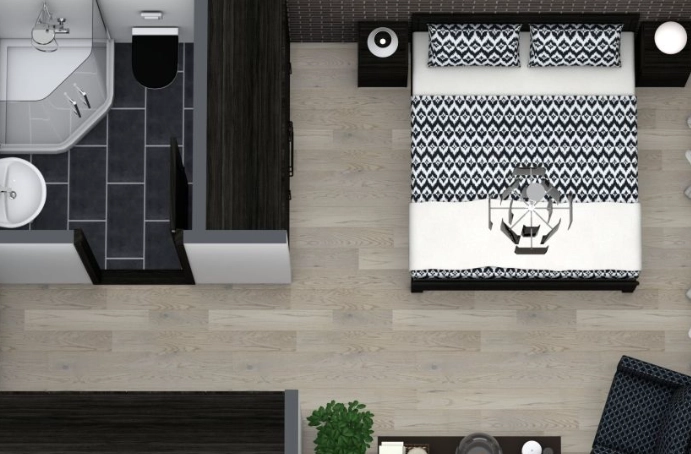
Common Challenges and How to Solve Them (The Real-World Stuff)
In a perfect world, we all have control over our bedrooms. But we live in the real world. Here’s where a rigid interpretation of what the 3-2-1 bedroom method is can fall apart, and where you need to adapt.
| Challenge | Why It Breaks the 3-2-1 Rule | Practical Workaround |
|---|---|---|
| Partner with Different Preferences | They might like a warmer room, need a light on, or hate white noise. | Compromise on the middle ground. Try a dual-zone mattress topper for temperature. Use a personal white noise machine or headphones (like sleep headphones in a headband) for sound. For light, a small, dim, directed reading light for them and a high-quality sleep mask for you. |
| Small Children or Babies | Night feeds, monitor lights, and unpredictable sleep schedules disrupt the routine. | Segment your sleep space. Use a very dim red-light nightlight (red light least disrupts melatonin) for feeds. Keep the monitor screen dimmed and facing away. Focus on controlling your immediate environment—your side of the bed with a mask and earplugs—when you have the chance to sleep. |
| Noisy Urban Environment | Constant traffic, sirens, and city hum violate the "1 consistent sound" principle. | Double-layer your sound defense. Good quality, comfortable foam earplugs combined with a white noise machine set to a volume that masks what the earplugs don't. Also, heavy curtains help dampen street noise. |
| Old HVAC System | Can't precisely control the temperature or it's too expensive to run all night. | Focus on micro-climate. Use a fan directly on you. A cooling mattress pad or a Chilipad/Ooler system (a bit of an investment) gives you precise temperature control of your bed surface regardless of room temp. Wear lightweight, breathable sleepwear. |
The point is, the 3-2-1 bedroom method is a framework, not a prison sentence. If you can only manage 1 hour of screen-free time instead of 3, that's still a win. If you can only make the room 1 degree cooler, that's progress. The spirit of the method is intentionality about your environment.
How the 3-2-1 Method Compares to General "Sleep Hygiene"
You might be thinking, "This just sounds like sleep hygiene." You're not wrong. But there's a key difference. Traditional sleep hygiene advice can feel like a vague, overwhelming laundry list: avoid caffeine, exercise (but not too late), have a routine, don't nap, manage stress, and make your room dark, cool, and quiet.
The 3-2-1 bedroom method is a tactical subset. It takes three of the most impactful environmental factors—factors you have direct, immediate control over tonight—and gives you a specific, measurable action for each. It doesn't ask you to solve your stress or quit coffee. It says, "Let's first make sure your bedroom isn't actively fighting against you."
Think of it this way: Sleep hygiene is the entire philosophy of health. The 3-2-1 bedroom method is the specific workout plan for your bedroom itself. It's the actionable core of environmental sleep hygiene.
That focus is its superpower. It's much easier to commit to "set the thermostat to 67" than to "practice good sleep hygiene." One is a clear action. The other is a cloud of intention.
Frequently Asked Questions About the 3-2-1 Bedroom Method
So, what is the 3-2-1 bedroom method in the end? It's a manual. A user manual for your bedroom that you probably never got. It doesn't promise magic, but it offers a high-probability blueprint for setting the stage for sleep your body actually wants to have. It turns your bedroom from a place where you simply collapse at the end of the day into a tool you actively use for recovery.
You don't need to get it perfect. Just get started. Pick one number—3, 2, or 1—and tweak it tonight. See what happens. Sometimes the simplest frameworks are the most powerful.
Reader Comments