You know the feeling. The lights are off, the house is quiet, but your mind is anything but. It's racing through tomorrow's to-do list, replaying an awkward conversation from three weeks ago, or just humming with a low-grade dread you can't quite name. Your body feels tense, your heart might be doing a little drum solo against your ribs, and sleep feels like a distant country you can't get a visa to. If this sounds familiar, you're not just dealing with insomnia—you're trying to sleep with anxiety. And one of the most overlooked, yet powerful, tools you have is something you do every night: your sleep position.
It's not just about comfort. The way you position your body sends direct signals to your nervous system. A cramped, tense posture can amplify feelings of stress and vulnerability. A supported, open, or gently contained posture can signal safety to your brain, slowing your heart rate and easing the transition into sleep. Forget the generic "sleep on your back" advice for a second. When anxiety is your bedtime companion, the rules change.
What You'll Find in This Guide
Why Your Sleep Position Matters for Anxiety
Think of your body and brain as a continuous feedback loop. When you're anxious, your body often defaults to a protective posture: shoulders hunched, chest collapsed, muscles braced. This physically restricts your breathing, making it shallower. Shallow breathing, in turn, tells your brain's alarm center (the amygdala) that there might be a threat, keeping you in a state of heightened alertness. It's a vicious cycle you can literally lie down and get stuck in.
The right sleep position for anxiety breaks this cycle. It does one or more of these key things:
- Promotes Diaphragmatic Breathing: Allows your diaphragm to move freely, encouraging deep, slow breaths that activate the parasympathetic (rest-and-digest) nervous system.
- Reduces Physical Pressure: Minimizes strain on joints and muscles, so your body isn't sending "pain" or "discomfort" signals that your anxious brain can misinterpret as danger.
- Creates a Sense of Security: Provides gentle, comforting pressure or support that can feel containing and safe, much like a weighted blanket.
Most generic sleep advice prioritizes spinal alignment to prevent back pain—which is important—but it often ignores the neurological and emotional component of posture. For someone with anxiety, a position that's "perfect" for the spine but leaves you feeling exposed or physically tense can be a disaster.
A Non-Consensus View: The often-touted "best" position—sleeping on your back (supine)—can be the worst for many people with anxiety. Why? It can make some people feel vulnerable (no physical contact with the bed), and it's the most common position for sleep apnea and disruptive snoring to occur, both of which fragment sleep and increase stress hormones. If you've tried back-sleeping and felt more anxious, you're not imagining it.
The 3 Best Sleep Positions to Calm an Anxious Mind
Based on neurophysiology and the principles of calming the nervous system, these three positions are your best bets. They're listed in order of what I've found most effective for clients dealing with persistent nighttime anxiety, but your mileage may vary.
| Position | Why It Works for Anxiety | Key Setup Tips |
|---|---|---|
| 1. Modified Fetal Position (Left Side) | This is the champion for a reason. Curling slightly mimics a secure, fetal posture, which is inherently calming. Sleeping on the left side is specifically beneficial because it can improve circulation and digestion, and it may help reduce acid reflux—common issues that can feel like or worsen anxiety symptoms at night. The gentle compression can feel like a hug. | Don't curl into a tight ball. Keep the curve gentle. Place a firm pillow between your knees and ankles to align your hips. Hug a second pillow against your chest and stomach. This provides comforting pressure and stops you from rolling onto your stomach. |
| 2. Supported Back Position (With Strategic Pillows) | If you can tolerate lying on your back, this version transforms it from a vulnerable position to a supported, throne-like one. It opens the chest fully, allowing for maximum breath capacity. The key is the strategic support, which eliminates the "floating" feeling that can trigger anxiety. | Use a pillow that supports the natural curve of your neck. Place a medium-firm pillow under your knees. This takes pressure off your lower back. Consider a small, weighted pillow or folded blanket on your lower abdomen or chest for grounding pressure. Keep arms slightly away from your body, palms up if comfortable. |
| 3. Stomach-Sleeping Rescue Position | I can hear the sleep experts gasping. Stomach sleeping is terrible for your neck and back, right? Usually, yes. But here's the thing: many people with anxiety gravitate to it instinctively because the pressure on the front of the body feels containing and safe. Instead of fighting it, we modify it to be less harmful. | This is a compromise. Lie mostly on your stomach, but then rotate one hip down about 30-45 degrees. Turn your head to that same side. Place a very flat pillow or no pillow under your head. Hug a pillow with your top arm. This reduces extreme neck torsion and lower back strain while keeping the comforting frontal pressure. |
The biggest mistake I see? People trying to force themselves into a "recommended" position that feels alien. That struggle itself creates anxiety. Start with the position that feels most intuitively safe to you tonight, then use the setup tips to optimize it gradually.
How to Test What Works For You
Don't just read this and roll over. Set up a 3-night experiment.
- Night 1: Try the Modified Fetal Position. Focus on the feeling of the pillow between your knees and the one you're hugging. As you breathe, feel your belly expand against the hugged pillow.
- Night 2: Try the Supported Back Position. Notice if the openness of your chest makes breathing easier or if it feels unsettling. The weighted element on the abdomen is crucial here—try a folded comforter.
- Night 3: Stick with the one that left you feeling the most physically relaxed, even if you didn't sleep perfectly. Consistency helps your nervous system learn that this posture equals safety.
Keep a simple note: "Position tried: X. Felt: Tight in shoulders/Calm in chest/Restless." Your own data is more valuable than any general advice.
Beyond Position: Creating an Anxiety-Reducing Sleep Sanctuary
Your sleep position is the foundation, but it's not the whole house. To really calm an anxious mind at bedtime, you need to layer in other sensory cues that signal "all is well." Think of it as building a nest specifically designed for a nervous system that needs extra convincing to power down.
The Pillow Stack is Your Best Friend. I'm not talking about decorative throw pillows. I mean functional, firm-ish pillows for strategic placement. Everyone needs a good head pillow, but for anxiety, the supporting cast is critical: a knee pillow (a must for side sleepers), a hug pillow (full-body length or a smaller one), and maybe a small lumbar pillow for back sleepers. They create boundaries and support that make your body feel held.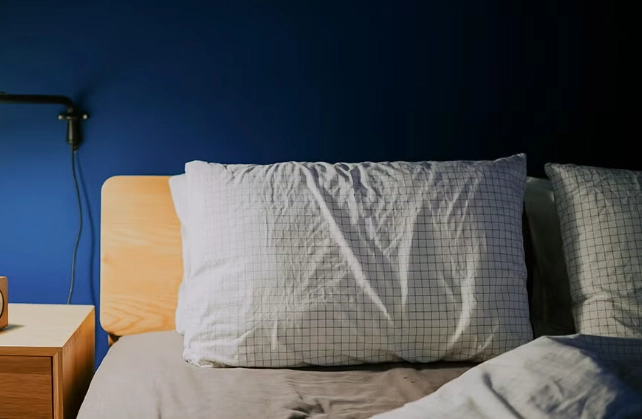
Weight is Right. The science behind weighted blankets is solid—the deep pressure touch stimulation (DPTS) they provide can increase serotonin and melatonin while decreasing cortisol. If a full blanket is too hot or restrictive, try a weighted lap pad just across your hips or chest once you're in your chosen position. The effect is surprisingly immediate.
Temperature and Texture. Anxious bodies often run hot. Cool, breathable sheets (like cotton or linen) are better than flannel or many synthetics. The tactile sensation matters too. A smooth, cool sheet can feel calming, while a rough texture might subconsciously irritate.
Remember Sarah, a client who had terrible nighttime anxiety? She slept in a messy, cluttered room, on a decade-old mattress with one flat pillow. We didn't start with expensive changes. We started with position (modified fetal) and added one firm knee pillow and a cool-to-the-touch cotton top sheet she loved. "It felt like I was finally giving myself permission to be comfortable," she said. The ritual of arranging her pillows became a calming pre-sleep signal. The position helped, but the intentionality around her entire sleep space made the difference.
Your Anxiety & Sleep Questions, Answered
Finding the best position to sleep with anxiety isn't about achieving a perfect, static pose for eight hours. It's about choosing a starting place that actively tells your body, "You are safe." It's about using pillows not just for your head, but as tools for containment and alignment. It's recognizing that the quest for perfect sleep can itself be anxiety-producing, and sometimes, just making one small change—like turning onto your left side and hugging a pillow—is enough to break the cycle for one night. Start there. See how it feels. Your nervous system will thank you for it.
Reader Comments