You know the drill. The lights are off, the room is quiet, and your head hits the pillow. Then it starts. A replay of that awkward thing you said five years ago. A mental to-do list for tomorrow that suddenly feels urgent. A cascade of "what-ifs" about work, health, life. Your mind is a browser with 50 tabs open, and someone just clicked on all of them at once. You check the clock. 1:17 AM. A wave of anxiety crashes over you—"I need to sleep!"—which, of course, makes your thoughts race even faster.
This isn't just "having trouble sleeping." This is the specific, maddening experience of anxiety-fueled insomnia, where your cognitive engine is redlining in neutral. The American Psychological Association notes that stress and anxiety are leading culprits behind sleep disturbances, but that fact doesn't help you at 2 AM. What you need isn't another article telling you to "just relax." You need a battle plan from someone who's been in the trenches and understands the mechanics of this loop.
What You'll Find Here
The Anxiety-Sleep Vicious Cycle (And Why "Just Relax" Fails)
Let's name the beast first. Racing thoughts at night aren't random. They're usually a symptom of your brain's threat detection system (the amygdala) being stuck in "on" position, often due to unresolved stress from the day. When you finally stop moving, there's no external noise to distract you from the internal noise.
The cycle looks like this:
- Trigger: Quiet, dark, bedtime. Your guard drops.
- Intrusion: A stressful thought or memory pops up.
- Worry Engagement: You start analyzing, problem-solving, or catastrophizing.
- Physiological Arousal: Your heart rate increases, muscles tense. This is anxiety.
- Sleep Effort: You notice you're awake and anxious, so you try harder to sleep.
- Performance Anxiety: The effort to sleep creates more anxiety about not sleeping.
- Reinforcement: The brain learns that bed = a place for anxious thinking.
Here's the non-consensus part most articles miss: Trying to forcefully "clear your mind" or "stop thinking" is often the worst thing you can do. It's like being told not to think of a pink elephant. The effort itself creates mental friction and more anxiety. The goal isn't thought suppression; it's thought de-escalation and changing your relationship to the thoughts.
A Common Mistake: People often use their bed as a secondary office—scrolling through work emails, planning the next day, or even arguing on social media. This trains your brain to associate the bed with active, alert, and often stressful cognition. When you then try to sleep in that same space, your brain is confused. The context cue (your bed) is now linked to mental activation, not deactivation.
In-the-Moment Tools to Halt Racing Thoughts
Okay, it's happening right now. You're in bed, and the mental chatter is loud. What do you actually do? Forget counting sheep. Here are tactics that work on the neurobiology of anxiety.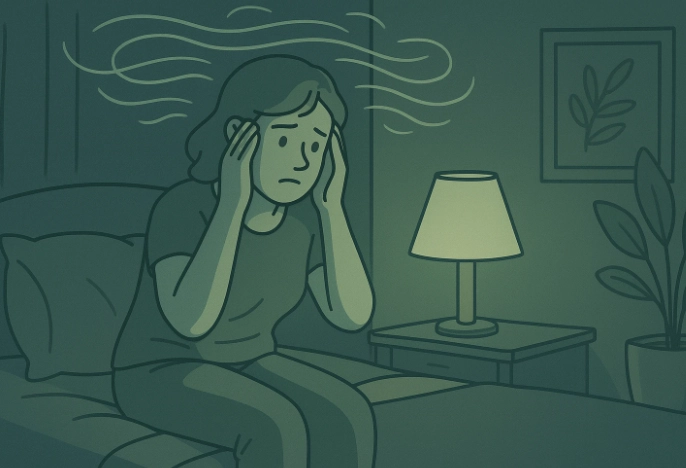
1. The "Worry Dump" (Not a Journal)
Keep a plain notebook and a dull pen (not your bright phone) on your nightstand. The moment the thoughts start, sit up, turn on a dim light, and write. But here's the key: don't write in sentences. Don't write paragraphs. Write in fragmented, messy bullet points. "Meeting tomorrow - afraid of Bob's question - need stats from report - remember to email Sarah - what if I look unprepared?"
The goal isn't to solve anything. It's to externalize the cognitive load. You're taking the swirling thoughts from your brain's working memory and dumping them onto a page where they can't bounce around. Once they're out, close the notebook. Literally tell yourself, "It's on the page now. It can wait until 9 AM." This creates a psychological boundary that mere thinking cannot.
2. Engage Your Senses to Ground Yourself
Anxiety is future-oriented ("what if") or past-oriented ("why did I"). To break its grip, you need to anchor yourself in the present using your senses. Deep breathing is often recommended, but for a frantic mind, it can feel too passive. Try this instead:
The 5-4-3-2-1 Sensory Scan: Do this slowly, focusing intently on each step.
5 things you can SEE. (The pattern on the curtain, the faint light under the door, the shape of your dresser.)
4 things you can FEEL. (The weight of the blanket on your toes, the coolness of the pillowcase, the texture of your shirt.)
3 things you can HEAR. (The hum of the fridge, distant traffic, your own breath.)
2 things you can SMELL. (The laundry detergent on your sheets, the faint scent in the air.)
1 thing you can TASTE. (The aftertaste of toothpaste, take a sip of water.)
This isn't mindfulness meditation. It's a cognitive redirect. It forces your prefrontal cortex (the logical part) to take over from your amygdala (the fear center) by giving it a simple, concrete task.
3. The Paradoxical "Get Up" Rule
This comes straight from Cognitive Behavioral Therapy for Insomnia (CBT-I), the gold-standard non-drug treatment. The rule is simple but brutal: If you're awake with racing thoughts for more than 20 minutes, get out of bed. Go to another room. Do something mildly boring in dim light: read a physical book (no thrillers!), listen to a calm podcast, fold some laundry. Do not check work email, scroll social media, or watch exciting TV.
Why does this work? It breaks the association between bed = anxious wakefulness. You're telling your brain, "Bed is for sleep, not for worrying. If we're going to worry, we do it elsewhere." Only return to bed when you feel sleepy. You might do this several times a night at first. It's frustrating, but it's one of the most powerful ways to retrain your brain's sleep cues.
Daytime Habits That Build a Quieter Mind at Night
Fighting the battle only at bedtime is a losing strategy. You need to fortify your mind during the day. Think of it as sleep hygiene for your thoughts.
| Habit | How It Helps Nighttime Racing Thoughts | Simple Implementation Tip |
|---|---|---|
| Scheduled Worry Time | Contains anxiety to a specific window, preventing it from invading bedtime. | Set a 15-minute afternoon appointment with yourself. Sit with a notepad and worry intentionally. When time's up, close the book. |
| Physical Activity | Burns off stress hormones (cortisol, adrenaline) and promotes deeper sleep pressure. | Aim for 30 minutes of moderate activity. A brisk afternoon walk is often more effective than intense evening gym sessions, which can be overstimulating. |
| Caffeine & Alcohol Cut-off | Caffeine can heighten anxiety; alcohol fragments sleep, leading to more awakenings where thoughts can rush in. | No caffeine after 2 PM. Limit alcohol, and have your last drink at least 3 hours before bed. |
| Digital Sunset | The blue light and engaging content (news, drama, arguments) stimulate the mind and suppress melatonin. | 60-90 minutes before bed, switch devices to night mode and engage in analog activities: reading, light chores, conversation. |
Let's talk about that last one. Scrolling through a stressful work Slack channel or the day's bad news right before bed is like pouring gasoline on your anxiety. You're directly feeding your brain the raw material for its nighttime worry marathon. The transition to sleep needs to be gradual, not an abrupt cliff dive from screen stimulation into darkness.
When It's More Than Nerves: Considering Professional Help
Sometimes, racing thoughts are a symptom of a larger issue like Generalized Anxiety Disorder (GAD), clinical insomnia, or another condition. How do you know when it's time to talk to a professional?
- It's been happening most nights for over a month.
- It's severely impacting your mood, energy, or work performance during the day.
- You feel a sense of dread about going to bed.
- The thoughts are intrusive, obsessive, or accompanied by panic symptoms (racing heart, shortness of breath).
A doctor can rule out physical issues (like thyroid problems or sleep apnea). A therapist, especially one trained in CBT-I or Acceptance and Commitment Therapy (ACT), can give you structured tools. ACT, for instance, is brilliant for this because it doesn't try to eliminate thoughts. It teaches you to see them as just "thoughts"—mental events you don't have to buy into or fight—allowing you to focus on the present moment and valued actions (like resting).
Medication is sometimes a short-term tool to break a severe cycle, but it's not a standalone solution. The behavioral strategies are what create lasting change.
Your Midnight Anxiety Questions, Answered


Reader Comments